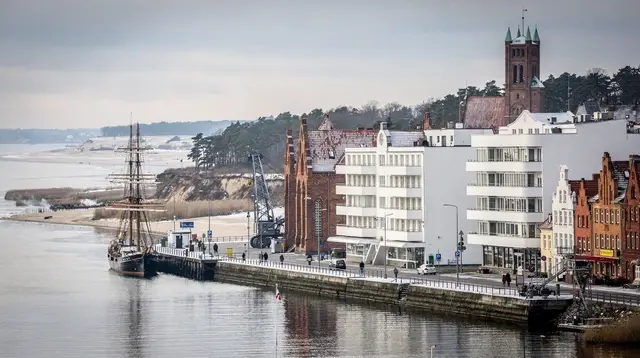
Danzig Is Not Gdańsk Today
The first time someone told me they were “going to Danzig this summer,” I asked where. They meant Gdańsk. They weren’t being pretentious, and they weren’t trying to make a point about history — they’d just read the name somewhere older than they realised, in a war memoir or an old atlas, and it had stuck. I didn’t correct them at the time.
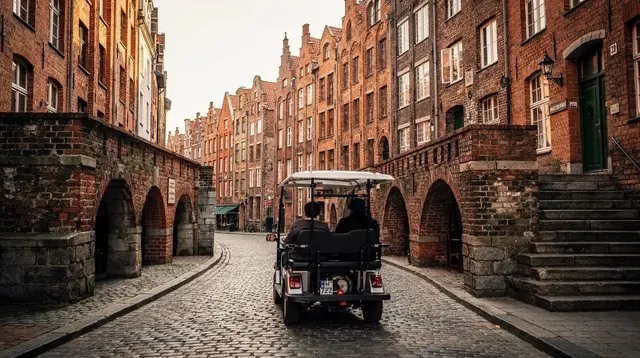
I wish I had, because the more time I’ve spent walking the reconstructed gables of Dlugi Targ and reading the plaques at Westerplatte, the more convinced I am that this isn’t a trivial slip. It’s a small, repeated act of erasure, and it happens constantly, in guidebooks, in casual conversation, in YouTube video titles chasing search traffic from an older, more familiar word.
Here’s the plain version of what actually happened, because the history gets lost in the shorthand. This city on the Motława has carried several names depending on who ruled it and when — Gdańsk under Polish kings, Danzig under Prussian and later German administration, and then, between the two world wars, something stranger still: the Free City of Danzig, a semi-autonomous city-state policed by the League of Nations, belonging fully to neither Germany nor the reborn Polish state next door. That status ended violently.
The Second World War began here, at Westerplatte, on 1 September 1939, when a German battleship opened fire on the small Polish garrison guarding the harbour. By 1945 the city that emerged from the rubble — and it was rubble, close to ninety percent of the Old Town destroyed — was rebuilt as, and belongs to, Poland. Its German population was expelled or fled westward. Its Polish population came in large part from Poles themselves displaced from territories the Soviet Union annexed further east. That is not a footnote. That is the whole event: one population out, another in, a border redrawn around them, a name changed to match.
So when “Danzig” gets used today — to describe a restaurant in the Old Town, a weekend in Sopot, the ferry terminal, the Solidarity movement’s birthplace — it isn’t just an alternate spelling. It’s importing a name that belonged to a different city-state, under a different flag, populated by different people, into a present it no longer describes. I don’t think most people doing this mean anything by it.
But the effect is the same either way: it quietly suggests continuity where there was rupture, and it flattens eighty years of very specific, very documented history into a single interchangeable label, as though “Danzig” and “Gdańsk” were just two ways of saying the same thing at the same time. They aren’t. They were two names for two different periods on the same patch of land, and only one of those periods is still going on.
I want to be careful here, because this isn’t a piece about taking offence. Nobody at a bar in the Old Town is going to wince if you say “Danzig.” This is a precision problem before it’s a sensitivity problem, and precision is the more interesting argument anyway. Historians still use “Danzig” correctly, all the time — when they’re discussing the Hanseatic port city under Prussian rule, or the interwar Free City, or the specific, harrowing chapter of what happened to the city’s German-speaking population during and after 1945.
Used that way, about that period, “Danzig” is exactly the right word, because it names a political entity that genuinely existed and genuinely isn’t the Poland of today. The error isn’t in the word. It’s in the tense. Say “Danzig” about 1935 and you’re accurate. Say “I’m flying to Danzig next week” about 2026 and you’ve made a small anachronism — you’ve reached for a name whose referent stopped existing eighty years ago and pinned it onto a city that has spent those eighty years being something else entirely.
What makes this worth dwelling on, rather than shrugging off as pedantry, is what the anachronism does to the story once you let it slide. If Gdańsk is just “Danzig, present day,” then the war, the border shift, the population exchange — the whole hinge on which this city’s twentieth century turns — becomes background noise instead of the main event. I noticed this most clearly at the European Solidarity Centre, standing at Gate No. 2 where the 1980 strikes began.
Nothing about that history makes sense if you’re still mentally filing this as “the German port city.” The workers who walked out in 1980 were Polish, their grandparents had in many cases arrived from the east after 1945, and the movement that grew out of that shipyard reshaped the map of Europe. None of it is legible through a “Danzig” lens, because that lens belongs to a city that, in the form it once took, no longer exists.
None of this means the German history disappears from the walking tour, and it shouldn’t. Gdańsk’s Old Town is, physically, a postwar reconstruction of a Hanseatic townscape that Danzig’s merchants built over centuries — I’ve written elsewhere about how deliberately rebuilt, not simply preserved, those gables actually are. A good guide, and I’d genuinely recommend booking one rather than piecing this together from plaques, will use both names in the same sentence without confusion, because the confusion only arises when you drop the tense.
If you want that told properly, with the Hanseatic Danzig and the postwar Gdańsk kept distinct rather than blurred into each other, a private city guide who can walk you through both eras without conflating them is worth the money, and it’s the single best way I know to leave with the distinction intact rather than dissolved. For anyone with actual family roots in the city’s German or Polish past, the stakes are more personal still, and a guided look into Polish ancestry and the city’s population history does more to clarify this than any plaque will.
So here’s where I’ve landed, after enough time here to have opinions about it. Use “Danzig” freely, and correctly, when you’re talking about the Hanseatic port, the Prussian city, or the Free City that ended in 1939. Use “Gdańsk” for everything since 1945, which is to say for the city you’re actually visiting, eating in, and photographing from the Żuraw crane today. Keeping the two names sorted by period isn’t fussiness. It’s the only way to keep the actual history — the rupture, not just the buildings — visible at all.
Frequently asked questions about Danzig versus Gdańsk
Is Danzig the old name for Gdańsk?
Yes and no — it’s more precise to say Danzig was the German name for the city during the periods it was under German or Prussian administration, including the interwar Free City of Danzig (1920-1939). Gdańsk is both the Polish name used throughout history when the city was under Polish rule and the only name used for the city today, which has belonged to Poland since 1945.
Why shouldn’t I call it Danzig when I visit?
Because the city you’re visiting in 2026 is Gdańsk, Poland — a different political entity, with a different population, than the Danzig that existed before 1945. Using “Danzig” for the present-day city implies a continuity that the historical record doesn’t support; the population, border and governance all changed after the Second World War.
When is it correct to say Danzig?
When you’re specifically discussing the pre-1945 city — the Hanseatic trading port, the Prussian and German administrative city, or the semi-autonomous interwar Free City of Danzig overseen by the League of Nations. Historians and museum texts use “Danzig” this way routinely, and correctly, because it names a real, bounded historical period.
What actually happened to the city in 1945?
Gdańsk was almost entirely destroyed in the fighting of early 1945, close to ninety percent of the Old Town reduced to rubble. The city’s German-speaking population was expelled or fled westward, and the rebuilt city was resettled largely by Poles, many themselves displaced from territories in the east annexed by the Soviet Union. The city and its surrounding region became part of Poland.
Does the Free City of Danzig explain the interwar period?
It explains it precisely. Between 1920 and 1939 the city was a semi-autonomous city-state under League of Nations protection, belonging fully to neither Germany nor Poland. That unusual status, and the tensions around it, formed part of the lead-up to the Second World War, which began nearby at Westerplatte on 1 September 1939.
Is this a sensitive topic locally, or just a factual one?
Both, but it’s fundamentally a factual one. Locals I’ve spoken with treat it less as an offence and more as a simple matter of getting the history right: Danzig for a documented historical period, Gdańsk for the Polish city that has existed continuously since 1945. Getting the tense right respects the actual sequence of events rather than any particular sensitivity.
Where can I learn this history properly while visiting?
The European Solidarity Centre and the Museum of the Second World War both address the city’s twentieth-century turning points directly, and a guided walk through the Old Town will typically explain the postwar reconstruction alongside the Hanseatic-era Danzig it recreates, keeping the two periods distinct rather than merged.
tours.History
Verified deep-linked GetYourGuide tours. Book through these links and we earn a small commission at no cost to you.
GetYourGuide does not provide a product photo for this activity — the image shows the meeting point, photographed by us.