A spa town built around a pier, not a beach resort in the southern sense
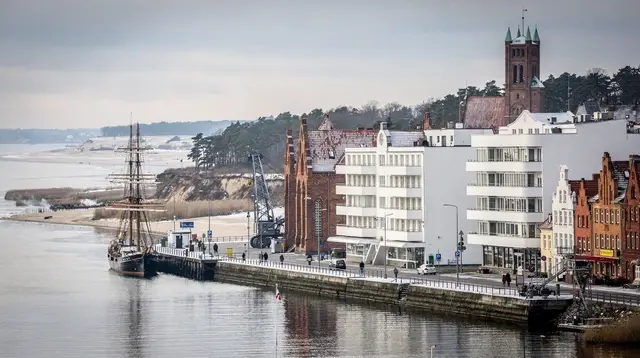
Sopot is the middle city of the Tricity, wedged between Gdańsk and Gdynia on a narrow strip of coast, and it has spent more than a century as Poland’s grandest seaside spa town. That history matters, because it explains why Sopot looks and feels different from Gdańsk’s rebuilt Old Town or Gdynia’s modernist port: this is a resort town of villas, sanatoria and a pier, laid out for promenading rather than for shipping or defending anything.
The centrepiece is the Sopot Pier (molo), a wooden structure running 511.5 metres out into the Bay of Gdańsk — the longest wooden pier in Europe, a fact worth stating precisely, since it is often inflated into a claim about the whole world, which it is not. Walking its full length and back takes around 30 to 45 minutes at an easy pace, longer if you pause to watch the yachts moored along its sides or the swimmers testing the water below.
Sopot earned its spa status from something less visible than the pier: brine. The town sits on natural saline springs, and its 19th-century identity was built on brine baths and a pump room rather than sandy beaches alone — Sopot is, in the old European sense, a “brine town,” a category that groups it with inland spa resorts as much as with seaside ones.
That heritage still shapes the town’s pace: wide tree-lined avenues, grand hotels, and a pier that was originally built for therapeutic sea bathing and promenading, not surfing or watersports. It is worth knowing this before arriving expecting a purely beach-holiday atmosphere, because Sopot reads more like a genteel European spa town that happens to sit on the Baltic than like a tropical resort.
Monciak: the street that carries Sopot’s energy
Running from the train station down toward the pier is Monte Cassino Street, universally known to locals as Monciak. This pedestrianised strip is where Sopot’s daytime and nighttime characters both live: cafes and ice cream stands by day, bars and clubs by night, with street performers and market stalls filling the gaps in summer. Monciak is short — a 10 to 15 minute walk end to end — but it is dense, and it is where most visitors get their first and last impression of the town. It ends at the pier gate, which makes the geography of a Sopot day trip almost self-organising: arrive near the station, walk Monciak, reach the pier, then loop back along the beach or through the side streets.
Just off Monciak, tucked into a small square, sits the building every visitor photographs: the Krzywy Domek, or Crooked House. Built in 2004, its walls and windows ripple and warp as if the whole structure were reflected in a funhouse mirror, and it now houses shops and cafes on its ground floor. It is tempting, and extremely common, to describe it as “Gaudi-esque” — the flowing, melted lines invite the comparison. Resist it: the Krzywy Domek has no connection to Antoni Gaudi’s work.
Its design was inspired by the fairy-tale illustrations of Polish artist Jan Marcin Szancer and by the whimsical architectural fantasies of Swedish illustrators Per Dahlberg and Jan Nilsson, filtered through Polish architects Szotynscy and Zaleski. The visual similarity to Gaudi’s organic curves is real but coincidental — a shared taste for warped, non-rectilinear form, not a shared lineage. Treat it as a piece of playful 21st-century Polish design, not an homage to Barcelona.
The pier, the pass, and what “brine town” actually buys you
Access to the Sopot Pier itself carries a small entry fee during the main season, waived or simply unenforced outside the warmer months — there is no booking system and no need to plan ahead, just turn up. What the fee funds, loosely, is the upkeep of a wooden structure that takes a battering from Baltic storms every winter.
At the pier’s landward end sits the old spa house and pump room area, a reminder that this promenade was built for a specific 19th-century purpose: bringing visitors to the sea air and the brine baths that gave the town its medicinal reputation. Modern Sopot has layered a beach-resort economy on top of that spa foundation, but the underlying identity — a place people came to for health as much as pleasure — still shows in the architecture along the seafront.
None of this changes the water itself. The Baltic at Sopot is genuinely cold by most visitors’ standards, even in the height of summer: sea temperatures typically peak around 17 to 20 degrees Celsius in August, and a windy day can knock several degrees off that within hours. This is not a sea to plan a long, warm afternoon of swimming around, and it is worth setting that expectation before arrival rather than after a first ankle-deep step into the water. A bracing dip, a walk along the sand, and time on the pier itself are the realistic Sopot beach experience; a Mediterranean-style day of floating in warm water is not what this coast offers, in Sopot or anywhere else on this stretch of the Baltic.
Planning a Sopot day from Gdańsk
Sopot is one of the easiest add-ons in the whole region, because the SKM commuter train connects it directly to both Gdańsk and Gdynia, running every 10 to 20 minutes at peak times and taking roughly 20 to 25 minutes from Gdańsk Glowny. There is no need for a car, and driving into Sopot in July or August often means more time spent finding parking than the train journey would have taken in total. Tickets are sold by time validity rather than by number of stops, so a return trip and a few hours of walking around usually fits comfortably inside a single all-day pass if combining Sopot with Gdynia or another Tricity stop.
A realistic day plan: arrive by SKM, walk Monciak toward the sea, detour to the Krzywy Domek, continue to the pier and out to its far end, then either settle onto the beach for an hour or turn back into the side streets for lunch. Visitors extending the day sometimes pair Sopot with a short cruise: a sunset sail along the bay, or a breakfast cruise departing from the coast, both of which give a different vantage point on the pier and the shoreline than a walk alone. For a first visit, a private walking tour of Sopot’s old town area is a straightforward way to get oriented without guessing which side streets are worth the detour — useful given how compact but layered the town’s centre actually is.
| Activity | Typical duration | Notes |
|---|---|---|
| Walk Monciak end to end | 10-15 min | Longer with cafe stops |
| Full pier walk (out and back) | 30-45 min | Small entry fee in season |
| Krzywy Domek photo stop | 10-15 min | Ground floor has shops and a cafe |
| Beach time | 1-2 hours | Sea rarely warms past ~20degC |
| Full Sopot day trip from Gdańsk | Half day to full day | Add SKM travel time both ways |
For visitors who want the water experience without wading in personally, a sunset yacht cruise along the Sopot coastline gives a view of the pier and the shoreline from offshore, welcome drink included. Those who prefer mornings can look at a breakfast cruise on a catamaran departing from Gdańsk or Sopot instead.
If food is the priority, a private traditional Polish food tour around Sopot covers the town’s restaurant side away from the pier crowds, and for a slower, low-key afternoon there is a private beach picnic with prosecco and finger food set up directly on the sand.
Where Sopot fits in a wider Tricity trip
Sopot rarely stands entirely alone on an itinerary — it is usually paired with Gdansk on one side and Gdynia on the other, since all three sit on the same short stretch of SKM line. A common shape is a two-day Gdańsk and Sopot itinerary for visitors with limited time, or a fuller three-day Tricity itinerary that adds Gdynia’s modernist centre.
Those weighing up how to split time across the three towns often start with a comparison of Gdańsk versus Sopot versus Gdynia, or, more narrowly, a look at Sopot versus Gdynia for where to stay if lodging in the resort town itself is the plan.
Sopot’s nightlife is a genuine draw in its own right, distinct from its daytime pier-and-beach identity: Monciak and the streets around it fill with bar crowds after dark in the warmer months, covered in more depth in a dedicated Sopot nightlife guide, while a broader Gdańsk pub crawl guide covers the Old Town’s separate bar scene for comparison. Travellers weighing whether to explore with a guide or independently can check the general guided tour versus DIY day trips breakdown, most of which applies equally to a Sopot visit.
Getting around without a car is standard practice here, and the SKM, tram and bus guide for the Tricity covers ticket types and timing in detail — useful before a first Sopot trip, since the fare system (time-based, not stop-based) trips up newcomers more often than the trains themselves. For those cycling instead of training in, the Tricity cycling guide covers the coastal path linking Gdańsk, Sopot and Gdynia.
If a longer swim or paddle is the goal rather than a quick dip, the Baltic coast watersports guide and the Gdańsk beaches and Baltic swimming guide both set realistic expectations for water temperature across the whole coast, not just in Sopot.
Families splitting time between Sopot’s beach and inland attractions sometimes combine it with the Oliwa park, zoo and cathedral guide, a short SKM ride further toward Gdańsk. And for context on why this stretch of coastline looks nothing like the postcard image of a warm sea, the blog piece on why the Baltic is not the Mediterranean is a useful, myth-clearing read before setting expectations for a Sopot beach afternoon.
Sopot travel FAQ
How long is the Sopot pier, and is it really the longest in Europe?
The Sopot pier measures 511.5 metres, making it the longest wooden pier in Europe. It is not the longest pier in the world — that distinction belongs to piers elsewhere built from other materials — so the claim should be stated precisely as Europe’s longest wooden pier.
Is the Krzywy Domek connected to Antoni Gaudi?
No. Despite the visual similarity of its warped, flowing lines to Gaudi’s architecture, the Krzywy Domek, built in 2004, was inspired by the fairy-tale illustrations of Polish artist Jan Marcin Szancer and by Scandinavian architectural fantasy art, not by Gaudi’s work.
How do I get from Gdańsk to Sopot?
The SKM commuter train runs directly between Gdańsk Glowny and Sopot, taking roughly 20 to 25 minutes with departures every 10 to 20 minutes at peak times. No car is needed, and driving in summer often takes longer due to parking pressure in the town centre.
Is the water warm enough to swim in Sopot?
Not by Mediterranean standards. Sea temperatures typically peak around 17 to 20 degrees Celsius in August and can drop noticeably on a windy day. Swimming is possible and popular, but expect a bracing dip rather than a long, warm swim.
What does “brine town” mean for Sopot?
Sopot developed as a 19th-century spa resort built around natural saline springs, with brine baths and a pump room forming the basis of its original tourist identity, well before it became known primarily as a beach and nightlife destination.
How much time should I budget for a Sopot day trip?
A half day covers the essentials: Monciak, the Krzywy Domek and the pier. A full day allows time on the beach, a meal off the main street, and possibly a short cruise along the coast.
Is Monciak worth visiting outside the evening?
Yes. Monciak functions differently by day and night — cafes, shops and street performers during the day, bars and clubs after dark — so a single visit at either time only shows one side of the street.
Can Sopot be combined with Gdynia in one day?
Yes, easily. Both sit on the same SKM line as Sopot, roughly 10 to 15 minutes apart by train, making a combined Sopot-and-Gdynia day a common and straightforward itinerary from Gdańsk.