Gdańsk and Sopot in 2 Days: Old Town Plus a Beach Afternoon
Two days is a realistic, unhurried amount of time to see the best of Gdansk and add a genuine beach-town afternoon in Sopot, without turning either day into a checklist. The split below is deliberate: Day 1 stays inside Gdańsk’s Main Town, where the brick-Gothic core rewards slow walking more than fast ticking-off; Day 2 crosses to Sopot by train for the pier, the seafront promenade and the town’s low-key architecture. Gdynia is left out on purpose - the Tricity’s third city has its own modernist character and deserves its own visit rather than an hour tacked onto someone else’s itinerary.
Day 1: Gdańsk’s Main Town, End to End
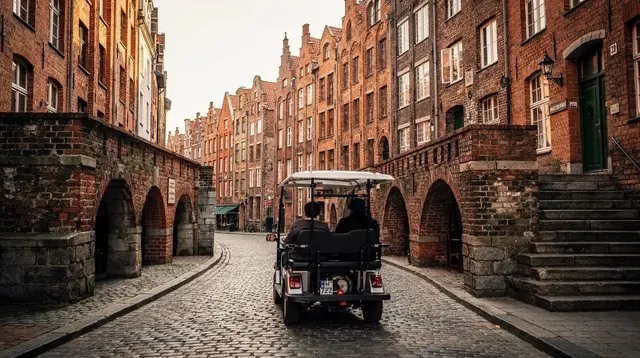
Start early at Zloty Brama (Golden Gate), the traditional entry point into the Royal Route, and walk down Dluga street toward Długi Targ, the long market square that is the historic heart of the city. This stretch is where Gdańsk’s Hanseatic-era wealth is most visible: tall gabled townhouses, ornamented facades, and at the centre of the square, the Neptune Fountain, cast in bronze in the early 17th century and still the informal meeting point of the Old Town today.
Facing the fountain is the Dwor Artusa (Artus Court), once the meeting hall of Gdańsk’s merchant guilds and now a museum interior preserved almost exactly as it looked when brokers and shipowners gathered there to do business. It is a compact visit - twenty to thirty minutes is enough to take in the carved woodwork, the tiled stove and the ship models hanging from the ceiling - but it explains more about the city’s Hanseatic identity than almost any other single stop. A guided walk through this stretch of the Old Town is worth considering here if you want the history explained on the spot rather than pieced together from plaques; a guided walking tour through the Main Town covers Długi Targ, the Golden Gate and the riverfront in a couple of hours with a local guide filling in the context.
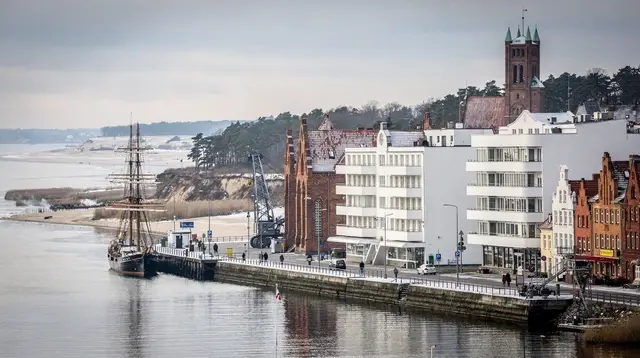
From Długi Targ, continue east toward the Motława river, where the waterfront opens out and the medieval Żuraw crane comes into view - the largest surviving port crane of its kind in medieval Europe, and today a branch of the National Maritime Museum rather than just a photogenic silhouette. An hour is enough to see the crane mechanism and the maritime exhibits inside, and the museum’s other branches, including the SS Soldek ship moored nearby, pair naturally with it if you have the appetite for more. If the water itself appeals more than another museum interior, an afternoon catamaran cruise along the Motława gives a different, slower view of the same waterfront and its brick warehouses from the water.
Turn back inland from the Żuraw and you reach Bazylika Mariacka (St Mary’s Basilica), one of the largest brick churches in the world and free to enter as a working parish church. The separate tower climb - more than 400 steps, no lift - is ticketed at the tower door rather than the church entrance, and it closes earlier than the church itself, particularly outside summer, so check the posted times rather than assume it is open.
From the basilica, Mariacka street runs down toward the river, lined with the ornamental stone porches that give the street its character and, block after block, amber stalls and workshops. This is the traditional heart of Gdańsk’s amber trade, and it needs no ticket and no timing beyond browsing at a reasonable pace - just remember that reputable dealers issue certificates, and that prices at the smaller stalls are often negotiable.
By early afternoon, the Main Town itself will have taken up most of the day if you have actually stopped at each of these points rather than walked past them. That is the honest pacing: Neptune’s fountain, the Artus Court, the Żuraw, the basilica and Mariacka street, taken properly, fill a full day on foot.
If energy allows late in the day, and only then, the Gdańsk Shipyard and the gate where the 1980 strikes began are a short taxi or tram ride from the Old Town. This is not a stop to squeeze in as an afterthought - the shipyard and the European Solidarity Centre museum beside it are dense with original documents and recordings, and a rushed forty-minute pass through them undersells what happened there.
If your legs and your attention are already spent from the Main Town, it is entirely reasonable to leave this for a return visit or a dedicated half-day rather than force it into Day 1. Pairing shipyard history with Westerplatte and the WWII museum on the same day as the Old Town is, frankly, too much ground for one visit to do any of it justice - each deserves its own unhurried time.
End Day 1 back near the river as the gabled facades catch the evening light, with dinner in the Old Town or along the Motława waterfront.
Day 2: Sopot by SKM
Sopot sits a short train ride up the coast from Gdańsk, and the SKM (Szybka Kolej Miejska) commuter line is the easiest way to get there - board at Gdańsk Glowny or Gdańsk Śródmieście, and the ride to Sopot station takes roughly 20 minutes, with trains running every 10 to 20 minutes through the day. Tickets are sold by time validity (20, 40, 60 or 90 minutes, or a 24-hour pass) rather than by number of stops, so buy accordingly before boarding.
From Sopot station, it is a short walk down toward the seafront and the town’s best-known landmark: the molo, a wooden pleasure pier stretching 511.5 metres out into the bay - the longest wooden pier in Europe, though not, despite what some pages claim, the longest in the world. A small seasonal entry fee applies in summer and is often waived or unenforced off-season; no booking is needed. Walking to the end and back takes 30 to 45 minutes at an easy pace, and the far end gives the best open view back toward the Tricity coastline. If you would rather see the coast from the water than the pier, a sunset yacht cruise with a welcome drink is a pleasant way to close out the afternoon, timed for the light rather than the crowds.
Before or after the pier, spend an hour on the beach itself - but set expectations honestly. The Baltic here rarely climbs past 17-20°C even at the height of summer, and a windy afternoon can knock several degrees off that within the hour. This is a beach for walking barefoot on the sand, wading in and out, and sitting with a coffee - not for the kind of prolonged swimming that a Mediterranean beach town promises. Sopot has sometimes been marketed as a glamorous seaside resort in the mould of the French Riviera, and while its pier and its Monte Cassino nightlife have real energy, the sea itself is a cool, brackish northern one, not a warm southern one.
From the beach, walk inland to Monte Cassino street, Sopot’s pedestrianised main artery, lined with cafes, shops and the town’s liveliest concentration of restaurants. Partway along it stands the Krzywy Domek (Crooked House), the town’s most-photographed building and one that is frequently, and wrongly, compared to Antoni Gaudi’s work in Barcelona. It has no design connection to Gaudi at all: it was completed in 2004, designed by Polish architects Szotynscy and Zaleski, and its warped, melting form draws instead on the fairy-tale illustrations of Polish artist Jan Marcin Szancer. It is worth five or ten minutes for photos, not a stop that needs planning around.
If you would rather have the town’s layout explained than piece it together on foot, a private walking tour of Sopot’s old town and pier covers the molo, Monte Cassino and the Crooked House with a guide who can point out which buildings predate the town’s 19th-century spa era and which, like the Crooked House, are recent additions dressed up as whimsy.
Round out the afternoon with a slow lunch or early dinner along Monte Cassino or back near the pier, then take the SKM back to Gdańsk in the evening - the same 20-minute ride, now with the coast lit gold if the timing works out. For visitors who prefer to start the day differently, a breakfast cruise on a catamaran departing from either Gdańsk or Sopot is worth considering as an alternative opening to Day 2, before the SKM leg or in place of it if the weather and the schedule line up.
Why This Two-Day Split, and What It Deliberately Leaves Out
This itinerary is built around a simple discipline: one full day per place, and no third destination wedged in to make the trip feel more complete than it needs to. Gdynia is the most common temptation - it sits only a few minutes further up the SKM line from Sopot, and it is easy to assume an hour there “on the way back” would round things out.
In practice, Gdynia’s modernist centre and its docked museum ships need their own unhurried block of time to make sense, and stacking it onto a Sopot afternoon usually means seeing neither place properly. If Gdynia genuinely interests you, it deserves a dedicated day on a longer Tricity trip, not a rushed final hour before catching a train home.
The same logic applies to Day 1: this itinerary keeps the Gdańsk Shipyard as an optional late addition, not a scheduled stop alongside Westerplatte and the WWII museum. Those memory and history sites are substantial in their own right, and treating them as add-ons to a Main Town walking day does a disservice to both halves of the day. A two-day trip built around the Old Town and Sopot’s pier is honest about what it covers and what it leaves for next time.
Practical Notes for Two Days in Gdańsk and Sopot
| Detail | Day 1 (Gdańsk) | Day 2 (Sopot) |
|---|---|---|
| Core area | Main Town: Długi Targ, Motława, Mariacka | Molo, Monte Cassino, Krzywy Domek |
| Getting there | On foot from Old Town hotels | SKM train, ~20 minutes from Gdańsk Glowny |
| Time needed | Full day | Half to full day |
| Optional extra | Gdańsk Shipyard (late, if energy allows) | Beach time (short dips, not long swims) |
| Sea/water temp context | N/A | ~17-20°C even in August |
For getting around both days, the SKM and tram network across the Tricity covers everything this itinerary needs - no car is required for either day, and driving into Sopot in summer often means a longer search for parking than the train journey itself takes.
If you are curious how the Baltic compares to warmer seas before you pack your swimwear, it is worth reading why Sopot is not the Baltic’s answer to Saint-Tropez - the comparison undersells what the town actually offers. And if the postwar look of Gdańsk’s Old Town raises questions, the short answer is in why the Main Town looks medieval but isn’t: it was rebuilt after 1945, brick by brick, from near-total ruin.
If two days leaves you wanting more, the natural next step is a three-day Tricity itinerary that adds Gdynia properly, or - if two days is genuinely all you have and even Sopot feels like a stretch - a tighter one-day Gdańsk plan that keeps everything inside the Main Town.
Frequently Asked Questions About Two Days in Gdańsk and Sopot
Is two days enough for Gdańsk and Sopot?
Yes, if you split it cleanly: a full day in Gdańsk’s Main Town and Old Town, and a second day given to Sopot’s pier and centre reached by a 20-minute SKM train. Trying to add Gdynia or Westerplatte into the same two days spreads the trip too thin.
Should I add Gdynia to this two-day trip?
Better not to. Gdynia’s modernist architecture and museum ships reward a dedicated few hours, and squeezing it into a Gdansk-and-Sopot itinerary usually means rushing all three places. Give it its own day on a longer visit.
How do I get from Gdańsk to Sopot?
Take the SKM commuter train from Gdańsk Glowny (or Gdańsk Śródmieście) to Sopot station. The ride takes roughly 20 minutes, trains run every 10-20 minutes, and tickets are sold by time validity rather than by stop count.
Can you swim at Sopot beach?
You can wade and paddle, but the Baltic rarely exceeds 17-20°C even in August, so it suits a bracing dip rather than a long afternoon of swimming. Most visitors treat the beach as a place to walk and sit, not to spend hours in the water.
Is the Krzywy Domek (Crooked House) in Sopot related to Gaudí?
No, despite the comparison that circulates online. It was built in 2004, inspired by the fairy-tale illustrations of Polish artist Jan Marcin Szancer, and has no design connection to Antoni Gaudí’s work in Barcelona.
Should I visit the Gdańsk Shipyard on Day 1?
Only if your energy holds after a full day in the Main Town. The shipyard and the European Solidarity Centre deserve a properly attentive visit, and pairing them with Westerplatte or the WWII museum on the same day turns an Old Town day into a rushed memory-sites day. If you want to do the shipyard justice, it earns its own half-day.
How long is the Sopot pier?
The wooden pier (molo) measures 511.5 metres, making it the longest wooden pier in Europe - not, as is sometimes claimed, the longest in the world.
tours.2 days
Verified deep-linked GetYourGuide tours. Book through these links and we earn a small commission at no cost to you.
GetYourGuide does not provide a product photo for this activity — the image shows the meeting point, photographed by us.