Tricity in 3 Days: Gdańsk, Sopot and Gdynia by Train
Three cities, three completely different characters, one train line stitching them together — that is the shape of this itinerary, and it is worth saying upfront what it deliberately leaves out. There is no side trip to Hel, no dash to Malbork Castle.
Three days is barely enough to do Gdansk, Sopot and Gdynia justice at a pace that lets you actually look at things rather than photograph them and move on; squeezing in a fourth destination means one of the three gets shortchanged, and Gdynia is usually the casualty because it’s the least famous name on the list. If you have more time, see one week in Pomerania instead. If you have less, the 2-day Gdańsk and Sopot itinerary drops Gdynia rather than rushing it.
The backbone of the whole trip is the SKM (Szybka Kolej Miejska), the Tricity’s commuter rail line, which runs along the coast from Gdańsk through Sopot to Gdynia and beyond. It’s frequent — every 10 to 20 minutes at peak times — and the ride itself is part of the experience, hugging the shoreline with sea glimpses for much of the way. One detail trips up almost every first-time visitor: the SKM ticket is not the same as the tram and bus ticket used within each city.
They’re two separate networks sold on two separate ticket systems, priced by zone and time validity rather than by number of stops. Buy an SKM ticket to move between cities, and a city ticket if you want a tram or bus once you’re there. For the full breakdown, see getting around the Tricity by SKM, tram and bus.
Day 1: Gdańsk Old Town and the shipyard
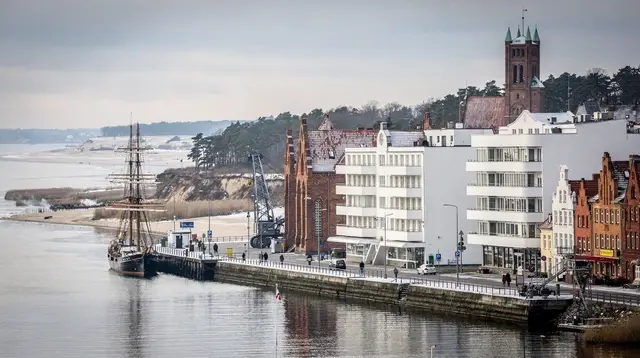
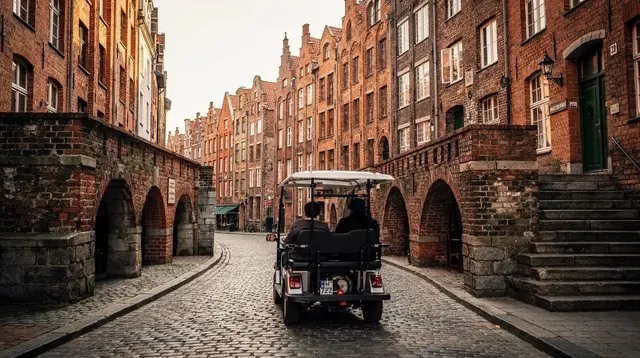
Base yourself in Gdańsk for the first night, since it has the widest choice of hotels and the easiest access to the station you’ll need on Day 2. Start early at Dlugi Targ, the long market square that is the postcard image of the city — gabled Hanseatic townhouses rebuilt after 1945, the Neptune Fountain, and the Main Town Hall. Walk down to Mariacka street, the amber-dealers’ lane with its distinctive stone porches, and into St Mary’s Basilica, one of the largest brick churches in the world; the tower climb (over 400 steps, no lift) is a separate ticket from the church itself if you want the view. A guided walk through this part of town is worth it for the context alone — a private city tour of Gdańsk’s Old Town covers the square, the basilica and the Motława riverfront with a local guide rather than a guidebook. For a structured route on your own, the Old Town walking tour guide lays out the same ground stop by stop.
Follow the Motława river north past the medieval crane Żuraw to the water, then decide between two very different afternoons — do not try to do both, they’re each worth a proper visit on their own. Option one is the Gdańsk Shipyard and the European Solidarity Centre, at the historic Gate No. 2 where the 1980 strikes began; the Centre’s permanent exhibition genuinely needs two to three hours if you read rather than skim, and it’s one of the most substantial modern-history museums in this part of Europe.
Background reading beforehand helps: the shipyard and Solidarity walking guide and the European Solidarity Centre guide both cover what’s inside. Option two is the Museum of the Second World War, one of the largest WWII museums in Europe, equally dense and equally deserving of two to three hours rather than a quick look — see the museum guide for what to expect. Either choice fills an afternoon properly; trying to fit both into one day means shortchanging both.
If you’d rather see the waterfront from the water, a short catamaran cruise on the Motława is a relaxed way to end the day instead of another museum — a catamaran river cruise along the Motława passes the crane, the old shipyards and the harbour mouth in under an hour. Finish with dinner in the Old Town; Gdańsk’s restaurant scene is dense enough that you don’t need to plan far ahead.
Day 2: Sopot by SKM — pier, Monciak, Krzywy Domek
Pack a bag and check out, or leave luggage at your Gdańsk hotel if you’re returning for a second night before continuing on — either works, since Sopot is only about 15-20 minutes away on the SKM. Buy an SKM ticket at the station (remember, this is not your city tram ticket) and get off at Sopot’s main station, a short walk from everything you’ll want to see.
Sopot is a resort town, not a historic one, and it reads that way — the pace is slower, the streets wider, the architecture is turn-of-the-century spa rather than medieval brick. Head first to Monte Cassino street, universally known as Monciak, the pedestrian promenade lined with cafes, shops and street performers that runs straight down to the sea. Partway along stands Krzywy Domek (the Crooked House), a deliberately warped, almost cartoonish building that’s become one of the most photographed spots on the Baltic coast — a five-minute stop, but a memorable one.
At the end of Monciak is Sopot’s pier (molo), the longest wooden pier in Europe, extending well out into the bay. A small seasonal entry fee applies (often waived off-season), and the walk to the end and back takes 30-45 minutes at an easy pace, longer if you stop to watch the sailboats or the SKM line curving along the shore behind you. For a fuller route through the town beyond the pier and Monciak, see the Sopot walking tour guide — it’s the kind of town that rewards wandering off the main strip toward the quieter residential streets near the forest edge.
Do not plan on a long swim here, however good the weather looks. The Baltic rarely exceeds 18-20°C even at the height of summer, and a shift in wind can drop it further within hours — treat the beach as a walk and a bracing dip, not a Mediterranean afternoon; see why the Baltic isn’t the Mediterranean and the Baltic swimming guide for realistic expectations. If the weather and timing align, a sunset option worth booking ahead is a sunset yacht cruise from Sopot with a welcome drink, which puts you out on the bay looking back at the pier and the coastline as the light goes gold — one of the better ways to close out a resort-town day. Stay overnight in Sopot if you want an evening on Monciak without a train ride afterward, or head back to Gdańsk; both are simple options given the SKM’s frequency.
Day 3: Gdynia by SKM — modernism, not medieval streets
Gdynia is roughly 35 minutes from Gdańsk by SKM (about 10-15 minutes on from Sopot if you’re starting there instead), and it needs a mental reset on arrival: this is not a historic old town. Gdynia barely existed before the 1920s — it was built almost from scratch as Poland’s main seaport after independence, and its centre reads accordingly, all wide avenues and clean, geometric interwar facades rather than gabled brick lanes.
That’s the whole point of the day: Gdańsk shows you thoroughly reconstructed medieval Hanseatic wealth, Sopot shows you a Belle Epoque resort, and Gdynia shows you something built by a young nation in a hurry, in the modernist idiom of its decade. See Gdynia built from nothing for the background, and the Gdynia modernism guide for what to look for on the facades.
Walk the waterfront district first, where the best of the Gdynia Modernism architecture is concentrated — a self-guided route works well here, and the Gdynia modernist walking tour guide maps out the key buildings without needing a formal tour. Down at the harbour, two museum ships are moored and each merits roughly an hour: the tall ship Dar Pomorza, a striking white-masted training vessel now open as a museum, and the destroyer ORP Blyskawica, a veteran of the Second World War. Buy tickets for each separately at the gangway; they’re inexpensive and the interiors are compact enough not to eat your whole afternoon.
For deeper context on the ships and Gdynia’s maritime identity, a guided option is worth considering — a private Gdynia maritime legends tour with tickets included bundles entry to the harbour sights with a guide who can explain what you’re looking at rather than reading placards. Afterward, climb (or take the funicular, when running) up Kamienna Gora, the wooded hill just south of the centre, for a wide view back over the harbour, the museum ships and the bay toward Hel — a good, unhurried way to close out the Tricity leg of the trip. If time allows before your train back, the Emigration Museum, housed in the old Marine Station where transatlantic liners once departed, adds another layer to Gdynia’s short, intense history, though it’s an optional extra rather than essential on a tight schedule.
Planning notes
| Day | Base | Core sights | Transport |
|---|---|---|---|
| 1 | Gdańsk | Długi Targ, Mariacka, Motława, shipyard OR WWII museum | Walking |
| 2 | Sopot | Monciak, Krzywy Domek, the pier | SKM from Gdańsk |
| 3 | Gdynia | Modernist centre, Dar Pomorza, ORP Blyskawica, Kamienna Gora | SKM from Sopot or Gdańsk |
A car adds nothing to this itinerary and mostly gets in the way — parking in Gdańsk’s Old Town and on Sopot’s pedestrian streets is awkward, and the SKM covers the same ground faster and without the hassle; see should you rent a car in Gdansk if you’re still weighing it up.
For a sense of how each city compares before you go, Gdańsk vs Sopot vs Gdynia and where to stay: Sopot vs Gdynia are worth a read while planning where to base yourself each night. And if the idea of squeezing Hel or Malbork into this trip keeps nagging — resist it. Both deserve their own day, and both are better done as extensions of a longer stay than as a rushed add-on that costs you Gdynia.
Frequently asked questions about the Tricity in 3 days
Can I do Gdańsk, Sopot and Gdynia in 3 days without a car?
Yes. The SKM commuter train links all three cities along the coast, running every 10-20 minutes at peak times, and each city’s core sights are within walking distance of its station.
Is the SKM ticket the same as the Gdańsk tram and bus ticket?
No. SKM is a separate rail network from the ZTM trams and buses used within Gdańsk, Sopot and Gdynia, and it sells its own tickets by zone and time validity. Carry both if you plan to use trams in the city centre as well as the train between cities.
Should I add Hel or Malbork to this itinerary?
Not on a 3-day trip. Three days is already tight for Gdańsk, Sopot and Gdynia at a reasonable pace; either extra destination means sacrificing a city, not adding a bonus.
Can I swim at Sopot or Gdynia beach in summer?
You can wade and dip, but the Baltic rarely exceeds 18-20 degrees Celsius even in August, and a windy afternoon can drop it further within hours. Treat the beaches as a walk and a bracing dip, not a day of lounging in warm water.
Is Gdynia worth a full day, or just a quick stop?
A full day is worth it if you want to see the modernist architecture properly plus the museum ships and Kamienna Gora viewpoint. A rushed half-day only covers the waterfront and misses most of what makes Gdynia different from Gdańsk and Sopot.
How far apart are Gdańsk, Sopot and Gdynia?
The three cities are strung along roughly 30 kilometres of coastline. Gdańsk to Sopot is about 15-20 minutes on the SKM, and Sopot to Gdynia is another 10-15 minutes, so the whole line end to end runs well under an hour.
What’s the difference between Gdańsk’s Old Town and Gdynia’s centre?
Gdańsk’s Old Town is careful postwar reconstruction of a medieval Hanseatic city, all brick gables and narrow lanes. Gdynia has almost no old town at all — it was built up from a fishing village into a major port after 1918-20, so its centre is 1920s-30s modernist architecture, wide avenues and Bauhaus-influenced facades.
tours.3 days
Verified deep-linked GetYourGuide tours. Book through these links and we earn a small commission at no cost to you.
GetYourGuide does not provide a product photo for this activity — the image shows the meeting point, photographed by us.