Gdańsk Shipyard and the Solidarity Movement: A Visitor's Guide
What should you actually see at the Gdańsk Shipyard?
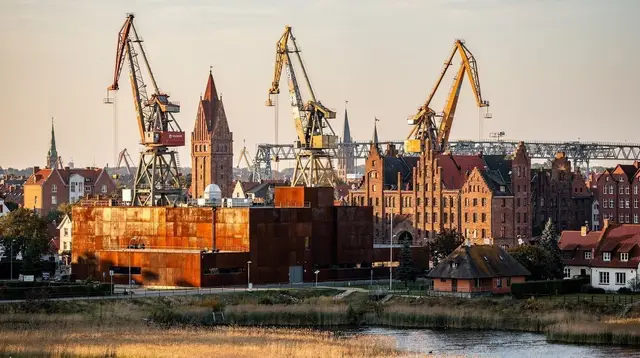
The main sites are Gate No. 2, where the August 1980 strikes began, the Monument to the Fallen Shipyard Workers, and the European Solidarity Centre, a corten-steel museum built beside the gate and opened in 2014. The shipyard beyond these points is still a working industrial site and is not open for casual walking.
Gate No. 2 and the memory it holds
Most first-time visitors expect a shipyard tour and get something closer to a memorial district. The Gdańsk Shipyard is still, in part, a working industrial site, and the areas open to the public are limited to a specific stretch around Gate No. 2 and the buildings next to it. That narrower focus is not a compromise — it is the point. This is the gate where, on 14 August 1980, shipyard workers led by an electrician named Lech Wałęsa walked out and occupied the yard, and where the strikers later posted their 21 demands on a wooden board for the whole city to read. The gate still stands, flags and photographs often pinned to its railings, and it remains the place from which the rest of the story radiates.
It helps to be precise about dates here, because the two headline years of Poland’s late-communist history get merged in casual conversation more often than almost any other fact about this country. The strikes that founded Solidarity happened in August 1980. The union that emerged from them, Solidarność, became the first independent trade union in the Soviet bloc, and its confrontation with the state played out over the following decade — a period that included the imposition of martial law in December 1981 and years of suppression before the union resurfaced.
1989 is a different date: the year of Poland’s semi-free parliamentary elections, the vote that effectively ended communist rule in the country and helped trigger the wider collapse across Eastern Europe. Nine years separate the two. If a guide, a plaque or a fellow traveller conflates them, it is worth gently correcting, because the gap between 1980 and 1989 is itself part of the story — a long, unresolved decade of strikes, crackdowns, underground organising and eventual negotiation, not a single triumphant moment.
The European Solidarity Centre
Beside Gate No. 2 stands the building most visitors actually spend their time in: the European Solidarity Centre, a museum housed in a deliberately industrial structure clad in weathering corten steel, its rust-brown surface designed to echo the hulls and cranes of the yard around it. It opened in 2014, more than three decades after the events it covers, and it is a serious, well-resourced museum rather than a small commemorative room.
The permanent exhibition moves chronologically through the prewar shipyard, the 1970 workers’ protests that preceded and shaped 1980, the August 1980 strikes themselves, the signing of the Gdańsk Agreements, the martial law years, the underground opposition of the 1980s, and the negotiated transition that followed. Original documents, recorded testimony, reconstructed strike-committee rooms and the physical artefacts of the period — banners, ID cards, printing equipment used by the underground press — are what fill the galleries, not reenactments or dramatised media.
Budget genuinely two to three hours for the permanent exhibition. It rewards visitors who read rather than skim, and the density of primary material means a rushed half-hour leaves most of it unseen. Tickets are sold on site and online; pre-booking is sensible for weekends and the summer months but is rarely essential on a quiet weekday outside peak season.
A joint visit that pairs the museum with a guide who can walk the exterior sites first is a good way to get context before going in — a booked option worth considering is the guided tour of the European Solidarity Centre, which threads the exhibition together with commentary rather than leaving visitors to navigate the chronology alone.
The Monument to the Fallen Shipyard Workers
A short walk from the gate stands the Monument to the Fallen Shipyard Workers, three tall steel crosses raised in 1980 in memory of workers killed in the earlier, bloodier protests of December 1970, when strikes along the Baltic coast were put down by force. The monument predates the Solidarity Centre by decades and was itself a negotiated concession — its construction was one of the strikers’ 21 demands in 1980, a public acknowledgment of an earlier suppression that the state had until then tried to bury. Seeing the crosses first, before entering the museum, gives useful context: the 1980 strikes did not emerge from nothing, they were the second act of a struggle that had already cost lives a decade earlier.
What is, and is not, open to visitors
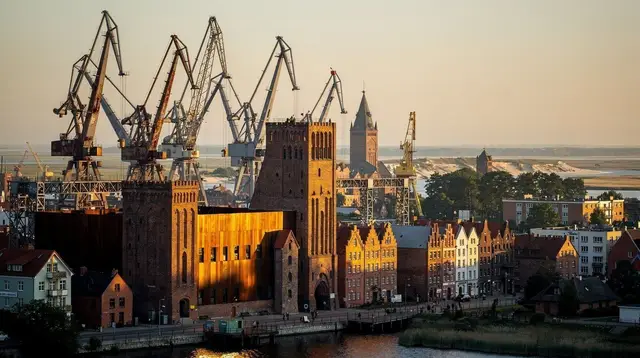
It is worth being direct about the limits of a shipyard visit, because marketing language sometimes implies more than is actually accessible. Beyond Gate No. 2, the monument and the Solidarity Centre building itself, the wider shipyard remains an active industrial and commercial zone, with working cranes, fenced yards and areas with no public access. This is not a preserved heritage site laid out for walking tours in the way a decommissioned yard elsewhere in Europe might be.
Visitors expecting to wander freely among dry docks and shipbuilding halls will be disappointed; what is on offer instead is a tightly focused memorial and museum district at the historic entrance, plus marked paths and viewpoints around it. A handful of newer developments — cafes, galleries and event spaces built into former shipyard buildings nearby — have opened in recent years and are worth combining with a Solidarity Centre visit if time allows, but they are adjacent additions, not part of the historic strike site itself.
Table: sites at a glance
| Site | What it is | Typical time | Ticket needed |
|---|---|---|---|
| Gate No. 2 | Historic strike entrance, 1980 | 15-20 minutes | No |
| Monument to the Fallen Shipyard Workers | 1980 memorial to 1970 victims | 10-15 minutes | No |
| European Solidarity Centre | Permanent exhibition, corten-steel building, opened 2014 | 2-3 hours | Yes |
| Surrounding shipyard grounds | Partly active industrial site | Limited access | Varies by path |
Getting there and pairing it with the rest of Gdańsk
The shipyard and Solidarity Centre sit north of the Old Town, close enough to the Motlawa riverfront to combine with a morning around Dlugi Targ and a walk to the crane gate. It is an easy, mostly flat 20 to 25 minute walk from the Old Town, or a short tram or bus ride if the weather turns. Many visitors treat it as a half-day on its own — Gate No. 2, the monument and the full Solidarity Centre exhibition together comfortably fill three to four hours, especially for anyone who wants to read the timeline properly rather than move quickly through it.
A guided option is worth considering here more than at some other Gdańsk sites, simply because the density of names, dates and organisations — strike committees, censorship boards, underground publications — benefits from someone narrating the thread. The Solidarity-focused walking tour of the shipyard district covers Gate No. 2, the monument and the surrounding streets with a guide who can untangle the chronology as you walk.
For visitors who want the shipyard folded into a broader sweep of Gdańsk’s twentieth-century history, the private tour combining communist-era Gdańsk with the Solidarity Centre museum pairs the shipyard with other Cold War-era sites around the city, and the standard European Solidarity Centre tour is a simpler option focused purely on the museum for visitors short on time.
A different story from Westerplatte
It is common for itineraries to bundle the shipyard together with Westerplatte, Gdańsk’s other major twentieth-century history site, but the two belong to different decades and different chapters entirely. Westerplatte is where the Second World War began, on 1 September 1939, when Polish defenders held out against a German bombardment for a week. The shipyard’s story starts four decades later, in a Poland already reshaped by that war and by more than three decades of communist rule, and it is about labour, censorship and the slow unravelling of one-party government rather than the outbreak of a continental war.
Visiting both in one day is possible — they are a reasonable public-transport ride apart — but treat them as two distinct histories rather than one continuous narrative, and budget separate, unhurried time for each. A dedicated overview of that earlier chapter is covered in the Westerplatte guide, while the broader sweep of Gdańsk’s wartime sites is laid out in the guide to Gdańsk’s WWII history.
Visiting with the right context
For visitors who want to go deeper into the individuals involved, the guide to Lech Wałęsa and Solidarity’s history covers the movement’s leadership and its aftermath, including Wałęsa’s later presidency and the union’s evolving role after 1989. Those short on time but keen to see the essentials can pair a shipyard morning with an afternoon in the Old Town, or fold the visit into a one-day Gdańsk itinerary that also takes in the Motława waterfront and St Mary’s Basilica.
Visitors building a longer stay may prefer the two-day Gdańsk and Sopot itinerary, which spreads the history-heavy sites across a less rushed schedule. And for a fuller list of Gdańsk’s twentieth-century sites beyond the shipyard, the overview of the European Solidarity Centre is the natural next stop, alongside the Museum of the Second World War a short walk further into the Old Town.
Why the site matters beyond Poland
Solidarity’s significance runs well past Gdańsk’s city limits. The union that formed at Gate No. 2 in August 1980 became the first independent trade union recognised in the Soviet bloc, forcing a negotiated agreement — the Gdańsk Agreements — from a government that had never before conceded such ground to organised labour. Its suppression under martial law from December 1981, and its survival underground through the rest of the decade, fed directly into the political changes that culminated in the 1989 elections and, within two years, the end of communist rule across the region.
The European Solidarity Centre tells this as a story with a long, uncertain middle, not a straight line from strike to freedom, and that honesty is part of what makes a visit worthwhile: the shipyard is not a monument to an easy victory but to a slow, costly and genuinely uncertain struggle whose outcome was not obvious to the people living through it.
Frequently asked questions about the Gdańsk Shipyard and Solidarity
Did the shipyard strikes happen in 1989?
No. The strikes that founded Solidarity happened in August 1980. 1989 is the year of Poland’s semi-free elections, a separate and later milestone in the same story, roughly nine years afterward.
Can you walk freely around the Gdańsk Shipyard?
Only along marked public paths near Gate No. 2 and the monument. The shipyard is still a working industrial site, not a preserved museum ground, so most of it is closed to visitors outside the European Solidarity Centre and its immediate surroundings.
How long does the European Solidarity Centre take to visit?
Budget two to three hours for the permanent exhibition. It is dense with original documents, recordings and reconstructed interiors, not a quick walk-through museum.
What is Gate No. 2?
It is the shipyard entrance where the August 1980 strikes began and where workers posted their 21 demands. It remains the symbolic heart of the site, standing beside the European Solidarity Centre building today.
Is this the same site as Westerplatte?
No. Westerplatte is where the Second World War began on 1 September 1939, a separate site and a separate story about 1939, not 1980. The shipyard and Solidarity Centre sit closer to the Old Town, on the Motława side of Gdańsk.
Do you need a ticket for the European Solidarity Centre?
Yes, tickets are sold on site and online. Pre-booking is sensible on weekends and in summer but is rarely essential midweek outside peak season.
Is the shipyard still operating as a shipyard?
Parts of the site remain industrial, but it is not the full, busy yard of the Cold War era. It is best approached as a memorial and museum district built around a working perimeter, not as an active-industry tour.
Solidarity tours
Verified deep-linked GetYourGuide tours. Book through these links and we earn a small commission at no cost to you.
GetYourGuide does not provide a product photo for this activity — the image shows the meeting point, photographed by us.