Where Westerplatte sits, and what it is
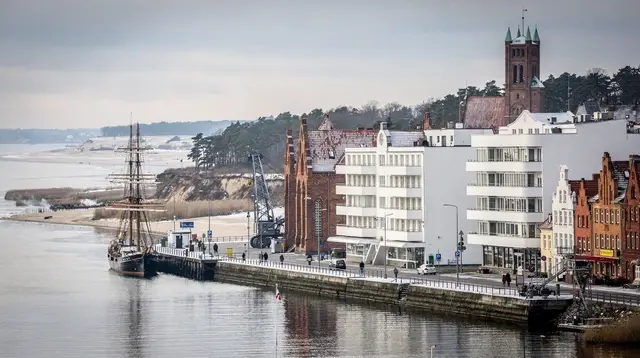
Westerplatte is a narrow peninsula at the point where the Dead Vistula meets the Baltic, marking the entrance to the port of Gdansk. It is part of the city, not a separate town, and lies a short distance downstream from the Gdańsk Shipyard and the Main Town, on the opposite bank of the harbour channel from the newer port docks.
The peninsula is low, flat and wooded in places, backed by the open Baltic on one side and the busy shipping channel on the other - geography that mattered enormously on the morning of 1 September 1939, when the German battleship Schleswig-Holstein, moored in the harbour under the pretext of a courtesy visit, opened fire on the small Polish garrison stationed here. That bombardment is generally reckoned the opening act of the Second World War in Europe, and it is the single reason Westerplatte exists on any visitor’s map.
It is important to say plainly what Westerplatte is not. It is not a beach outing, not a themed attraction, and not a place built for entertainment. There is no reconstructed battle, no costumed guide, no gift shop selling novelty souvenirs. What stands here is a memorial landscape: the broken remains of the garrison’s barracks and guardhouses, a scatter of concrete casemates half-reclaimed by grass and trees, and a single large monument on a low rise overlooking the water.
Read more on why the site was deliberately left this way, largely untouched rather than rebuilt, in our piece on Westerplatte staying empty. A visit here is closer in tone to a war cemetery than to a city sight, and the page that follows is written with that in mind - factual, not promotional.
Getting there from central Gdańsk
Westerplatte sits close enough to the Main Town to be a straightforward half-day addition to a Gdańsk itinerary, and there are two realistic ways to reach it.
The bus is the reliable, year-round option: a direct city bus runs from the Main Town area to Westerplatte in comfortably under 30 minutes, and it keeps running through the winter months when the boats stop. For anyone checking how to get around the Tricity by public transport, this is the simplest leg of the trip - no transfers, no timetable gymnastics.
The water tram along the Motława is the scenic route, gliding past the crane gate, the shipyard gantries and out through the harbour mouth before reaching Westerplatte’s jetty. It is a pleasant ride in its own right, but it is slow - figure 45 to 75 minutes each way depending on the operator and the number of stops - and it runs mainly from April to October. In winter it is often suspended entirely, which makes the bus the only dependable option for a cold-season visit. Neither route requires booking ahead; tickets for the boat are bought at the jetty or on board, and city bus tickets follow the standard Tricity fare system.
Travellers arriving from further afield sometimes fold Westerplatte into the trip in from the airport - if that is the plan, see the practical notes on getting from Gdańsk airport to the city centre first, since Westerplatte is a further leg beyond the Old Town, not on the way in.
| Route | Duration | Runs |
|---|---|---|
| City bus | Under 30 min | Year-round |
| Water tram (Motława) | 45-75 min each way | Roughly April-October |
| Guided tour with transport | Half-day slot | Seasonal, check availability |
What is actually on the ground
Westerplatte is an open-air site with no single entrance gate and no admission fee. Visitors walk a network of paths through what remains of the garrison grounds, and three elements structure almost every visit.
The ruins of the garrison and its guardhouses. The Polish military transit depot stationed here in 1939 was small - a few hundred soldiers defending scattered barracks, sentry posts and ammunition stores against a much larger force. What survives today are broken walls, foundations and the shells of several buildings, left in the state the fighting left them rather than restored to look intact. Information panels along the path identify individual buildings and outline the sequence of the September 1939 defence, which held out for seven days against artillery, air attack and infantry assault before surrendering.
The concrete casemates. Several low, heavily built bunkers and ammunition casemates are still visible, their concrete pocked and cracked from the 1939 bombardment. These are among the most tangible traces of the fighting - unlike the barracks ruins, which register mainly as building outlines, the casemates still read clearly as military structures built to take a hit, which several of them visibly did.
The monument. Dominating the highest point of the peninsula is a large memorial obelisk, built in the 1960s and visible from some distance across the harbour and the sea. It stands as the formal commemorative centrepiece of the site, and most visitors end their walk here, looking back across the water toward the shipyard cranes and the Gdańsk skyline. Beside it, a preserved section of coastal defence and a small collection of period artillery pieces round out the outdoor display.
Beyond these three elements, Westerplatte is largely open ground: paths through trees and scrub, views out to the Baltic on one side and the shipping channel on the other, and benches rather than facilities. There is no large visitor centre on site comparable to the Museum of the Second World War in the city - Westerplatte is the location where events happened, while the detailed exhibition and interpretation live at that museum and at the European Solidarity Centre, both back in central Gdańsk.
How long a visit actually takes
Westerplatte does not reward a rushed stop. Walking the main path from the landing point past the ruins and casemates up to the monument and back takes roughly 45 minutes to an hour at an unhurried pace, and closer to 90 minutes for visitors who stop to read every panel. Add the return journey and a half-day slot - two to three hours door to door from central Gdańsk - is the realistic figure, longer if the water tram is the chosen route in both directions.
There is little seasonal variation in what is open, since the site is entirely outdoors and unticketed, but winter shortens practical visiting hours in the sense that daylight runs out earlier and the boat option disappears. A grey, windy off-season afternoon is, if anything, a fitting register for the place - Westerplatte is not diminished by bad weather the way a beach or a garden would be.
A memorial site, not an outing
It is worth being direct about tone. Westerplatte draws visitors who are building a serious itinerary around Gdańsk’s wartime and Solidarity-era history
- see our guide to Gdańsk’s WWII history sites and the wider Tricity WWII sites tour for how it fits alongside the shipyard and the Solidarity story. It does not suit anyone looking for a lively afternoon out, and it should not be marketed or approached that way. There are no cafes or shops on the peninsula itself, no interactive displays, and nothing designed to entertain.
What there is, is a quiet place to stand where a war started, read what happened, and look at what is left. Visitors planning a broader Gdańsk memory trail often pair Westerplatte with the shipyard’s Gate No. 2 and the Solidarity story - see Gate Two and the 1980 strikes for that thread - and some extend the theme further afield to Stutthof, covered separately in our notes on visiting Stutthof respectfully and in why Stutthof was never a Polish camp.
For visitors who prefer not to arrange the bus or boat themselves, a private city tour of Gdańsk commonly includes Westerplatte alongside the Old Town and shipyard sites, with a guide able to walk through the sequence of events on the ground rather than relying on the panel text alone. Those focused specifically on the historic core before or after the trip out to the peninsula may prefer an Old Town walking tour to anchor the rest of the day.
Travellers extending their WWII-themed day further toward the former Stutthof camp sometimes combine the two sites through a guided Stutthof museum tour with transfer, though that excursion runs separately from a Westerplatte visit and needs its own half-day or more.
Practical notes
Westerplatte has no admission charge and no fixed opening gate, so it can in principle be visited at any hour, but a daytime visit is strongly preferable: the paths are unlit, the site is exposed to the sea wind, and the information panels are only useful in daylight. There is minimal shelter on the peninsula, so weather-appropriate clothing matters more here than at most Gdańsk sights - this is an open coastal site with no roof to duck under if a Baltic shower rolls in.
Facilities are limited to basic signage and a small number of benches; bring water and anything else needed, since there is nowhere to buy refreshments on site. Wheelchair and pushchair users can manage the main paved paths to the monument reasonably well, though some of the ruin areas involve uneven ground. Photography is unrestricted and expected, but visitors are asked - as at any memorial site - to keep a respectful tone rather than treat the ruins as a backdrop.
For context on how many days to allot Westerplatte within a wider trip, see how many days in Gdansk; most itineraries treat it as a half-day addition rather than a full day on its own, easily paired with a morning or afternoon in the Old Town or at the Gdańsk Shipyard and the Solidarity sites nearby.
Westerplatte: frequently asked questions
Is there an entry fee for Westerplatte?
No. Westerplatte is an open-air memorial site with free entry, no ticket booth and no fixed opening hours. Only optional transport - the bus fare or the water tram ticket - costs money.
How do I get to Westerplatte from central Gdańsk?
By city bus, which takes under 30 minutes and runs year-round, or by water tram along the Motława, which takes roughly 45 to 75 minutes each way and typically operates from April to October only.
How much time should I plan for a visit?
Most visitors need one to two hours on site, plus travel time in each direction. Counting transport, a half-day slot of two to three hours from central Gdańsk is realistic.
What can I actually see at Westerplatte?
The ruins of the Polish garrison’s barracks and guardhouses, several concrete defensive casemates from 1939, and a large memorial monument on high ground overlooking the harbour and the Baltic. There is no reconstructed battle scene and no large indoor exhibition on site.
Is Westerplatte suitable for children?
It can be visited with children as an educational stop, but it is a solemn memorial site rather than an activity-oriented attraction, and it works best framed to kids as a history lesson rather than a fun outing.
Is Westerplatte the same as the Museum of the Second World War?
No. Westerplatte is the location where the war began in 1939, with outdoor ruins and a monument. The Museum of the Second World War is a separate, large indoor museum back in central Gdańsk with detailed exhibitions covering the wider conflict.
Does the boat to Westerplatte run in winter?
Rarely. The seasonal water tram along the Motława generally operates from April to October. Outside that window, the city bus is the dependable way to reach the site.
Can Westerplatte be combined with other Gdańsk sights in one day?
Yes. It pairs naturally with the shipyard, the Solidarity sites and the Old Town, and many visitors treat it as one stop within a broader half-day or full-day itinerary rather than a standalone trip.