Getting your bearings in the Main Town
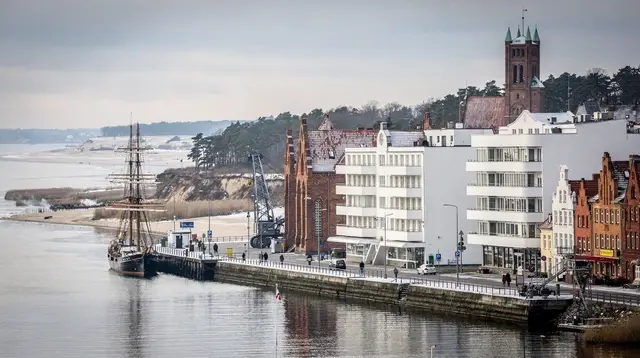
Gdańsk sits at sea level where the Motława river meets the Vistula’s Dead Vistula branch, at the head of the Bay of Gdańsk. With around 470,000-490,000 inhabitants, it is the historic capital of Pomerania and the anchor city of the Tricity (Trojmiasto), the conurbation it forms with Sopot and Gdynia along roughly 30km of coastline. The three cities are stitched together by the SKM commuter train, so most visitors base themselves in Gdańsk and use the railway rather than a car.
Everything a first visit needs starts in the Główne Miasto, the Main Town, and specifically on Długi Targ, the long market square lined with the Neptune Fountain and the Artus Court (Dwor Artusa), a merchants’ meeting hall whose facade has anchored the square since the Hanseatic era. From here the streets fan out toward the river and toward St Mary’s Basilica, and almost everything worth seeing on a first day is within a 20-minute walk.
The Main Town is a reconstruction, not a survival
It matters to say this plainly rather than let a pretty photo imply otherwise: the gabled townhouses along Długi Targ and the surrounding streets look medieval, but the Main Town was reduced to roughly 90% rubble in 1945, and almost everything standing today is careful postwar reconstruction, not untouched original fabric.
Planners worked from old prints, paintings and surviving fragments to rebuild the skyline house by house through the 1950s-70s, which is itself a remarkable achievement, but it is reconstruction, not preservation. A walk down Długi Targ on a guided route makes far more sense once that distinction is clear, because a guide will point out which fragments are genuinely old (some cellars, some portals, some fittings salvaged from the ruins) against the rebuilt shells around them.
The Motława riverfront and the Żuraw
The river frontage is the second anchor of the Main Town. The wooden Żuraw (crane gate), a squat twin-towered structure jutting over the water, is the best-known silhouette in the city and dates in its current rebuilt form from the medieval Hanseatic period, when it hoisted cargo and ships’ masts. It looks like a simple photo stop but is in fact a working branch of the National Maritime Museum: the hoisting mechanism and maritime exhibits inside need a ticket, and pairing the visit with the museum’s other branches, including the SS Soldek ship moored a short walk along the bank, is the efficient way to see it. An hour covers it comfortably.
The riverfront promenade itself is free and unticketed, lined with amber shops, cafes and the boarding points for river cruises. A short catamaran or boat trip on the Motlawa is a relaxed way to see the crane, the old granaries on Olowianka island, and the harbour beyond from the water, and boats also run further out toward Westerplatte in the warmer months.
a catamaran cruise along the Motława gives a different angle on the crane and the granary islands than walking the bank does, and most sailings run 45-75 minutes.
St Mary’s Basilica and the climb up the tower
St Mary’s Basilica (Bazylika Mariacka), a few streets back from Długi Targ, is one of the largest brick churches in the world and free to enter as a working parish church. What catches visitors out is the tower: climbing it is a separate ticket from the church entrance, paid at the tower door, and the climb itself is real exercise — roughly 400 steps with no lift, in a narrow stairwell that can bottleneck in summer. The view over the Main Town’s red rooftops is the payoff, but this is not a five-minute detour; budget 45 minutes to an hour including the queue and the climb, and check the noticeboard for hours, since the tower closes earlier than the church and both close around services.
Mariacka street and the amber trade
Mariacka street, running from the basilica down to the river, is Gdańsk’s amber-dealers’ lane, its townhouses fronted by ornamental stone porches (przedproza) that survived or were rebuilt as part of the same postwar effort as the rest of the Main Town. It needs no ticket and no timing, just an understanding of what is actually being sold. Baltic amber is fossilised tree resin, tens of millions of years old, washed up on beaches or dredged from shallow coastal deposits — it is not a mined gemstone or a mineral in the geological sense, whatever a stall’s marketing suggests.
Poland’s coast holds one of the richest concentrations of it anywhere, and Gdańsk has traded it for centuries; reputable pieces come with a certificate, and prices at smaller stalls are usually negotiable. The city’s Amber Museum, housed in the medieval Foregate near the basilica, covers how it forms and how it has been worked, and is worth an hour before or after browsing Mariacka’s shops.
Beyond the Main Town: Shipyard, Westerplatte and Oliwa
Gdańsk’s identity is not only the Main Town. A short walk or tram ride north brings you to Gate No. 2 of the Gdańsk Shipyard, where the 1980 strikes led by Lech Wałęsa began and where the independent trade union Solidarity (Solidarność) was founded — a movement credited with helping bring about the fall of communism in Poland and, over the following decade, across Eastern Europe. The European Solidarity Centre beside the gate is a dense, well-built museum, not a plaque, and genuinely needs two to three hours; the working shipyard around it is viewed from marked paths and the monument to the Fallen Shipyard Workers, not wandered freely.
Further out, Westerplatte is where the Second World War began on 1 September 1939, when the German battleship Schleswig-Holstein opened fire on the small Polish garrison stationed there. It is reached by a scenic water tram along the Motława (roughly 45-75 minutes each way, running mainly April to October) or a city bus in well under 30 minutes year-round; the site itself is an open memorial park, free to enter, with ruined barracks and a hilltop monument, and is honestly a 45-60 minute walk unless a guide is booked. Full details are in the Westerplatte guide.
In the other direction, Oliwa is a green, quieter district built around its cathedral, known above all for its historic pipe organ, still played at recitals held through the season inside a building set in a park rather than any dramatic landscape. Oliwa Park itself, with its zoo and shaded paths, makes an easy half-day out of the centre; see the Oliwa Park, Zoo and Cathedral guide for recital times, which thin out sharply off-season. The residential district of Wrzeszcz, associated with writer Gunter Grass, sits between the two and rewards a dedicated walking route for anyone with an extra afternoon.
Getting around and getting there
Gdańsk’s own centre is compact and walkable, but reaching the wider Tricity and the coast runs on the SKM, the frequent commuter train that hugs the shoreline from Gdańsk through Sopot to Gdynia and beyond, departing every 10-20 minutes at peak times. Tickets are sold by time validity (20, 40, 60, 90 minutes, or a 24-hour pass) rather than by number of stops, which trips up first-time riders who look for a destination-based fare. Full logistics, including how SKM differs from the newer PKM line further south, are covered in Getting Around the Tricity.
Gdańsk Lech Wałęsa Airport (GDN) sits about 12km northwest of the Old Town; the SKM reaches Gdańsk Glowny station in roughly 25-35 minutes, while a taxi or transfer takes about 20-30 minutes depending on traffic — see the airport transfer guide for both. Longer distance, PKP Intercity trains link Gdańsk Glowny with Warsaw in as little as 2h30 on the fastest Pendolino services, and a hire car is genuinely unnecessary for a Gdansk-based trip: most of what the region has to offer, from the coast to Malbork, is reachable by train and bus.
| Trip from Gdańsk centre | Typical time | How |
|---|---|---|
| Airport (GDN) | 20-35 min | SKM train or taxi |
| Sopot | ~15-20 min | SKM train |
| Gdynia | ~30-35 min | SKM train |
| Malbork Castle | 30-40 min | Regional or PKP Intercity train |
| Westerplatte | 25-75 min | Bus (fast) or water tram (scenic) |
Where the Main Town fits in a longer visit
Three to four days is the honest minimum to see Gdańsk’s centre properly and still have a day spare for a coastal or castle excursion. A single one-day itinerary can cover Długi Targ, the Motława and St Mary’s tower, but it has to skip the Shipyard, Westerplatte and Oliwa.
A two-day Gdańsk and Sopot plan or the fuller three-day Tricity itinerary gives the Main Town room to breathe alongside a beach afternoon in Sopot. Anyone building a first visit from scratch should also check how many days in Gdansk before booking accommodation, since the district you stay in changes how much of this list is walkable versus a tram ride.
For orientation without committing to a self-guided route on day one, a guided walking tour of the Old Town covers Długi Targ, the Motława and the basilica exterior with the reconstruction history explained on the spot, which is harder to piece together alone from plaques. Travellers short on time or interested in a private pace often prefer a private city tour of Gdańsk that can be weighted toward the Shipyard and Solidarity sites instead.
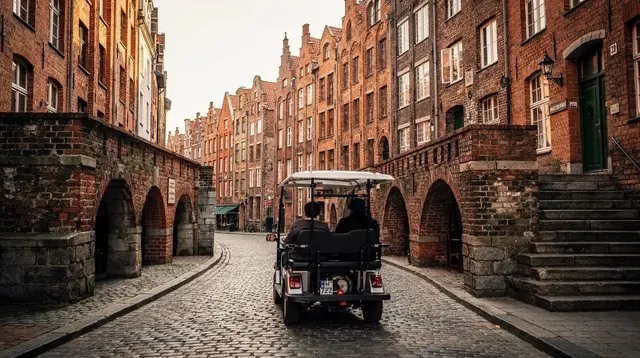
For a low-effort overview of the wider centre beyond walking range, an electric golf cart tour of the city covers more ground in less time, useful for visitors with limited mobility or a tight schedule. Those planning the Stutthof memorial as a day trip should note a small-group tour to Stutthof handles the transport logistics that public transport makes awkward on a single afternoon.
Money and practicalities matter here too: Poland uses the zloty (PLN), not the euro, and contactless card payments are near-universal in the Main Town’s shops and cafes, though smaller amber stalls on Mariacka sometimes prefer cash for negotiated prices. See how to pay in Poland for specifics, and Gdańsk safety and tourist scams for the handful of things worth knowing before wandering the riverfront after dark.
Gdańsk’s Old Town and amber trade: frequently asked questions
Is Gdańsk’s Old Town actually medieval?
No. The Main Town’s gabled facades look medieval but the district was reduced to roughly 90% rubble in 1945 during the Second World War. What stands today along Długi Targ and the surrounding streets is careful postwar reconstruction completed mainly through the 1950s-70s, not original medieval fabric, though some cellars, portals and salvaged fittings are genuinely old.
How many steps is St Mary’s Basilica tower?
The climb is roughly 400 steps with no lift, in a narrow stairwell. It is a separate ticket from the church entrance, paid at the tower door, and the tower keeps shorter hours than the church itself, especially off-season.
Is amber a gemstone mined in Poland?
No. Baltic amber is fossilised tree resin, millions of years old, collected from beaches or dredged from shallow coastal deposits rather than mined. Poland’s Baltic coast holds one of the world’s richest concentrations of it, and Mariacka street is the traditional centre of the amber trade in Gdańsk.
What is the Żuraw and do you need a ticket?
The Żuraw is the medieval wooden crane gate on the Motława riverfront, Gdańsk’s best-known landmark. It is now a branch of the National Maritime Museum, and while the exterior is visible for free, entering to see the hoisting mechanism and maritime exhibits requires a ticket.
What happened at the Gdańsk Shipyard?
The independent trade union Solidarity (Solidarność), led by Lech Wałęsa, was founded at the shipyard’s Gate No. 2 during the 1980 strikes. It is widely credited with helping trigger the fall of communism in Poland and, subsequently, across Eastern Europe. The European Solidarity Centre beside the gate documents the movement in depth.
How long do you need in Gdańsk?
Three to four days covers the Main Town, the Shipyard and Solidarity sites, Westerplatte and Oliwa at an unhurried pace, with a day spare for a coastal trip or Malbork Castle. A single day is enough only for the Main Town’s core sights around Długi Targ and the Motława.
Is Gdańsk the same as the Tricity?
No. Gdańsk is one city of around 470,000-490,000 people; the Tricity (Trojmiasto) is the wider conurbation of Gdańsk, Sopot and Gdynia stretched along the coast, connected by the SKM commuter train.
Do you need a car to see Gdańsk and the coast around it?
No. The Main Town is entirely walkable, the SKM train covers the Tricity efficiently, and Malbork, the coast and most day trips are reachable by train or organised transfer rather than requiring a hire car.