One Day in Gdańsk: The Essential Old Town Itinerary
Why this itinerary only covers the Main Town
A single day in Gdansk is enough time to see the historic core properly, but it is not enough time to see the core, the shipyard, a WWII museum and Sopot in the same afternoon - and a lot of itineraries online promise exactly that. This plan deliberately refuses to stack all of it in. It sticks to the Main Town (Główne Miasto), the compact reconstructed district around Długi Targ and the Motława river, and it offers one - not two - afternoon options beyond it: the Gdańsk Shipyard and European Solidarity Centre or the Museum of the Second World War.
Pick one. Both are excellent, both need two to three unhurried hours, and trying to do both after a morning of walking is how a good day turns into a rushed one. Sopot and Gdynia are not on this itinerary at all: they sit on a separate SKM train line and belong on a second day, covered in the Gdańsk and Sopot in two days plan or the fuller Tricity in three days itinerary. For context on why one day is a compressed but workable option, see how many days you actually need in Gdansk.
One more thing worth knowing before you start walking: the gabled facades lining Długi Targ and the Motława look centuries old, and stylistically they are, but the Old Town was almost entirely destroyed in 1945 and rebuilt afterwards. Walking through it is walking through careful postwar reconstruction, not untouched medieval fabric - a fact covered in more depth in why Gdańsk’s Old Town is reconstructed, not original. It does not make the walk less worthwhile; it just changes what you are actually looking at.
Day 1: Gdańsk Old Town, then one afternoon choice
Morning: Długi Targ, the Artus Court and the river
Start on Długi Targ (Long Market), the wide pedestrian square that is the visual heart of the Main Town. The Neptune Fountain, a bronze statue of the sea god that has stood here since the early 17th century, marks the square’s centre and is the obvious first photo stop. Behind it stands the Artus Court (Dwor Artusa), a former merchants’ meeting hall whose ornate facade and interior reflect Gdańsk’s Hanseatic-era wealth; a look inside, if it is open, gives a sense of how the city’s medieval trading elite actually lived. Walking this stretch at an easy pace, reading the plaques rather than racing through, takes a good 45 minutes to an hour.
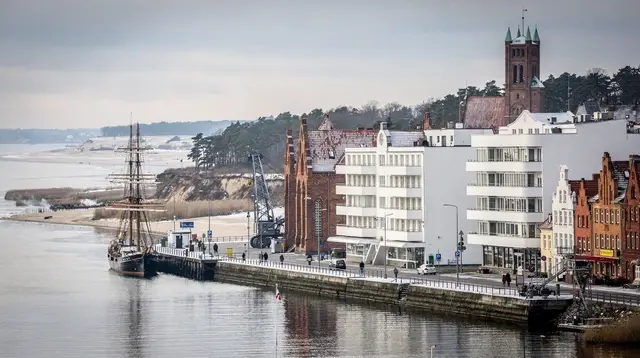
From Długi Targ, walk east through the Green Gate to the Motława riverfront. This is the working waterfront of the old city, lined with cafes and boat operators, and it is where the medieval Żuraw crane comes into view - a striking timber-and-brick structure that looks like a photo stop but is actually a functioning branch of the National Maritime Museum, with the crane mechanism and maritime exhibits inside needing a separate ticket. Budget an hour here if you go in, less if you are only viewing it from outside.
Boat operators along this stretch run short Motława river cruises past the crane and out toward the harbour, a relaxed way to see the waterfront from the water rather than the quay - covered in more detail in the guide to Motława boat tours from Gdansk. If a narrated overview of the whole Old Town appeals more than self-navigating with a map, a guided walk covers this same ground with context on what you are looking at:
a guided Old Town walking tourthreads through Długi Targ, the Green Gate and the Motława waterfront in around two hours, which fits neatly into this morning slot without eating into the afternoon choice ahead. Travelers who would rather set their own pace but still want a knowledgeable guide can look at a private city tour of Gdańsk instead, tailored to what you want to linger on.
Midday: St Mary’s Basilica and the tower decision
A short walk back from the riverfront brings you to St Mary’s Basilica (Bazylika Mariacka), one of the largest brick churches in the world and free to enter as a working place of worship. Inside, allow 20-30 minutes for the nave, the astronomical clock and the memorial chapels.
The tower is a separate decision, and it deserves an honest warning: the climb is around 400 steps with no lift, a narrow, warm, physically real climb rather than a quick photo errand - the full story is in St Mary’s tower and its four hundred steps. It is genuinely worth it for the panoramic view over the red rooftops of the Main Town, but only if you are reasonably fit and have 45 minutes to an hour to spare, including the queue. If knees or heat make that climb unappealing, skip it without guilt - the view from ground level, looking up at the tower from Mariacka street, is a fine consolation.
Lunch fits naturally around here: the streets just off Długi Targ and toward Mariacka have a good spread of milk bars and sit-down restaurants for a Polish lunch without needing to plan a detour.
Early afternoon: Mariacka street and amber
From St Mary’s, walk down Mariacka street, the cobbled lane running to the river, lined with elaborate stone porches and dozens of amber shops. It is worth knowing what you are actually looking at here: amber is fossilised tree resin, gathered from the Baltic seabed and shoreline over millennia, not a mined mineral or gemstone in the geological sense - a distinction the guide to spotting real amber explains alongside how to avoid plastic imitations sold to tourists.
Reputable dealers sell pieces with a certificate; prices at the smaller stalls are often negotiable. If the material itself is interesting rather than just the shopping, the Amber Museum, housed in the medieval Foregate near the tower, covers its formation and centuries of craftsmanship and is well matched to the hour after browsing Mariacka’s shop windows.
This whole stretch - basilica, tower decision, Mariacka, and optionally the museum - comfortably fills an hour and a half to two hours, which is why the plan does not try to squeeze in more before the afternoon choice.
Afternoon: choose one, not both
This is the point in the day where the itinerary asks you to commit to one direction rather than trying to cover everything Gdańsk offers. Both options below are a 10-15 minute taxi or tram ride from the Main Town and both need two to three focused hours - which is exactly why only one of them fits into a single day alongside the morning you have just done.
Option A - Gdańsk Shipyard and the European Solidarity Centre. At historic Gate No. 2, the 1980 strikes that founded the Solidarność trade union began - a turning point covered in the story of Gate Two and 1980. The European Solidarity Centre museum next to it is dense with original documents, recordings and reconstructed interiors; the full Solidarity Centre guide has the practical details. This is the right choice for visitors drawn to modern political history and the Cold War’s endgame in Eastern Europe.
Option B - the Museum of the Second World War. One of the largest WWII museums in Europe, a short walk from the Old Town, with an exhibition dense enough that a “quick look” genuinely does not work - the museum guide lays out what to expect and whether timed tickets are worth booking ahead. This is the right choice for visitors more focused on the war’s outbreak and its civilian cost than on the 20th century’s later chapters.
If choosing between the two feels difficult, both the shipyard sites and the WWII museum sit under the wider theme of Gdańsk’s WWII history, and it is entirely reasonable to save the one you skip for a return visit - Gdańsk rewards more than a single day, and stretching this itinerary across two days with Sopot added is the natural next step for anyone who leaves wanting more.
Evening: back to the Main Town
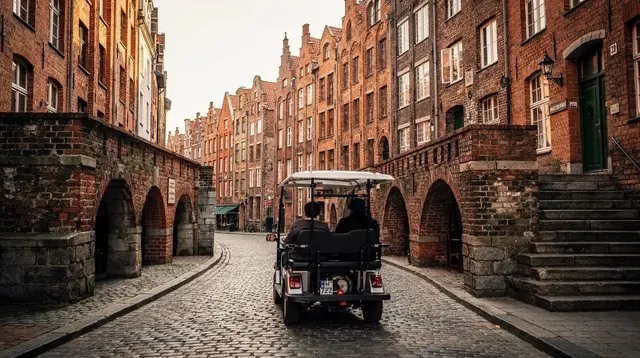
Head back toward Długi Targ or the Motława for dinner - the riverfront restaurants are well placed for watching the evening light on the water, and after a day that has covered several kilometres of walking plus one museum, a relaxed sit-down meal close to where you started makes more sense than another crosstown trip. For a lower-effort way to close the loop back to the centre, a short evening spin on an electric golf cart tour of the Old Town covers the same landmarks from Długi Targ to the Motława at a gentle pace, useful if the legs are tired after the tower climb and the afternoon museum.
Should you take a guided tour or do this yourself?
Either works for a single day in Gdańsk. Self-guided with a map keeps the pace flexible and costs nothing beyond entry tickets; a guided walk adds historical context that plaques alone do not, particularly around the shipyard and the Solidarity movement, where the significance is not always obvious from the buildings themselves. The comparison in guided tour vs DIY day trips in Gdansk weighs the trade-offs in more detail if you are undecided. First-time visitors who want the full orientation before picking a format can also check the first-time in Gdańsk guide.
One day in Gdańsk: frequently asked questions
Is one day enough to see Gdańsk?
One day is enough for the essential Main Town - Długi Targ, the Motława waterfront and St Mary’s Basilica - plus one afternoon addition such as the shipyard and Solidarity sites or the WWII museum. It is not enough to also add Sopot, Gdynia or both afternoon options in the same day without rushing.
Should I climb St Mary’s Basilica tower?
Only if you are reasonably fit and have around an hour to spare including the queue. The climb is roughly 400 steps with no lift, and it is a genuine physical effort rather than a quick photo stop, though the panoramic view over the Old Town’s rooftops rewards the climb.
Is amber on Mariacka street real?
Much of it is, but not all of it, and prices vary widely between shops. Amber is fossilised tree resin rather than a mined stone, and reputable dealers sell it with a certificate of authenticity; smaller stalls are often open to negotiation, while plastic imitations do circulate, so buying from an established shop is the safer route for a serious purchase.
Should I visit the shipyard or the WWII museum on a one-day trip?
Choose one, not both. The Gdańsk Shipyard and European Solidarity Centre focus on the 1980 Solidarity movement and its role in ending communism in Poland; the Museum of the Second World War focuses on the war’s outbreak and civilian experience. Each needs two to three unhurried hours, so combining them with the morning Old Town walk in a single day is not realistic.
Can I fit Sopot into this one-day Gdańsk itinerary?
Not comfortably. Sopot is a separate SKM train ride from central Gdańsk, and adding it on top of the Old Town and an afternoon museum turns an already full day into a rushed one. It fits far better as its own outing on a second day, as in the two-day Gdańsk and Sopot itinerary.
Is the Gdańsk Old Town original medieval architecture?
No. The Old Town was largely destroyed in 1945 and rebuilt afterward, so the gabled facades along Długi Targ and the Motława are careful postwar reconstruction rather than untouched medieval fabric, even though they follow the historic style closely.
Do I need to book tickets in advance for a one-day Gdańsk visit?
Not usually for the Old Town sights themselves - St Mary’s Basilica, Dlugi Targ and the Motława waterfront need no booking. The Museum of the Second World War benefits from booking ahead on weekends and school holidays, and the European Solidarity Centre is sensible to pre-book on weekends, though neither is strictly essential midweek.
What is the best way to get around during a one-day Gdańsk visit?
Walking. The Main Town is compact enough to cover entirely on foot, and the optional afternoon sites (the shipyard or the WWII museum) are a short taxi, tram or bus ride away rather than requiring a car - useful to know alongside the wider guide to getting around the Tricity by SKM, tram and bus.
tours.1 days
Verified deep-linked GetYourGuide tours. Book through these links and we earn a small commission at no cost to you.
GetYourGuide does not provide a product photo for this activity — the image shows the meeting point, photographed by us.