How Many Days Do You Need in Gdańsk?
How many days should I spend in Gdańsk?
Two full days cover the Old Town, the Motława waterfront and Oliwa at a reasonable pace. Add a third day for Sopot and Gdynia to see the whole Tricity, and a fourth or fifth if you want to add Malbork, and a further day again for something further afield like Toruń or the Kashubian lakes.
There is no single right answer, only trade-offs
Ask how many days Gdańsk needs and you’ll find confident answers everywhere — “one day is plenty,” “two days and you’ve seen it all.” Neither is quite true, and neither accounts for what you actually want out of the trip.
The honest answer depends on three separate decisions: how much of the Old Town and its history you want to absorb rather than skim, whether you want the whole Tricity — Gdańsk, Sopot and Gdynia — or just the city itself, and whether you plan to add a day trip such as Malbork or something further afield like Torun. This page walks through each layer so you can build a day count that fits your actual trip, rather than borrowing someone else’s itinerary and hoping it fits.
Layer one: the Gdańsk Old Town alone
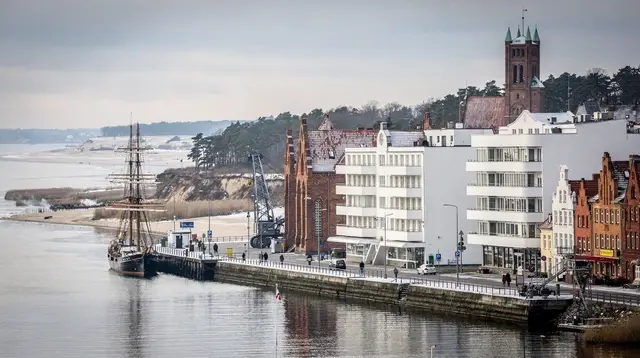
If your trip is a stopover — a night before a flight, a single free day tacked onto business travel — the Old Town can be seen at a rush in a day. Dlugi Targ, Mariacka street, the Motława riverfront with the Żuraw crane, and a look inside St Mary’s Basilica are all walkable within a compact core, and none of them individually demands hours. But “seen” and “understood” are different things here. Gdańsk’s gabled streets look medieval, and the city’s deeper story — its centuries as a Hanseatic trading power, its interwar status as the semi-autonomous Free City of Danzig, its near-total destruction in 1945 and careful postwar reconstruction — takes time to absorb, not just to photograph.
For a fuller sense of the city, plan on two full days: one for the Old Town and waterfront at an unhurried pace, and a second for the sites the rushed version skips — the Gdańsk Shipyard and the European Solidarity Centre, Oliwa with its cathedral and its historic organ, and the residential district of Wrzeszcz. The first-time visitor’s guide breaks this split down further if you’re deciding what to prioritise on a tight schedule.
Layer two: adding Sopot and Gdynia
Gdańsk is one city; the Tricity is three, strung along roughly 30km of coast and connected by the frequent SKM commuter train. Skipping Sopot and Gdynia on a Gdańsk trip is common, and defensible if your interest is purely historical — but it means missing two genuinely different places. Sopot has Europe’s longest wooden pier and a resort atmosphere that Gdańsk’s Old Town doesn’t offer. Gdynia is almost the opposite of Gdańsk architecturally: a city built up largely in the twentieth century, known for its interwar modernist buildings rather than brick Gothic gables.
Seeing both properly, rather than passing through on the train, adds a third day. It’s tempting to squeeze Sopot and Gdynia into half a day each attached to a Gdansk-focused itinerary, and for a quick look that works — but a half-day in Gdynia means the docked museum ships and the modernist walking route compete for the same few hours, and something gets cut short. If a full Tricity picture matters to you, budget the third day properly rather than splitting it thin. The comparison in Gdańsk vs Sopot vs Gdynia is worth reading before you decide how to split your time between the three.
Layer three: day trips, and why they’re not free
This is where day counts most often go wrong. A day trip to Malbork or Toruń looks like an “extra” on a map — a short hop, easily bolted onto an existing itinerary — but each one is a full day’s commitment once travel time and the site itself are accounted for.
Malbork sits around 50-60km from Gdańsk, roughly 35-40 minutes each way by regional train. That part is genuinely easy. What catches people out is the castle itself: it is the largest brick fortress in the world, and the full route through the High, Middle and Low Castles takes three to four hours if you actually read the rooms rather than march through them. Add the train time on both ends and a Malbork day trip is a full day, not a half-day extra squeezed in after a morning in Gdańsk. The Malbork day trip itinerary and getting to Malbork from Gdansk guides lay out the logistics in detail.
Toruń is a different order of commitment. At roughly 170km from Gdańsk, it is not a casual add-on — the round trip alone takes a meaningful chunk of a day, and Toruń’s own UNESCO-listed old town and Copernicus sites deserve more than a rushed afternoon once you’re there. Treat Toruń as a full day trip in its own right, or better, as an overnight if your schedule allows — not as something you fit in “on the way” to or from somewhere else. The Toruń day trip guide is honest about this trade-off.
Other options sit somewhere in between: the Kashubian Switzerland hill country is about an hour’s drive and works well as a half-day to full-day trip, while somewhere like the Wolf’s Lair near Ketrzyn, at around 250km, is realistically a long day trip or an overnight, not a casual addition to a Gdansk-based schedule. For a fuller rundown of what’s realistic and what isn’t, see best day trips from Gdansk.
Putting the layers together
| Trip shape | Days | What’s included |
|---|---|---|
| Fast stopover | 1 day | Old Town highlights only, at a rush |
| Gdańsk properly | 2 days | Old Town, Motława, shipyard history, Oliwa |
| Full Tricity | 3 days | Gdańsk (2 days) + Sopot and Gdynia |
| Tricity plus one excursion | 4-5 days | Full Tricity + Malbork or a similar half/full-day trip |
| Tricity plus wider Pomerania | 6+ days | Full Tricity + two day trips (for example Malbork and Kashubia, or Toruń as an overnight) |
Treat this table as a starting framework, not a formula.
A traveller with a strong interest in WWII and Cold War history might spend a whole extra day on the shipyard, the European Solidarity Centre and the Museum of the Second World War alone, while someone chasing beaches and boat trips might trade a Malbork day for time on the water instead — a private catamaran cruise between Gdańsk and Sopot covers the coastline at a pace the train never will, and a Motława river cruise is an easy way to see the waterfront from the water on a shorter day.
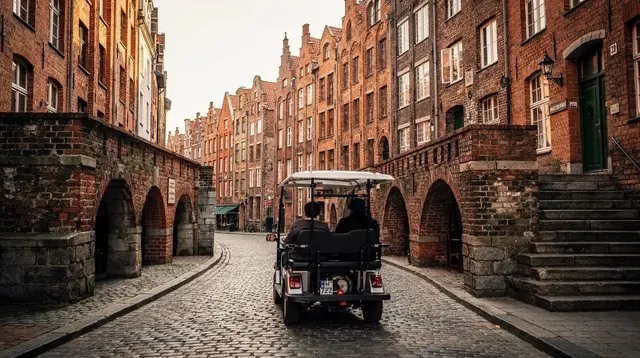
For getting oriented on day one without wasting hours working out the layout, a golf cart city tour of the Old Town or a shipyard and Gradowa Hill golf cart tour covers ground efficiently for visitors on a tighter schedule.
The season changes the arithmetic
Every day count above assumes reasonable daylight and open attractions, which is not a safe assumption year-round on the Baltic. In June and July, daylight runs from before 5am to past 9pm, which stretches a genuinely usable sightseeing day well beyond what the same itinerary offers in December, when the sun sets mid-afternoon. Several coastal attractions — boat services to Westerplatte, the Hel Peninsula ferry, parts of the Słowiński dune access — run on reduced schedules or close outright in winter, which means a day trip that works easily in July may not be possible at all in January, or may need a different route (bus instead of boat, for instance).
If you’re planning a winter visit, plan for Gdańsk’s indoor museums and Old Town rather than building a schedule around the coast, and give yourself more slack per day than a summer itinerary would need. It is not realistic to expect the same program to work regardless of when you go — treat a winter trip as a genuinely different, shorter version of the summer one, not the same itinerary with warmer clothes.
Where to stay changes what’s easy
How many days you need is also shaped by where you base yourself. Staying in Gdańsk’s Old Town puts the historic core and the shipyard sites within walking distance, but adds a short SKM ride for every trip to Sopot or Gdynia. Basing in Sopot flips that trade-off — easy beach access, a slightly longer commute into Gdańsk each day. Neither choice changes the total time you need for a full Tricity visit, but it does change how much of each day goes to transit rather than sightseeing, which matters more on a tight schedule than a generous one. The where to stay in Gdansk guide breaks down the practical differences between basing in each of the three cities.
A framework, not a promise
No single number is honest for every traveller, and any guide claiming otherwise is smoothing over real trade-offs. One day does not comfortably cover Gdańsk and a day trip together — the arithmetic simply doesn’t work once travel time and a proper look at any single site are both accounted for. Toruń does not slot in as an easy extra on a short trip; at roughly 170km away, it needs to be planned as its own day, or skipped this time.
And no itinerary should assume the same pace works in December as in June — the short winter daylight window is a real constraint, not a minor inconvenience. Use the layers above to build your own count: start with how much of Gdańsk itself you want, decide whether the wider Tricity matters to you, and treat any day trip as the full day it actually is rather than an afterthought squeezed into a packed schedule.
Questions about planning how many days to spend in Gdańsk
Is one day enough for Gdańsk?
One day covers the Old Town’s highlights at a rush — Długi Targ, the Motława waterfront and St Mary’s Basilica — but it leaves no room for the shipyard history sites, Oliwa or any day trip. Treat one day as a stopover minimum, not a comfortable visit.
How many days for the whole Tricity — Gdańsk, Sopot and Gdynia?
Three days is the realistic minimum: two for Gdańsk’s Old Town and outer districts, one for Sopot’s pier and Gdynia’s modernist centre, reached easily by the SKM commuter train.
Can I fit Malbork Castle into a short trip?
Yes, but only as a planned half-day to a full day, not a quick extra. The castle is around 50-60km from Gdańsk, and the site itself takes three to four hours to see properly once you are there.
Can I visit Toruń as a day trip from Gdańsk?
It is possible but demanding — Toruń is roughly 170km away, and the round trip plus a proper look at its UNESCO old town realistically needs a full day, or an overnight if you want to see it at a relaxed pace.
Does the season change how many days I need?
Yes. Winter days on the Baltic are short, with the sun setting mid-afternoon, which cuts the usable sightseeing window well below what a June visit offers, and some coastal attractions reduce their hours or close entirely.
What’s the minimum for Gdańsk plus one coastal day trip?
Budget four days: two for Gdańsk itself, one for the Tricity’s coastal towns, and one full day set aside for a single excursion such as Malbork or the Hel Peninsula.
Should I split my time between the Old Town and the beach towns?
Most visitors do, and it works well given how close Sopot and Gdynia sit to Gdańsk on the same rail line — the trade-off is time, not logistics, so build it into your day count rather than assuming it’s free.
Is it worth staying longer than five or six days?
For most travellers, five to six days lets you cover Gdańsk, the full Tricity and two day trips without rushing; beyond that you are into the wider Pomerania region — Kashubia, the Baltic coast further out, or Toruń — which rewards more time but is a different, slower kind of trip.
Trip planning
Verified deep-linked GetYourGuide tours. Book through these links and we earn a small commission at no cost to you.
GetYourGuide does not provide a product photo for this activity — the image shows the meeting point, photographed by us.