Gdańsk vs Sopot vs Gdynia: Where to Spend Your Time
Should I stay in Gdańsk, Sopot or Gdynia?
Gdańsk has the historic Old Town, the museums and the widest choice of accommodation, so most first-time visitors base themselves there. Sopot suits travellers who want a beach and nightlife base a short SKM ride away, and Gdynia suits those drawn to modernist architecture and a quieter, more local feel. None of the three is objectively best; it depends on what you came for.
Three cities, one coastline, no single answer
Ask a dozen visitors whether Gdańsk, Sopot or Gdynia is “the best” and you will get a dozen different answers, because the question itself is the wrong shape. These are three distinct cities with three distinct personalities, strung along the same stretch of Baltic coast and linked by one commuter railway. Gdańsk carries the weight of history — a reconstructed medieval core, a working shipyard that changed Europe, museums that take a real afternoon each. Sopot is a seaside resort built for promenading, sea air and evenings out. Gdynia is something else again: a city that barely existed a century ago, built almost from scratch as Poland’s window on the sea, and shaped by interwar architects rather than medieval guilds.
None of the three is a smaller or lesser version of the others. There is no single hierarchy that fits every traveller, and this page will not pretend otherwise. What it will do is lay out what each city actually offers, how long it honestly takes to get between them, and which profile of visitor tends to be happiest based in each one. For a full introduction to the region that these three cities sit inside, see Gdansk and the wider Tricity coverage; this page is about choosing between them, not describing each from scratch.
The short version
| Gdańsk | Sopot | Gdynia | |
|---|---|---|---|
| Character | Reconstructed medieval Old Town, port history | Seaside resort, spa town, nightlife | Interwar modernist port city |
| Signature sight | Długi Targ and the Motława waterfront | The 511.5m wooden pier | Modernist architecture, museum ships |
| Old town? | Yes, rebuilt after 1945 | No — resort layout, not a medieval core | No — largely 20th-century |
| Best for | History, museums, first-time visitors | Beach time, nightlife, short breaks | Architecture, calm, day visits |
| Travel time from Gdańsk (SKM) | — | About 20 minutes | About 35 minutes |
| Hotel choice | Widest, all budgets | Good, skews resort pricing in summer | Narrower, generally calmer rates |
Treat this table as an orientation point, not a verdict. The right base depends on what pulls you to this coast in the first place.
Gdańsk: history first, a base that works for everyone
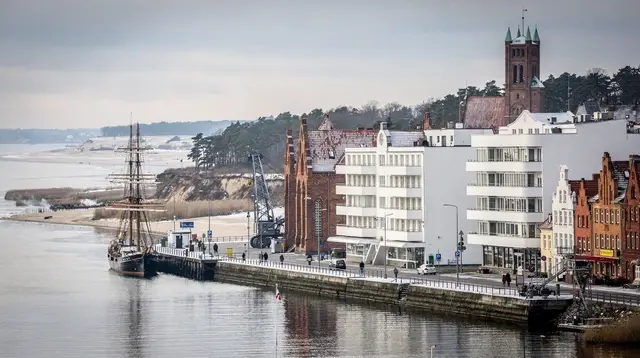
Gdańsk is the obvious starting point for most visitors, and for good reason. Its Old Town, centred on Dlugi Targ and the Motława riverfront, looks medieval but was rebuilt after being reduced to rubble in 1945 — a fact worth knowing before you assume the gabled facades are untouched originals; see why the Old Town isn’t original for the fuller story. From there it is a short walk to St Mary’s Basilica, the crane gate on the river, and Mariacka Street’s amber workshops.
Beyond the Old Town, Gdańsk carries genuine historical weight that neither Sopot nor Gdynia can match: the Gdańsk Shipyard and the European Solidarity Centre, where the Solidarność movement began in 1980, and Westerplatte, where the Second World War opened on 1 September 1939. These sites need real time, not a passing glance — budget two to three hours for the Solidarity Centre alone, covered in more detail in the shipyard and Solidarity tour guide.
Gdańsk also has by far the widest range of accommodation, from Old Town apartments to budget hostels near the station, which is the practical reason most itineraries put a Gdańsk hotel at the centre and treat Sopot and Gdynia as day trips out and back. If you only have two or three nights on this coast, basing in Gdańsk and using the SKM for the rest is the simplest approach — see the two-day Gdańsk and Sopot itinerary or the fuller three-day Tricity itinerary for how that splits across days. For orientation on where within Gdańsk to book, where to stay in Gdansk breaks down the Old Town against the quieter Wrzeszcz district.
A private guide covering all three cities in one outing removes the need to work out train timings yourself; the Gdańsk Tri City private tour taking in Sopot and Gdynia is built for exactly this, with a driver-guide handling the logistics between stops.
Sopot: the resort, and the one everyone photographs
Sopot is unmistakably a different kind of place the moment you step off the train. There is no old town to speak of, no medieval street grid, no shipyard — Sopot’s entire identity is built around the sea, the pier, and a tradition of spa tourism that goes back to the 19th century. Its centrepiece, the wooden Molo, is genuinely the longest wooden pier in Europe at 511.5 metres; it is not, whatever a stray caption might claim, the longest pier in the world — several concrete and steel structures elsewhere beat it on raw length.
What makes it worth the walk is the wood construction and the view back at the resort’s belle-epoque skyline, not a superlative that doesn’t hold up. The Sopot walking tour guide covers the pier alongside the spa house and the crooked house on Monte Cassino Street.
Monte Cassino Street itself is Sopot’s second draw: a pedestrian strip lined with restaurants, bars and shops that turns into the region’s busiest nightlife stretch after dark, especially through the summer months — see the Sopot nightlife guide for what that looks like beyond the pier. Sopot is also, straightforwardly, not a Mediterranean resort; the Baltic rarely tops 18-20°C even in August, so the appeal here is the promenade and the atmosphere as much as swimming — a point covered directly in why Sopot isn’t Saint-Tropez.
Basing yourself in Sopot makes sense if beach time, a resort pace and evenings out matter more to your trip than museum-going, and if you are happy to take the SKM into Gdańsk for the historical sites. It is a poor base, on the other hand, for anyone prioritising the Solidarity history or the WWII sites, which sit in Gdańsk proper and are not a quick stroll from a Sopot hotel.
Gdynia: the city that didn’t exist a century ago
Gdynia is the one visitors most often skip, and the one that most rewards those who don’t. Where Gdańsk’s Old Town is a careful postwar reconstruction of something centuries old, Gdynia has almost no old town at all, because there was barely a city here before the 1920s — it was built up rapidly as newly independent Poland’s main seaport after the First World War, and its architecture reflects that: clean, functional interwar modernism rather than brick Gothic gables. The scale of that transformation, from fishing village to major port in roughly two decades, is the subject of how Gdynia was built from nothing.
The result is a genuinely distinct architectural district, sometimes called Gdynia Modernism, best explored on foot with a map rather than through a single ticketed sight — the Gdynia modernist walking tour and the broader Gdynia Modernism guide both lay out routes through it. Down at the waterfront, two docked museum ships — the tall ship Dar Pomorza and the destroyer Blyskawica — each need a separate ticket and roughly an hour apiece, which is worth knowing before assuming a quick harbourside walk covers them.
Gdynia tends to suit travellers who have already done a first Tricity trip and want something quieter and less obviously touristed, or architecture enthusiasts for whom interwar modernism is a genuine draw rather than a footnote. It is a weaker choice as a first-time base simply because it sits furthest from the Old Town sights that most visitors come for, and because its hotel and restaurant scene, while perfectly good, is narrower than Gdańsk’s.
Getting between them: the SKM, and honest travel times
All three cities sit on the same SKM (Szybka Kolej Miejska) commuter line, which is the single biggest reason a Tricity trip works without a car. But the three legs are not interchangeable, and itineraries that imply an even “20 minutes to anywhere” are quietly wrong. From Gdańsk Glowny, Sopot is around 20 minutes away; Gdynia is further, at around 35 minutes; and Sopot to Gdynia is a shorter hop again since Sopot sits between the other two. Trains run every 10 to 20 minutes at peak times, hugging the coastline with sea glimpses along the way — full detail, including tickets and the tram and bus network that fills in the gaps, is in getting around the Tricity by SKM, tram and bus.
Because the geography is linear — Gdańsk, then Sopot, then Gdynia, roughly north along the coast — a day that strings all three together works best in that order rather than backtracking. A guided six-hour tour covering the best of Gdańsk, Gdynia and Sopot follows broadly this route for visitors who would rather not plan train connections themselves, and travellers who prefer sea rather than rail between stops can look at a private sailing cruise linking Gdańsk, Sopot and Gdynia for a different angle on the same three cities.
Matching the city to the traveller
First-time visitors with two or three days are usually best served basing in Gdańsk and treating Sopot as a half-day out, with Gdynia added only if a third day is available. The Old Town, the shipyard history and the WWII sites are concentrated enough in Gdańsk that spreading a short trip across three separate hotel bookings tends to waste time on logistics rather than sightseeing.
Beach- and nightlife-focused travellers, especially those visiting in July or August, often do better basing in Sopot and taking Gdańsk as a day trip in the other direction. The trade-off is a resort price premium in peak season and a longer walk to the historical sights that pull most visitors to this coast in the first place.
Architecture enthusiasts and repeat visitors are the group most likely to genuinely prefer Gdynia as a base, precisely because its appeal — the modernist streetscape, the harbour, a slower pace — is exactly what gets skipped on a rushed first trip. It rewards travellers who already know they don’t need the Old Town on this visit.
Families tend to split the difference: Sopot’s beach and pier work well for younger children, Gdańsk’s museums suit older kids with a longer attention span for history, and a day in Gdynia gives everyone a change of pace with the docked ships as an easy anchor point. A private road trip format that adapts to a family’s pace, such as the Gdańsk, Sopot and Gdynia road trip with a local guide, avoids the pressure of hitting fixed train times with young children in tow.
None of this is a ranking. It is a map of trade-offs, and the honest answer to “which city should I stay in” is the one this page opened with: it depends what you came for, and the SKM makes it cheap to change your mind partway through the trip.
Gdańsk vs Sopot vs Gdynia: frequently asked questions
Are Gdańsk, Sopot and Gdynia the same place?
No. They are three separate cities that together form the Tricity (Trojmiasto), a conurbation stretched along roughly 30km of Baltic coastline, each with its own centre, history and character.
Which city should I stay in?
Gdańsk if you want the Old Town, museums and the widest hotel choice on your doorstep. Sopot if a beach walk and nightlife matter more than sightseeing. Gdynia if you prefer a calmer, more residential base with easy SKM access to both neighbours.
How long does it take to get between the three cities?
The SKM commuter train links them all. Gdańsk to Sopot is around 20 minutes; Gdańsk to Gdynia is around 35 minutes; Sopot to Gdynia is a shorter hop again. Trains run every 10 to 20 minutes at peak times.
Does Sopot have the longest pier in the world?
No. Sopot’s wooden pier, at 511.5 metres, is widely described as the longest wooden pier in Europe, not the longest pier in the world; several concrete and steel piers elsewhere are longer.
Is Gdynia’s Old Town worth visiting?
Gdynia does not have an old town in the Gdańsk or Toruń sense. It was built up mainly from the 1920s as Poland’s new seaport, so its appeal lies in interwar modernist architecture and a working harbour, not medieval streets.
Can I see all three cities in one day?
You can visit all three in a single long day thanks to the SKM, but it means picking one or two highlights per city rather than seeing everything; two or three days lets you actually settle into each one.
Which city is best for nightlife?
Sopot has the region’s densest concentration of bars and clubs, especially around Monte Cassino Street, and draws the liveliest summer crowd. Gdańsk’s Old Town has a growing bar scene too; Gdynia is quieter after dark.
Which city is more family-friendly?
All three work for families, but Sopot’s beach and pier suit younger children well, Gdańsk’s museums and Old Town suit older kids interested in history, and Gdynia’s ships and open spaces suit families who want fewer crowds.
Compare tours
Verified deep-linked GetYourGuide tours. Book through these links and we earn a small commission at no cost to you.
GetYourGuide does not provide a product photo for this activity — the image shows the meeting point, photographed by us.