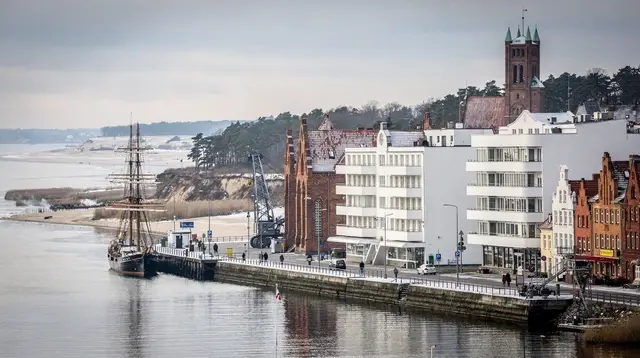
Where to Stay in Gdańsk: Choosing Your Base
Where should I stay in Gdańsk?
It depends on what you want. Główne Miasto (the Old Town) puts every major sight within walking distance; Sopot trades some of that convenience for beach and spa life about 20 minutes away by SKM train; Gdynia is further still, around 35 minutes, and suits modernist-architecture fans more than sightseers; Wrzeszcz is a quieter residential option a short ride from the centre. None of the four is objectively best - each is a different set of compromises.
Choosing a base on the Baltic coast is really a choice between four different holidays wearing the same trip. Stay in the Old Town and you get a walkable, history-dense city break. Stay in Sopot and you get a resort town with a beach, a spa tradition and a livelier summer buzz, a short train ride from the sights. Stay in Gdynia and you get a modernist port city with its own character, further still from the medieval core. Stay in Wrzeszcz and you get a quieter, more residential foothold on the rail network. This guide sets out what each area actually offers and what it costs you in time and atmosphere - not which one wins, because that depends on what kind of trip you are packing for.
The shape of the decision
Before comparing neighbourhoods, it helps to see the geography. Gdańsk, Sopot and Gdynia together form the Tricity (Trojmiasto), a roughly 30km ribbon of urban development along the coast, linked by the SKM commuter rail line. Wrzeszcz is a district of Gdańsk itself, sitting between the Old Town and Oliwa, on the same SKM and PKM lines.
None of these places are far apart by the standards of a big city commute, but “not far” is not the same as “next door” - and the four options are not symmetrical in distance, price or mood. If you want the fuller three-way comparison of Gdańsk, Sopot and Gdynia as destinations in their own right, see Gdańsk vs Sopot vs Gdynia; this page focuses specifically on where to sleep.
Główne Miasto: the Old Town, on foot
Staying in Gdańsk’s Główne Miasto (Main Town) means stepping out of your hotel onto Długi Targ or a side street off Mariacka, with St Mary’s Basilica, the Motława riverfront and the medieval crane Żuraw all within a ten or fifteen-minute walk. This is the highest-convenience option of the four: no train timetable to check, no last-SKM-home to catch, and the greatest concentration of restaurants, amber shops and evening bars anywhere in the region. If your priority is seeing the historic sights without commuting to them, this is the area built for that.
The trade-off is what you are not getting. The Old Town is postwar reconstruction - handsomely done, but rebuilt after 1945 rather than original medieval fabric, a fact worth knowing before you stand in front of a gabled facade assuming it survived the war intact (more on that distinction in Gdańsk: Reconstructed, Not Original).
It is also the busiest and often priciest area in the June-to-September high season, and it has no beach - for that, you are looking at Sopot or Gdańsk’s own Sobieszewo Island, both a deliberate excursion from here. Nightlife is dense and central, which is a plus for some travellers and a reason to look elsewhere for others; see Best Bars in Gdańsk Old Town and Gdańsk Pub Crawl Guide for a sense of what that means in practice.
A base here suits first-time visitors, short city breaks, and anyone prioritising the WWII and Solidarity history sites, the Amber Museum and the Motława waterfront over a beach. For a walking-focused first day, Gdańsk Old Town Walking Tour is a natural companion, and One Day in Gdansk shows how much of the centre a single day on foot can cover.
Sopot: beach town, one train ride out
Sopot is where the Tricity goes to relax. It is home to Europe’s longest wooden pier, a genuine spa and resort tradition, and a beach that the Old Town simply does not have. The SKM ride from Gdańsk Glowny to Sopot takes roughly 20 minutes, with trains running every 10 to 20 minutes through most of the day - close enough that a Sopot base does not cut you off from Gdańsk’s sights, but it is still a journey, not a stroll. Staying here means planning your Old Town days around a train rather than a doorstep.
What you gain is a different pace: mornings on the sand or the pier, an active spa and wellness scene, and a summer nightlife that leans toward beach clubs and open-air bars rather than the Old Town’s tightly packed pub streets - see Sopot Nightlife Guide. Sopot also sits closer to Gdynia than the Old Town does, which suits visitors planning to split time between the beach and Gdynia’s modernist centre.
The honest caveat: the Baltic rarely exceeds 18-20°C even in August, so “beach town” here means sand, wind and a bracing dip, not Mediterranean warmth - a distinction covered more fully in The Baltic Coast Is Not the Mediterranean. Outside the June-to-September season, much of Sopot’s resort infrastructure quiets down considerably, which changes the calculus for a winter visit.
A Sopot base suits beach-and-relaxation-focused trips, travellers building in a day or two of downtime, and anyone drawn to the pier and spa culture as much as to castles and museums. Sopot Walking Tour and Gdansk-Sopot, 2 Days both work well from here.
Gdynia: modernist and further out
Gdynia is the outlier of the four, and not only in distance. It is a largely twentieth-century city, built up rapidly as Poland’s main seaport after 1918-20, and its identity is architectural rather than medieval - a townscape of interwar modernist buildings collectively known as Gdynia Modernism, plus museum ships moored along its waterfront. The SKM journey from Gdańsk Glowny to Gdynia takes around 35 minutes, noticeably longer than the Sopot leg, and it is worth being explicit about that asymmetry: Sopot and Gdynia are not interchangeable “20 minutes out” options - Gdynia is a longer commute in both directions, every day of your stay.
That distance buys a genuinely different city rather than a satellite of Gdańsk. Visitors drawn to twentieth-century architecture, the docked tall ship Dar Pomorza and destroyer Blyskawica, or simply a quieter, less tourist-dense evening scene tend to find Gdynia rewarding on its own terms - see Gdynia Modernism Guide and Gdynia Modernist Walking Tour.
It suits people building a trip around the Tricity as a whole rather than around Gdańsk’s Old Town specifically, and those who don’t mind trading proximity to St Mary’s Basilica for a 35-minute train ride each way. It is a less obvious choice for a short first visit weighted toward Gdańsk’s historic core and museums, simply on time-budget grounds.
For a direct read on the Sopot-versus-Gdynia question specifically, see Sopot vs Gdynia: Where to Stay.
Wrzeszcz: residential, on the rail line
Wrzeszcz is a district of Gdańsk itself, not a separate town, sitting on the SKM and PKM lines between the Old Town and Oliwa. It is primarily residential - the birthplace and childhood home of the writer Gunter Grass, and a district explored in its own right on the Wrzeszcz Gunter Grass Walking Tour - and it offers a quieter, more local-feeling base than the Old Town’s tourist density, generally at a more moderate price point, while staying within easy rail reach of central Gdańsk.
The compromise is straightforward: Wrzeszcz has none of the Old Town’s walk-out-the-door convenience to the major sights, and it lacks the specific draws of Sopot (beach) or Gdynia (modernist waterfront). What it offers instead is a lower-key, everyday-Gdansk atmosphere and good transport links, which suits travellers who want to be based in the city without paying Old Town prices or dealing with Old Town crowds, and who don’t mind a short SKM or tram ride to reach Długi Targ each day. It is also a sensible, lower-cost base for exploring Oliwa and its cathedral and park, both close by.
Comparing the four areas
| Area | Distance to Old Town sights | Character | Best suited to |
|---|---|---|---|
| Główne Miasto (Old Town) | On foot | Historic, dense, busiest in high season | First-time visitors, history and museum-focused trips |
| Sopot | ~20 min by SKM | Beach and spa resort, lively in summer | Beach time, relaxation, a slower pace |
| Gdynia | ~35 min by SKM | Modernist port city, quieter evenings | Architecture fans, longer Tricity-wide trips |
| Wrzeszcz | Short SKM/tram ride | Residential, everyday Gdańsk | Budget-conscious, quieter stays near Oliwa |
The travel times above are approximate and depend on which SKM service you catch and time of day; none of the four journeys are interchangeable with each other, and none should be assumed to match a figure you might have seen quoted for a different area.
What this guide will not promise
There is no single neighbourhood that is correctly described as “best for everyone” - a beach-focused family and a Solidarity-history enthusiast on a 36-hour trip have genuinely different optimal bases, and this guide will not pretend otherwise. The travel times from Sopot and Gdynia to the Old Town are not the same figure wearing two labels: roughly 20 minutes against roughly 35 minutes by SKM is a real difference, not a rounding error, and it is worth building into your daily plans rather than assuming both areas are equally close.
Finally, this page will not quote a specific nightly rate for any area - accommodation prices shift with the season, the year and the property, and a number printed here would be stale within months; treat the high-season pattern (Old Town and Sopot generally pricier, Wrzeszcz and Gdynia generally more moderate) as a planning guide, not a budget line.
Getting between your base and the sights
Whichever area you choose, the SKM commuter train is the backbone connecting all four - it runs along the coast from Gdańsk through Sopot to Gdynia and beyond, with trains every 10 to 20 minutes at peak times, and tickets sold by time validity rather than by number of stops. Trams and buses fill in gaps the SKM doesn’t reach, including much of Wrzeszcz’s local movement. A hire car is not necessary for choosing between these four areas or moving between them day to day.
If you’re weighing a base near the water for a boat trip along the Motława or out toward Westerplatte, an Old Town or Wrzeszcz stay puts you closest to the departure points; a river cruise on the Motława with food and drink included is an easy add-on from a central base. Visitors weighing Sopot or Gdynia for their coastal setting might instead look at a private catamaran cruise between Gdańsk and Sopot, which ties the two areas together on the water rather than by rail.
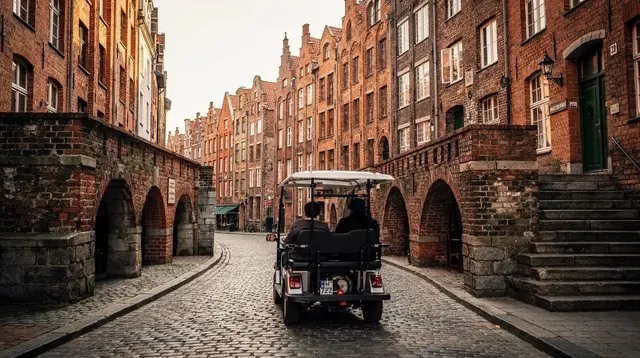
For getting your bearings in the Old Town itself regardless of where you sleep, a golf cart sightseeing tour of central Gdańsk covers the historic core efficiently, and those staying centrally and curious about the shipyard’s Solidarity history might combine sightseeing with a golf cart city tour paired with local beer tastings.
Frequently asked questions about where to stay in Gdańsk
Is it better to stay in Gdańsk or Sopot?
Neither is universally better. Gdańsk’s Old Town puts the historic sights, restaurants and nightlife on your doorstep, while Sopot trades that walkable convenience for a beach, a spa culture and a livelier summer scene, at the cost of a short SKM ride each way. Families and beach-focused visitors often prefer Sopot; first-time sightseers usually prefer Gdańsk.
How far is Sopot from Gdańsk city centre?
The SKM commuter train between Gdańsk Glowny and Sopot takes roughly 20 minutes, with trains running every 10-20 minutes for most of the day. It is a genuinely easy commute, but it is still a commute, not a walk.
How far is Gdynia from Gdańsk Old Town?
Gdynia is further out than Sopot, at around 35 minutes from Gdańsk Glowny by SKM. That is not the same journey time as Sopot’s, so budgeting a Sopot-length trip for a Gdynia base will leave you short on time.
Is Wrzeszcz a good place to stay in Gdańsk?
Wrzeszcz suits visitors who want a quieter, more residential base with easier access to the SKM and PKM lines, at the cost of losing the Old Town’s walk-everywhere convenience. It is the district most associated with the writer Gunter Grass, who was born there.
Do I need a car if I stay outside central Gdańsk?
No. The Tricity is stitched together by the SKM commuter rail line running along the coast through Gdańsk, Sopot and Gdynia, with trams and buses filling in the rest. A car is not required for any of the four areas covered here.
How much does accommodation cost in Gdańsk versus Sopot?
Prices vary by season, star rating and how far in advance you book, and shift from year to year, so this guide does not quote a fixed figure. As a general pattern, Sopot’s beachfront and Gdańsk’s Old Town tend to command a premium in the June-to-September high season, while Wrzeszcz and Gdynia are usually more moderate.
Which area is best for nightlife?
Gdańsk’s Old Town has a dense concentration of bars within walking distance of most hotels, while Sopot has its own, more beach-club-oriented nightlife scene in summer. Gdynia and Wrzeszcz are quieter after dark, which suits visitors who prefer to sleep rather than bar-hop.
Trip planning
Verified deep-linked GetYourGuide tours. Book through these links and we earn a small commission at no cost to you.
GetYourGuide does not provide a product photo for this activity — the image shows the meeting point, photographed by us.