Sopot Walking Tour: Monciak, the Pier and the Crooked House
What does a Sopot walking tour actually cover?
A compact loop from Monte Cassino street (Monciak) down to the pier, Europe's longest wooden pier at 511.5 metres, past the Krzywy Domek (Crooked House) and into the spa quarter by the seafront. The whole route can be walked in two to three hours, and Sopot is reached from Gdańsk in about 20 minutes on the SKM train.
Sopot is the smallest of the Tricity’s three cities and the easiest to walk in an afternoon. It has no old town in the medieval sense, no shipyard, no cathedral crypt — what it has is a single pedestrian spine, a beach, a wooden pier, and a spa-town atmosphere that survives despite the summer crowds. This walk covers all of it: Monte Cassino street, the pier, the Krzywy Domek, and the quieter saline-water side of the town that most day-trippers walk straight past.
Getting to Sopot from Gdańsk
Sopot sits between Gdansk and Gdynia in the Tricity (Trojmiasto), and it is reached the same way most Tricity trips are: by SKM commuter train, not by car. Trains from Gdańsk Glowny run every 10-20 minutes at peak times and take around 20 minutes to reach Sopot station, which sits a short, obvious walk from the top of Monte Cassino street. There is no need to plan around a schedule — this is turn-up-and-go commuter rail, with the same ticket system (time-validity tickets, not per-stop) used across the conurbation.
Coming from Gdynia the ride is similarly short, which is why comparing the two towns as a single afternoon is a common move — see Sopot vs Gdynia: where to stay if the walk below has you weighing a base for the night. For a wider sense of how the three cities differ in character, Gdańsk vs Sopot vs Gdynia lays out the split plainly: Gdańsk is the historic core, Gdynia is the modernist port city, and Sopot is the resort.
The route in outline
The walk below runs roughly 2km end to end and takes two to three hours at an unhurried pace, including a stop on the pier and a coffee break. It starts at Sopot station, runs the length of Monte Cassino street to the seafront, out along the pier, and finishes with a loop past the Krzywy Domek and into the quieter spa quarter to the north.
| Stop | What it is | Time to allow |
|---|---|---|
| Monte Cassino street (Monciak) | Pedestrian shopping and dining spine | 30-45 min |
| Sopot Pier (Molo) | Longest wooden pier in Europe, 511.5m | 30-45 min |
| Krzywy Domek | Crooked House, built 2004 | 10-15 min (photo stop) |
| Spa quarter and Pijalnia | Saline water pump room, seafront promenade | 20-30 min |
| Sopot beach | Sand, boardwalk, seasonal swimming | as long as you like |
Monte Cassino street — Monciak
Monte Cassino street, universally shortened by locals to “Monciak,” is Sopot’s main artery, running roughly 600 metres from the train station down to the pier entrance. It is fully pedestrianised, lined with cafes, restaurants, ice cream stands and souvenir shops, and it carries the town’s holiday energy more than any single building does. Walking it end to end takes ten minutes without stopping; with a coffee and a browse through the side streets, closer to 45.
Monciak is not a historic street in the way the Gdańsk Old Town is — Sopot’s development as a resort really took off in the 19th century, and much of what lines the street today is 20th- and 21st-century construction dressed for tourism. That is worth knowing going in: this is a resort promenade, not a museum piece, and it is busiest in the evening, when restaurant terraces fill and street performers set up along the route. For an evening plan built around exactly this stretch, see Sopot nightlife guide.
Partway down Monciak, a short detour east leads toward the Bohaterow Monte Cassino cross streets, where quieter cafes sit away from the main flow — worth knowing if the main street feels too busy in peak season.
The Krzywy Domek — and the Gaudi myth, corrected
About two-thirds of the way down Monciak, set slightly back from the street, stands the building most photographed in Sopot: the Krzywy Domek, or Crooked House. Completed in 2004, its walls and roofline are deliberately warped and undulating, as if the whole structure had been left out in the sun and started to melt.
It is worth correcting a claim repeated constantly online and in guidebooks: the Krzywy Domek was not designed by Antoni Gaudi, was not inspired by Gaudi, and has no direct architectural link to Barcelona at all. It was designed by the Polish architects Szotynscy and Zaleski, and its actual inspiration is the fairy-tale book illustrations of Jan Marcin Szancer, a Polish artist and illustrator whose whimsical, curving drawing style the building’s facade deliberately echoes.
The confusion likely comes from a surface resemblance — both Gaudi’s Barcelona buildings and the Crooked House avoid straight lines — but the building’s own stated design lineage is Polish, not Catalan. It is worth saying this plainly on a walking route, since the Gaudi comparison is the single most repeated error about Sopot’s most photographed building.
The building today houses shops and a restaurant on its ground floor; ten to fifteen minutes is enough for photographs and a look inside unless you are stopping to eat.
The pier — 511.5 metres, and no further claim than that
At the seaward end of Monciak, the Sopot pier (molo) extends 511.5 metres into the Baltic. It is the longest wooden pier in Europe — a specific and accurate claim — not the longest pier in the world, a distinction some tourist material blurs. Several concrete and steel piers elsewhere considerably exceed its length; Sopot’s record is about wooden construction and about Europe specifically, and it is worth being precise about that rather than repeating the more sweeping version.
A small seasonal entry fee applies in the warmer months, often unenforced or waived outside summer; no booking is needed either way. Walking to the end and back takes 30-45 minutes depending on how often you stop — and most people do stop, since the pier is where Sopot’s views open up: back toward the town and the wooded hills behind it, out toward the Gdańsk Bay, and on a clear day toward the Hel Peninsula in the distance. A marina sits alongside the pier’s base, and short seasonal boat trips depart from near here toward Hel or along the coast — see Motława sunset cruise for the Gdańsk equivalent if a boat is part of the wider trip.
a private guided walk through Sopot’s Old Town, Monciak and the pier covers this same route with a local guide filling in the history as you go, which is worth considering if you would rather listen than read plaques.
The spa quarter and the saline water
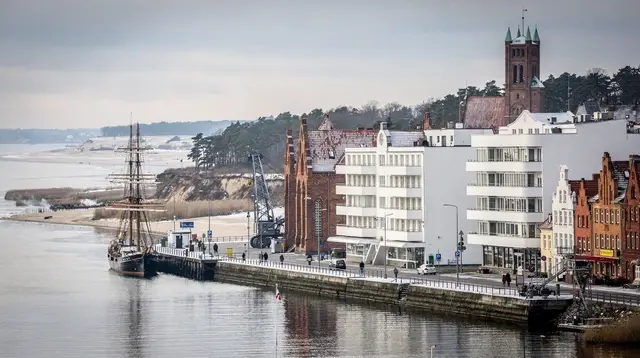
North of the pier, past the crowds gathered near Monciak’s seaward end, the town quiets down considerably. This is Sopot’s original identity: a 19th-century spa resort built around a saline spring, not simply a beach town. The Dom Zdrojowy (spa house) and the nearby Pijalnia Wod Mineralnych — a pump room where visitors can sample the mineral-rich saline water — sit close to the seafront here, a low-key counterpoint to the ice cream stands further south.
The water itself is not to everyone’s taste — it is markedly salty, drawn from a spring, and taken in small measured cups rather than gulped — but trying it is a five-minute stop that connects Sopot’s beach-resort present to its health-resort past. This stretch of promenade is also considerably quieter than Monciak, and a good place to sit and look at the sea without competing for a bench.
From here, a path leads along the seafront promenade rather than back through the town centre, past beach access points and the northern end of Sopot’s grand 19th- and early 20th-century villas — a different, calmer register from the main pedestrian street.
The beach — what to actually expect
Sopot’s beach runs the full length of the town’s seafront, wide and sandy, with the pier splitting it roughly in two. It is a genuine Baltic beach, not a Mediterranean one, and the distinction matters for anyone planning to swim: sea temperatures here rarely exceed 18-20 degrees Celsius even in the height of summer, and a windy afternoon can drop that further within hours. Most visitors treat a dip as bracing rather than warm, and a walk on the sand as the main event rather than a swim.
For the fuller picture across the coast, Gdańsk beaches and Baltic swimming guide covers water temperature and beach conditions in more detail, and the wider point about the region — that this is a northern sea, not a southern one — is worth internalising before booking a beach holiday around it; see Sopot is not Saint-Tropez.
In peak season (June-September) the beach and pier get genuinely crowded, particularly on warm weekends; arriving before mid-morning or visiting on a weekday eases that considerably. Outside summer, much of the beach’s seasonal infrastructure — deck chair rental, snack kiosks — closes down, and the walk described here becomes a quieter, greyer version of itself, still worth doing but with fewer places to stop along the way.
Extending the walk
The route above is a self-contained loop, but Sopot rewards a longer stay if time allows. A short uphill detour east of Monciak reaches wooded park land and quieter residential streets lined with early 20th-century villas, a contrast to the beachfront crowds. Those with more time sometimes pair Sopot with a look at Gdynia’s modernist centre the same day — a genuinely different architectural register just one SKM stop further north — via the Gdynia modernist walking tour.
For a two-day frame that puts this walk in context alongside Gdańsk’s Old Town, see Gdańsk and Sopot in 2 days; for a longer look across all three Tricity cities, Tricity in 3 days. Those coming specifically to compare Sopot’s architecture with Gdańsk’s reconstructed Old Town should also know that Gdańsk’s gabled centre, unlike Sopot’s, was rebuilt after near-total destruction in 1945 — a different kind of “not what it first appears to be,” covered in Gdańsk: reconstructed, not original.
Those who prefer to cover the same ground by bike rather than on foot can join a three-hour guided bike tour through Sopot and its surrounding parkland, which extends beyond the walking route into areas that are a stretch on foot in an afternoon; see also cycling the Tricity for the wider route network. Travellers who would rather slow the pace down entirely can try a quiet guided walk through Sopot paired with a seaside Qi Gong session, a gentler alternative to the standard highlights circuit.
Where to eat along the way
Monte Cassino street and the streets just off it hold the highest concentration of restaurants and cafes in Sopot, ranging from casual pierogi counters to seafood restaurants near the pier itself. For a guided introduction rather than trial and error, a private traditional Polish food tour through Sopot covers several stops with a local guide. Those coming from Gdańsk and comparing food scenes across the conurbation may also want Tricity food tour: Sopot and Gdynia for a wider view, or best bars in the Gdańsk Old Town if the evening plan shifts back toward Gdańsk.
Practical notes
Sopot’s entire walking route is flat and paved, with no stairs beyond the odd curb, making it one of the more accessible walks in the region. It gets noticeably busier and more expensive in July and August, particularly around the pier and Monciak’s restaurant terraces; outside those months, the same walk is quieter but some seasonal amenities — beach kiosks, boat trips, deck chair rental — scale back or close. Combining Sopot with a same-day trip back to Gdańsk is straightforward given the frequency of SKM trains; those flying in can also check the Gdańsk airport to city centre guide for onward connections toward Sopot on arrival day.
Frequently asked questions about walking Sopot
Is Sopot’s pier really the longest in the world?
No. It is the longest wooden pier in Europe, at 511.5 metres, not the longest pier anywhere in the world. Several concrete and steel piers elsewhere are considerably longer; Sopot’s claim is specifically about wooden construction and specifically about Europe.
Is the Krzywy Domek designed by Gaudi?
No, and this is one of the most repeated errors about the building. The Crooked House, completed in 2004, was designed by Polish architects Szotynscy and Zaleski, drawing on the whimsical illustrations of Polish artist and book illustrator Jan Marcin Szancer, not on the work of Antoni Gaudi.
How long does the Sopot walking route take?
Budget two to three hours at an easy pace for Monciak, the pier and the Crooked House, longer if you stop for coffee, browse the shops on Monte Cassino, or linger on the pier itself, which alone takes 20-30 minutes to walk end to end and back.
Can you swim at Sopot beach?
Yes, but manage expectations: the Baltic Sea here rarely exceeds 18-20 degrees Celsius even at the height of summer, and a windy day can drop it further within hours. Most visitors treat it as a bracing dip and a walk on the sand rather than a long swim.
How do you get from Gdańsk to Sopot?
The SKM commuter train runs frequently between Gdańsk and Sopot, with the ride taking around 20 minutes and trains departing every 10-20 minutes at peak times. Sopot’s station is a short walk from the top of Monte Cassino street.
Is the pier free to enter?
There is a small seasonal entry fee for the pier in the warmer months, often waived or unenforced outside the summer season. No booking is needed either way.
What is Sopot’s saline water known for?
Sopot developed as a spa town in the 19th century around a mineral-rich saline spring, and that spa heritage is still visible in the pump room (Pijalnia) near the pier, where visitors can sample the water, and in the town’s continuing identity as a health resort alongside its beach-town reputation.
Walking tours
Verified deep-linked GetYourGuide tours. Book through these links and we earn a small commission at no cost to you.
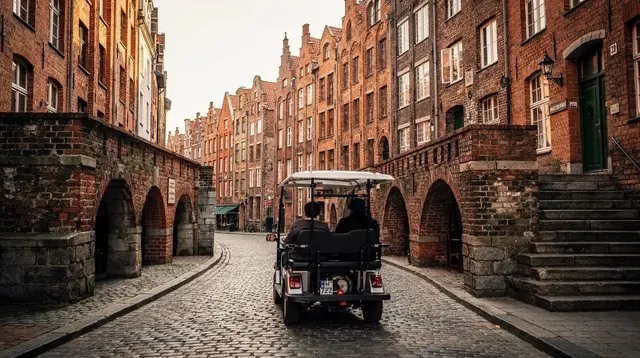
GetYourGuide does not provide a product photo for this activity — the image shows the meeting point, photographed by us.