Tricity Food Tour: Comparing Gdańsk, Sopot and Gdynia
Which Tricity city has the best food: Gdańsk, Sopot or Gdynia?
They are not comparable that way. Gdańsk has the deepest, most historic restaurant scene concentrated in the Old Town; Sopot leans into resort dining, cocktails and beach bars; Gdynia offers younger, portside and more modern food. Fresh Baltic fish is the common thread across all three.
Ask three people which Tricity city has the best food and you will get three different, equally defensible answers, because Gdańsk, Sopot and Gdynia are not really competing in the same category. They sit along the same 30km stretch of coast, they share the same Bay of Gdańsk and the same fish landed from it, and they are connected by the same commuter rail line — but the eating experience in each one has a distinct character, built up over a different history. This guide compares the three honestly, rather than picking a winner, and sets out how a tasting trip across all three actually has to be planned.
Gdańsk: historic, touristic, concentrated
Gdańsk’s food scene is anchored in the Old Town, inside the rebuilt Hanseatic gabled townhouses along Długi Targ and the streets running down to the Motława. This is where the city’s wealth as a Hanseatic League port shows up on the plate as much as on the facades: hearty, richly sauced Polish and Kashubian dishes, amber-coloured Goldwasser liqueur poured as a digestif, and a dense concentration of restaurants aimed squarely at visitors. That density is Gdańsk’s strength and its catch: it is the easiest of the three cities to eat well in without planning ahead, but it is also the most touristic, with menus translated into five languages and prices that rise the closer you sit to the basilica.
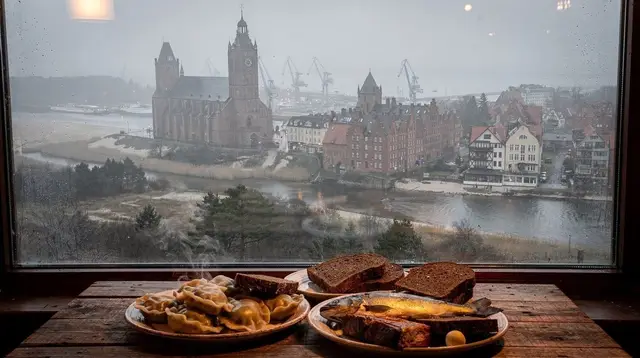
Fresh fish is a constant here too. Smoked mackerel and herring served a dozen different ways turn up on menus from riverside terraces to the stalls near the crane gate, Zuraw, and the fish market tradition along the waterfront has never really left. A guided walk through this side of the city works well as a first orientation, and a dedicated Gdańsk food tour that tastes its way through the Old Town is a straightforward way to get past the tourist-menu restaurants into the places locals actually recommend.
For a version tailored more narrowly to a private group and pace, a private traditional Polish food tour based out of Sopot can also be arranged to take in Gdańsk stops, which is worth knowing if you would rather not join a fixed-departure group.
Reservations matter more in Gdańsk’s Old Town than visitors often assume, especially in August, when St Dominic’s Fair fills Długi Targ with stalls and pulls extra crowds into every restaurant within walking distance of the market. Booking a table a day or two ahead during the fair’s three-week run avoids a long wait at the door, and the same caution applies loosely across the whole summer high season, when riverside terraces fill early on warm evenings.
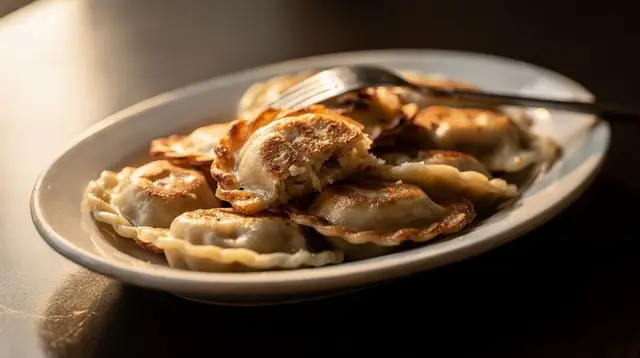
Beyond the fish-and-Goldwasser staples, Gdańsk’s kitchens also lean on the wider Polish and Kashubian repertoire — pierogi, bigos, soured rye soup — and travellers who want to taste that side properly, rather than picking it up incidentally between fish courses, are better served by a dedicated pierogi and Polish cuisine tour than by ordering blind off an Old Town menu.
Sopot: resort, festive, thermal
Twenty to thirty minutes up the coast by SKM, Sopot runs on a completely different rhythm. This is a nineteenth-century spa town built around Europe’s longest wooden pier, and its food and drink culture reflects that resort history: beach bars, cocktail terraces, and a livelier after-dark scene than either Gdańsk or Gdynia. Sopot’s dining leans toward the leisurely and the festive — brunch on a terrace near the pier, seafood platters at beach clubs, evening drinks that run later than in the more historically minded Old Town of Gdańsk.
The thermal and spa heritage still shows in a slower, more indulgent pace to eating here, and fresh fish keeps its place on the menu, usually served more casually than in Gdańsk — grilled or fried at a beach kiosk rather than plated in a restored townhouse dining room. A relaxed way to sample this side of Sopot is a private beach picnic with prosecco and finger food set up on the sand, which captures the resort mood better than a sit-down restaurant booking would.
Sopot is not a quieter, smaller version of Gdańsk’s Old Town, and it is worth resisting the urge to treat it as one stop on a checklist. Its nightlife and beach-club culture are the actual draw, and trying to squeeze a full Sopot evening into a rushed hour between trains undersells it.
Timing matters here too, in the opposite direction from Gdańsk. Sopot’s beach clubs and terraces run on a summer clock: many close or cut hours drastically outside June to September, so a food-focused evening planned for October or later should check ahead rather than assume the pier-side scene is running at full capacity. When the kitchens do close early or the terraces empty out, the evening shifts inland to the town’s bars and clubs, covered in more detail in a separate Sopot nightlife guide — worth reading before assuming an evening here in January means the same thing it does in July.
Gdynia: portside, modern, working city
Gdynia is the newest of the three by a wide margin — built up largely after 1918-20 as Poland’s main seaport, which is why its architecture reads as modernist rather than historic. The food scene follows the same logic: fewer restored Hanseatic dining rooms, more contemporary bistros, and a noticeably more local, less tourist-menu atmosphere than central Gdańsk. This is a working port city, and its seafood culture shows that directly — restaurants near the harbour serve fish that came off boats not far away, often with simpler, less ornate preparation than in Gdańsk’s Old Town.
Gdynia rewards a slower, more exploratory visit rather than a tick-box stop between Gdańsk and Sopot. Pairing a meal here with a walk through the city’s Gdynia Modernism architecture, or combining it with the coastal walking route covered by a Gdynia forest, cliff and beach guided walking tour, gives the food more context than eating in isolation would.
Gdynia’s food scene is also newer than it looks from the menu alone: much of the restaurant strip near the marina and Kamienna Gora has opened within the last decade or so, part of the same wave of investment that turned the interwar port into a destination for Gdynia Modernism architecture tourism. That means fewer generations-old family kitchens than in Gdańsk, but also a kitchen scene more willing to experiment with the same Baltic fish rather than serving it the traditional way, and menus that change more often than the fixed, tourist-facing cards common in the Old Town.
Fresh fish: the thread that connects all three
Whatever else divides Gdańsk, Sopot and Gdynia, they share the same bay, and the fish culture along its shore does not stop at a city boundary. Herring, flounder, cod and smoked mackerel appear on menus in all three, usually treated simply — smoked, grilled, or served cold with bread and pickles rather than reworked into something else.
What changes is the setting: a smokehouse stall near Gdańsk’s Motława riverfront, a fried-fish kiosk on Sopot’s beach, or a harbourside restaurant in Gdynia serving what was landed that morning. If there is one dish worth trying in all three cities specifically to compare how each treats it, smoked fish is the one — it travels well between a market stall and a proper restaurant plate, and the differences in preparation say a lot about each city’s character.
A single guided day that moves through all three cities with a food focus, such as the Tricity tour covering Gdańsk, Oliwa, Gdynia and Sopot, is one way to taste this consistency for yourself without managing the train timetable personally.
What a same-evening crawl actually requires
It is tempting to plan a single evening that runs Gdańsk to Sopot to Gdynia, or some order of the three, tasting a course or a drink in each. It can be done, but only with real planning, not optimism. The SKM connects the three cities, and each leg — Gdańsk to Sopot, Sopot to Gdynia — runs roughly 20 to 35 minutes depending on the station and time of day. Trains are frequent at peak times but thin out later in the evening, and a missed connection can turn a planned 45-minute gap into 90 minutes of waiting on a platform.
Three things are worth stating plainly, because itineraries elsewhere tend to gloss over them:
There is no single ticket that covers everything. The SKM sells its own tickets, and each city’s tram and bus network sells separate ones. A ticket validated for the SKM does not work on a Gdańsk tram or a Gdynia bus, and the reverse is also true. Budget for buying tickets at each stage, not one pass that quietly covers the whole evening.
The atmosphere is not interchangeable. Gdańsk’s Old Town restaurants, Sopot’s beach bars and Gdynia’s portside bistros do not feel like three branches of the same thing. Arriving in Gdynia expecting Sopot’s resort buzz, or arriving in Sopot expecting Gdańsk’s historic density, sets up a disappointment that has nothing to do with the food itself.
One day is not really enough to do all three unhurried. A single day trip can touch all three cities, but “touch” is the operative word — a rushed 40-minute meal followed by a dash for the next train is not the same as actually experiencing what each city’s food scene is about. A day and a half, or splitting the three across a longer Tricity stay, gives each one room to be itself.
If you can only choose one city for dinner
Short on time, most visitors default to Gdańsk because it is easiest, but that is not always the right call for every trip. Anyone weighing this decision in more general terms, not just for food, will find the trade-offs laid out in a dedicated Gdańsk vs Sopot vs Gdynia comparison, which covers accommodation and sightseeing alongside dining and is worth reading before booking a base for the whole trip.
For food specifically, Gdańsk is the safe, easy choice for a first-timer with one evening and no patience for planning; Sopot rewards anyone prioritising atmosphere and a late night over cuisine; Gdynia suits a traveller who has already done the postcard version of Poland and wants a working city’s honest, less curated cooking instead.
Comparing the three at a glance
| Gdańsk | Sopot | Gdynia | |
|---|---|---|---|
| Character | Historic, Hanseatic, touristic | Resort, festive, thermal-spa heritage | Portside, modern, local |
| Best for | First-timers wanting an easy, dense concentration of restaurants | Evening drinks, beach dining, a livelier pace | Contemporary bistros, fresher port-to-table feel |
| Fresh fish style | Smoked, market-stall and riverside | Casual, beach-kiosk grilled or fried | Harbourside, simply prepared |
| Typical evening | Old Town dinner near Długi Targ | Beach bar or terrace near the pier | Bistro or restaurant near the port |
| SKM travel time from Gdańsk Glowny | — | roughly 20 minutes | roughly 30-35 minutes |
Planning a longer visit
If the goal is a genuine comparison rather than a rushed sampler, spreading the three cities across an itinerary of several days works better than one packed evening. A Gdańsk food tour on the first day, an evening in Sopot built around its pier and beach clubs, and a separate visit to Gdynia paired with its modernist architecture, gives each city the time its food scene actually needs.
For those who would rather not manage tickets and timing themselves, a private option such as the Gdansk-based private tour covering Sopot and Gdynia handles the logistics across all three in one booking.
However it is arranged, the point worth holding onto is that Gdańsk, Sopot and Gdynia are not competing versions of the same night out. They are three different food cultures sharing one bay, one fish supply and one rail line — and the trip works best when it is planned around that difference rather than against it.
Frequently asked questions about food across Gdańsk, Sopot and Gdynia
Can I do a food tour of Gdańsk, Sopot and Gdynia in one evening?
It is possible but tight. The SKM connects the three cities in roughly 20-35 minutes each leg, so a same-evening crawl means building in real transfer time and checking the timetable rather than assuming trains run constantly.
Is one train ticket valid for Gdańsk, Sopot and Gdynia trams and the SKM?
No. The SKM commuter rail and the local tram or bus networks in each city sell separate tickets. A ticket bought for the SKM does not cover a tram ride once you arrive, and vice versa.
What is the common food across the three Tricity cities?
Fresh fish from the Bay of Gdańsk, especially herring, flounder, cod and smoked mackerel, appears on menus in all three cities, usually served simply with bread, pickles or a light sauce rather than heavily reworked.
Do Gdańsk, Sopot and Gdynia have the same restaurant atmosphere?
No. Gdańsk’s Old Town restaurants sit in restored Hanseatic-era buildings and skew historic and touristic; Sopot’s dining is resort-paced, built around its pier and beach clubs; Gdynia’s is more contemporary and portside, with fewer tourist-menu restaurants.
Is Gdynia’s food scene worth visiting compared to Gdańsk and Sopot?
Yes, for a different reason than the other two. Gdynia is a working port city built up mostly in the twentieth century, and its food scene reflects that: modern bistros and seafood spots aimed more at locals than at coach-tour visitors.
Where is the best place to try fresh fish in the Tricity?
All three cities serve fresh Baltic fish, but the harbour-adjacent spots in Gdynia and the fish stalls and smokehouses around Gdańsk’s Motława riverfront tend to be closest to where the fish is actually landed.
How much time should I budget to properly explore food in all three cities?
Treat it as at least a day and a half, or spread across a longer Tricity stay, rather than one day. Rushing all three in a single sitting means less time eating and more time on the platform.
Does St Dominic’s Fair in August affect restaurant bookings in Gdańsk?
Yes. The three-week fair in August draws large crowds into the Old Town, and restaurants near Długi Targ get busier and often need booking a day or more ahead during that period; outside the fair, walk-ins are usually easy.
Food tours
Verified deep-linked GetYourGuide tours. Book through these links and we earn a small commission at no cost to you.
GetYourGuide does not provide a product photo for this activity — the image shows the meeting point, photographed by us.