Pierogi and Polish Cuisine in Gdańsk: A Real Food Guide
What Polish food should you eat in Gdańsk?
Start with pierogi in both savoury and sweet versions, try zurek (sour rye soup, often served in a bread bowl), and seek out Baltic smoked fish, especially smoked mackerel and flounder, which is a coastal specialty rather than something found across all of Poland. Portions are generous and best shared.
Three dishes that explain Gdańsk’s kitchen
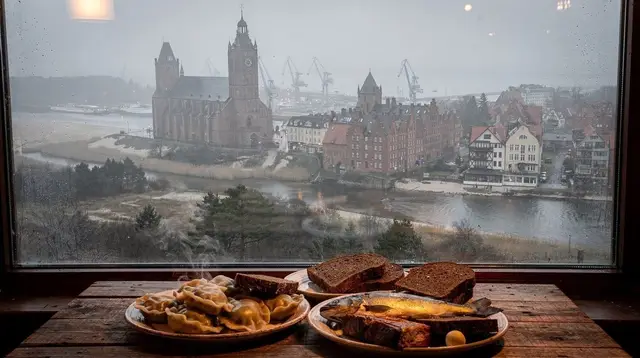
Gdańsk eats like the rest of Poland in most respects, but it has a coastline running through its food that inland cities simply do not have. Three dishes do most of the explaining: pierogi, which is Poland’s most famous export and appears here in both familiar and regionally inflected forms; zurek, the sour rye soup that turns up on nearly every traditional menu in the Old Town; and smoked Baltic fish, which is less a dish than a whole category of eating rooted in the fact that the sea starts a short walk from Dlugi Targ.
None of these are exclusive to Gdańsk. What is regional is the balance between them, and the way fish quietly takes a seat at the table that, in Krakow or Warsaw, would be occupied by more meat and fewer scales.
This guide goes dish by dish rather than venue by venue or tour stop by tour stop. If the goal is a fast, guided two-hour introduction with several tastings bundled together, a walking food tour is the better read — see the separate Gdańsk food tour guide for that format. This page is for understanding what is actually on the plate, why it looks the way it does, and what to order with some confidence once you are sitting down on your own, whether that is in the Old Town, in Wrzeszcz, or at a harbour stall near the Motlawa.
Pierogi: more than one dish wearing the same name
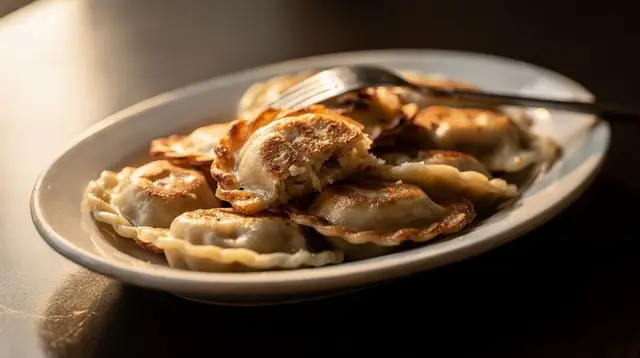
Pierogi are boiled (sometimes then pan-fried) dumplings of unleavened dough wrapped around a filling, and the word covers a genuinely wide family rather than one fixed recipe. Getting the savoury-versus-sweet distinction straight before ordering saves confusion, because both categories often sit on the same menu under the same heading.
Savoury pierogi are the default order for a main meal. Pierogi ruskie — despite the name, a Polish dish rather than a Russian import, referring to the historical Ruthenia region — combine mashed potato, curd cheese (twarog) and fried onion, and are the single most common filling nationwide. Meat-filled pierogi usually hold a seasoned mixture of minced pork or beef, sometimes with onion or mushroom folded in.
Mushroom and sauerkraut pierogi, a classic pairing of wild mushroom with fermented cabbage, are common on Old Town menus, especially around the winter months and the Christmas period. Most savoury versions arrive with a knob of butter, fried onion, or a dollop of sour cream on top, and a plate of eight to twelve pierogi is a full meal, not a starter, however small they look individually.
Sweet pierogi are less a dessert in the Western sense and more an alternative main course or a substantial afternoon dish, a distinction that surprises first-time visitors. Blueberry pierogi, filled with whole or lightly cooked berries, are a summer staple when the fruit is in season. Sweetened curd cheese pierogi, sometimes with a touch of vanilla, are available year-round. Both are typically served with a generous spoon of sour cream and a light dusting of sugar, and both can be — and often are — ordered as a full plate rather than a token taste.
A few practical notes that apply across the Old Town and beyond: portion sizes are generous by design, so pierogi are rarely a dish to order alongside three other things; sharing a mixed plate between two people, savoury on one side and sweet on the other, is a genuinely common way to eat them here. Freshly made pierogi have a slightly thicker, chewier dough than the thinner, more delicate wrappers found in some other countries’ dumpling traditions, and that heartiness is part of the point rather than a flaw.
Zurek: the sour soup that anchors a Polish menu
Zurek is a soup built on fermented rye flour, which gives it a distinctive sour, slightly tangy base unlike anything in most visitors’ usual repertoire of soups. The fermentation — traditionally a rye starter left to sour over several days — is what separates zurek from a simple broth, and it is this sourness, balanced against the richness of what floats in it, that makes the dish work.
A standard bowl includes smoked sausage (kielbasa), sliced hard-boiled egg, and diced potato, sometimes with a bit of marjoram stirred through for a herbal lift. The most theatrical version, seen widely across Old Town restaurants, comes served inside a hollowed-out round loaf of bread instead of a bowl — edible container included, and worth asking for if it is not listed by default, since not every kitchen offers it. Zurek is filling enough to function as a light meal on its own, particularly on a cold, windy Baltic day when the coastal chill off the Motława or the harbour makes a hot, sour, substantial soup feel like the correct order rather than an indulgent one.
Vegetarian versions exist, generally swapping the sausage for extra vegetables or mushroom, though it is worth asking directly, since a “default” bowl in most traditional kitchens assumes meat. Zurek turns up reliably on the menus of sit-down Polish restaurants throughout the Old Town and in the city’s milk bars, discussed further down, and it is one of the easiest dishes to order with confidence on a first visit, since almost every traditional kitchen has its own version.
Baltic smoked fish: why Gdańsk eats differently from inland Poland
This is the dish category that genuinely marks Gdańsk out from the rest of the country, and it deserves the explanation rather than a passing mention. Poland as a whole does not have a strong national tradition of fish as an everyday food — pork, beef and poultry dominate most regional cuisines inland. Gdańsk and the wider Tricity coastline break that pattern, and the reason is straightforward geography: the Baltic Sea is a short walk from the historic centre, fishing fleets have worked this coast for centuries, and smoking has long been the practical, low-tech way to preserve a daily catch before refrigeration existed and, by habit, long after it did too.
Smoked mackerel is the most widely available option, sold whole or in fillets at harbour-side stalls and covered market halls, and it is commonly eaten cold, straight off the paper it is wrapped in, as a walking snack rather than a seated meal. Smoked flounder (a flatfish common in Baltic waters) and smoked herring both appear regularly too, herring sometimes pickled or marinated rather than smoked outright, and both are typically sold by weight rather than by a fixed plate price.
Fresh, unsmoked options — grilled or pan-fried flounder, herring in various preparations, and simply prepared white fish — also appear on restaurant menus in Sopot and along the Gdańsk waterfront, distinct from the smoked stall food but drawing on the same coastal supply.
The practical way to try this category is at a market hall or a harbour stall near the water, standing up, unwrapped, with maybe a squeeze of lemon and nothing else needed. It is a genuinely different register of eating from a sit-down pierogi meal, and worth doing at least once specifically because it does not exist in this form away from the coast — a Warsaw or Krakow menu will rarely offer anything comparable.
Where these dishes actually turn up
A quick map of venue types helps more than a list of specific restaurant names, since the categories matter more than any single address.
| Venue type | What to expect | Best for |
|---|---|---|
| Milk bar (bar mleczny) | Canteen-style, cash-and-carry, low prices, simple traditional menu | Zurek, pierogi, an unpretentious daily lunch |
| Sit-down Old Town restaurant | Full menu, table service, often both savoury and sweet pierogi | A relaxed meal, zurek in a bread bowl |
| Market hall / harbour stall | Standing-room, sold by weight or piece | Smoked mackerel, herring, flounder |
| Guided food tour | Multiple stops bundled into one outing | A fast introduction across several dishes at once |
Milk bars (bary mleczne) deserve a specific mention because they are easy to miss and genuinely worth finding. These are canteen-style restaurants with roots going back decades, serving simple, home-style Polish food — pierogi, soups, cutlets, seasonal vegetables — at prices well below a typical sit-down restaurant. They are not a tourist recreation of the past; several operate as ordinary working lunch spots in and around the Old Town and in Wrzeszcz, used daily by locals, and they are one of the most direct ways to eat what Gdańsk residents actually eat on an ordinary Tuesday.
What this page will not promise
A few honest limits, because overpromising on food is an easy way to disappoint a hungry traveller. This guide will not claim that Gdańsk’s food is representative of Poland as a whole — the coastal fish tradition described above is specific to this region and the wider Baltic coast, not something you can expect to find with the same depth in Krakow, Warsaw or the mountains further south.
It will not quote precise prices per dish, since menus change, exchange rates move, and a number printed here would be stale within months; budget loosely and expect Old Town sit-down restaurants to cost more than milk bars or market stalls. And it will not suggest that euros are usable for everyday payment: Poland’s currency is the zloty (PLN), not the euro, and while a handful of tourist-facing spots may quote informal euro conversions, restaurants and food stalls expect zloty, in cash or by card — for the mechanics of paying, see the separate guide on how to pay in Poland.
Doing it guided versus doing it yourself
Eating independently, using the categories above as a map, is entirely workable and arguably the better way to find a personal favourite, since it allows for going back to the pierogi place that impressed you rather than moving on to the next tour stop. For a faster, more curated introduction — several dishes and several venues compressed into a couple of hours with someone explaining what you are eating as you go — a guided option bundles the tasting and the context together in one outing.
a guided walk through Gdańsk’s traditional food stops, tasting authentic Polish dishes along the way covers much of the ground described above in a single afternoon. For a version that widens the lens to include the region’s Kashubian influences as well as core Polish dishes, a food tasting tour pairing Polish staples with Kashubian regional specialties is worth considering.
And for those who want to pair the eating with the region’s drinking traditions, a guided vodka tour through Gdańsk’s bars and distilling history makes a natural follow-on to an evening meal, since Polish vodka culture and Polish food culture have always sat at the same table.
For a broader sense of the guided-tour format itself, including how it compares with independent exploring, the Gdańsk food tour guide and the wider Tricity food tour covering Sopot and Gdynia both go into more detail on logistics, timing and what a typical route includes. Those pairing food with drink specifically might also want the Goldwasser liqueur tasting guide, covering Gdańsk’s centuries-old gold-flecked spirit, or the Polish craft beer tasting guide for a beer-focused evening after a day of pierogi and soup.
A short practical itinerary
For a self-guided day built entirely around eating, one workable structure runs like this: start with a late breakfast or early lunch at a milk bar for zurek and a plate of savoury pierogi, priced low enough to make it an easy first stop; spend the afternoon wandering Mariacka street and the Motlawa riverfront, picking up smoked mackerel or herring from a harbour stall as a mid-afternoon snack eaten on the move; and finish the evening with a sit-down meal at an Old Town restaurant, ordering a plate of sweet pierogi — blueberry in summer, curd cheese otherwise — as a dessert-that-is-also-a-meal.
This loosely follows the natural rhythm of a day in Gdańsk’s centre and touches all three of the dishes covered above without requiring a booked slot or a fixed schedule. For a version of this same day stretched across a longer stay, the how many days in Gdańsk guide and the one-day Gdańsk itinerary both offer a fuller framework to build around.
Frequently asked questions about eating in Gdańsk
Is Gdańsk food the same as food elsewhere in Poland?
No. Gdańsk shares the Polish staples of pierogi, soups and cured meats with the rest of the country, but its position on the Baltic gives it a distinct emphasis on smoked and fresh fish that inland regions like Krakow or Warsaw simply do not have in the same way.
What is the difference between pierogi ruskie and other fillings?
Pierogi ruskie are filled with a mix of potato, curd cheese and fried onion, and are the most common savoury version across Poland. Gdańsk kitchens also serve meat-filled pierogi, mushroom and cabbage pierogi, and sweet versions with blueberries or sweetened curd cheese, often topped with sour cream.
What is zurek and where can you try it?
Zurek is a sour soup made from fermented rye flour, typically served with sausage, hard-boiled egg and potato, sometimes in a hollowed-out bread loaf. It is widely available in traditional milk bars (bar mleczny) and sit-down Polish restaurants across the Old Town.
Why is smoked fish such a big deal in Gdańsk?
Gdańsk sits directly on the Baltic coast, and smoking has long been the region’s practical way to preserve the daily catch. Smoked mackerel, herring and flounder are sold at harbour stalls and market halls and eaten as a snack or light meal, a habit tied to the sea rather than to Polish cuisine as a whole.
Can you pay in euros in Gdańsk restaurants?
No. Poland uses the zloty (PLN), not the euro, and while some tourist-facing stalls may informally quote euro prices, everyday restaurants and food stalls expect payment in zloty, by card or cash.
Is a guided food tour worth it compared to eating independently?
A guided tour is useful for a fast, curated introduction that bundles several dishes and venues into a couple of hours, while eating independently lets you linger, order seconds of whatever you liked, and explore milk bars and market stalls at your own pace. Many visitors do both on different days.
What should vegetarians look for on a Gdańsk menu?
Pierogi ruskie, mushroom pierogi and cabbage-filled pierogi are all meat-free, as is a plain zurek without the sausage on request. Milk bars almost always list several vegetarian dishes clearly, since meat-free eating has long been common in traditional Polish cooking.
What is a milk bar and is it still a real place to eat?
A bar mleczny, or milk bar, is a canteen-style restaurant with roots in the communist era, serving simple, home-style Polish dishes at low prices. Several still operate in Gdańsk and the Old Town, and they remain a genuine, unpretentious way to eat what locals eat, not a museum piece.
Food tours
Verified deep-linked GetYourGuide tours. Book through these links and we earn a small commission at no cost to you.
GetYourGuide does not provide a product photo for this activity — the image shows the meeting point, photographed by us.