A sand spit, not an island
The single fact that shapes every visit to Hel is its shape: a narrow strip of dune and pine forest stretching roughly 35 kilometres out into the Baltic, barely 200 metres wide at its thinnest point near Kuznica, joined to the mainland the entire way. It is a peninsula, full stop - not an island, never cut off by tide or channel, and reachable by ordinary road the whole length of it.
That last detail is exactly what causes the trouble: because the only way onto the spit by car is one single road, running the full 35km out to the tip at Hel town, the whole peninsula turns into a queue on a sunny July or August weekend. Drivers who picture Hel as some kind of detached island often assume traffic can’t be that bad, precisely because they’re picturing a ferry crossing or a bridge with capacity limits. There is no such choke point - just one road, thousands of cars, and nowhere for any of them to pass.
That’s the case, made early and directly, for arriving by train or by boat instead of driving. Both options land you close to the town centres without the crawl, and both are covered in detail below.
Getting there: train, boat, or the road you should think twice about
By train is the most reliable option in season. A direct summer service runs from Gdańsk to Hel town in around two hours, cutting inland around the Bay of Puck rather than following the coast road, and it keeps running on schedule regardless of how backed up the peninsula road gets. Trains also stop at the smaller towns along the spit - useful if your target is Jastarnia rather than Hel itself.
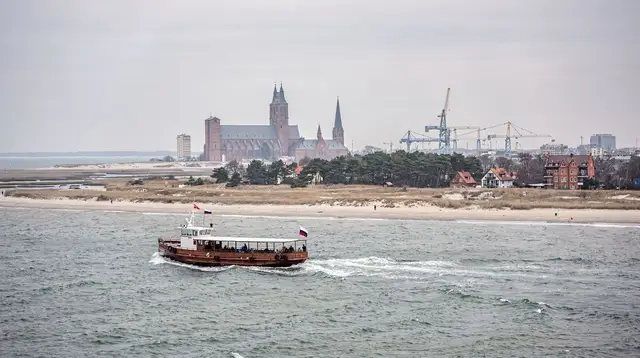
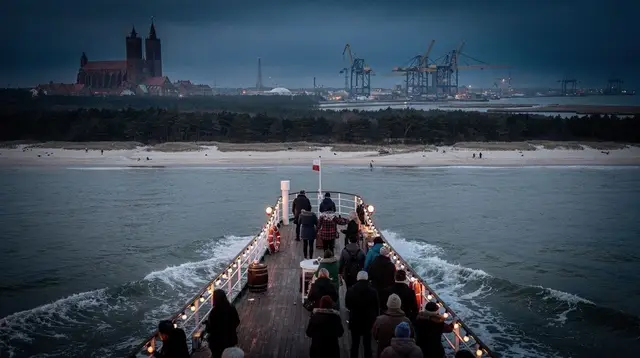
By boat is the scenic alternative, sailing from Gdańsk, Sopot or Gdynia out across the bay to Hel, roughly 90 minutes to two hours depending on departure point and sea conditions. It only runs seasonally, mainly May to September, and can be cancelled or delayed in poor weather, but on a calm day it’s the best introduction to the geography of the bay - watching the spit narrow to a thread of sand as the boat approaches. A comparable short cruise out onto the Baltic from Gdańsk gives a feel for this same stretch of water even outside a dedicated Hel sailing.
By road works fine outside peak summer weekends and is the only way to reach some of the quieter stretches of dune between towns. But treat July and August with real caution: the single road in and out means a car trip that should take an hour each way can stretch well past two, especially on a Saturday with good weather. If a car is the only option in high season, an early morning departure avoids the worst of it; otherwise, the train or boat is the straightforwardly better call.
| Method | Time from Gdańsk | Runs | Notes |
|---|---|---|---|
| Direct train | ~2 hours | Year-round, summer direct service | Most reliable in traffic-heavy months |
| Seasonal boat | 1.5-2 hours | Roughly May-September | Weather-dependent, scenic |
| Car (own or hire) | 1.5-3+ hours | Year-round | Single road; heavy congestion Jul-Aug |
One practical detail that catches drivers out even when they’ve accepted the congestion risk: parking at the destination end. Hel town’s harbour-side car parks are paid and limited, and on a sunny July or August weekend they fill by mid-morning, leaving latecomers to circle or park well outside the centre and walk in. Arriving by train sidesteps this completely, since the station sits close to both the harbour and the Fokarium.
Hel town or Jastarnia: choosing a base
For a single day trip the choice barely matters - Hel town is the natural target, home to the Fokarium, the harbour and most of the peninsula’s restaurants and shops within easy walking distance of the station. But for anyone staying overnight, or splitting a visit across two stops, Hel town and Jastarnia offer genuinely different bases. Hel town is busier, more geared toward day-trippers, and means less onward travel to reach the seal sanctuary and the harbour-front cafes.
Jastarnia sits roughly two-thirds of the way along the spit, has a quieter evening atmosphere once the day-trip crowds clear out, and puts cyclists closer to the narrowest, wildest middle stretch of dune and pine forest without losing easy access to either shore. Families prioritising the Fokarium and a short, simple day should base in Hel town; anyone building a two-day visit around cycling and beach time with fewer crowds does better starting from Jastarnia and taking the train or a bike ride into Hel town for the feeding sessions.
The seal sanctuary: Hel’s fixed point
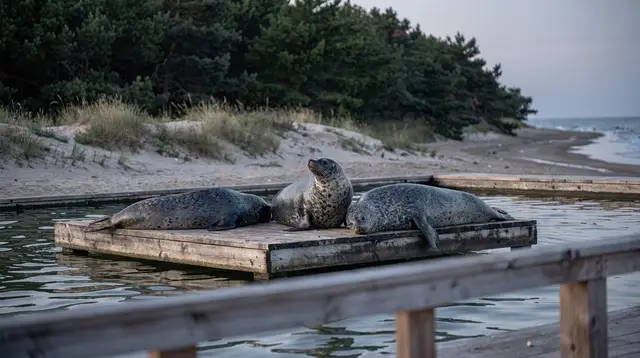
If one stop anchors a visit to Hel, it’s the Fokarium, the seal sanctuary run by the Marine Station of the University of Gdańsk in Hel town. Grey seals were hunted to local extinction along this coast in the twentieth century, and the station’s breeding and rehabilitation programme is a large part of why they’re back in the Baltic at all today.
The seals themselves - a mix of residents and animals being rehabilitated for release - are fed at scheduled times through the day, typically two to four sessions depending on the season, and those feeding talks are genuinely worth timing a visit around rather than just dropping by and hoping. Outside feeding times the pools are quieter and the seals less active, so check the day’s schedule on arrival and plan the rest of the visit around it.
The Fokarium sits right in Hel town, an easy walk from both the train station and the harbour where boats dock, which makes it a natural centre of gravity for a first visit: arrive, check the next feeding time, and use the gap either to walk the town’s small fishing harbour and church-turned-museum, or to head out toward the beach.
Getting around once you’re there
Hel town, Jastarnia and the other settlements along the spit are spread out over that same 35km length, and the peninsula’s narrow width means the open Baltic beach is usually on one side and the calmer bay shore on the other, often just a short walk apart. Cycling is a popular way to cover ground here: a paved path runs much of the length of the peninsula, flat and largely shielded from road traffic, and bike hire is easy to find in the main towns. For a single focused visit, though, most travellers do fine sticking to Hel town itself on foot, using the train to reach it and the same train back.
A pattern worth knowing: the ocean-facing beach tends to be windier and better for watersports, while the bay side is calmer and shallower, warming faster in summer - a distinction that matters more here than at most Baltic beach towns, given how close the two shores sit to each other.
What can disappoint
Hel is honest about what it is - a fishing town turned beach destination - and a couple of expectations are worth resetting before arrival. First, this is not a dune landscape to rival Łeba and the Słowiński National Park: the peninsula’s beaches are flat, sandy and pine-backed, pleasant but unspectacular, and visitors expecting the towering moving dunes further along the coast will be looking in the wrong place. Second, the water is genuinely cold even in August, rarely climbing past 18-20 degrees Celsius on the open Baltic side and only a little warmer in the bay - swimmers used to southern Europe often find the first entry into the sea a shock.
Third, Hel town itself is small, and on a peak summer day the crowd around the harbour, the Fokarium queue and the handful of main-street restaurants can feel more like a busy seaside resort than a remote getaway, which surprises visitors who pictured a quiet fishing village at the end of a long sand spit. None of this makes Hel not worth the trip - the seal sanctuary, the walk to the tip, and the sheer geography of the place are reason enough - but it’s a day of beach, wind and wildlife rather than dramatic scenery.
When to go
June through September is when everything on the peninsula actually operates: the direct summer train, the seasonal boats, the Fokarium’s fullest feeding schedule, and the beach cafes and rental kiosks in Hel town and Jastarnia. Outside that window, boats stop running altogether, the town empties out, and while the Fokarium itself stays open year-round, much of the rest of the tourist infrastructure closes or cuts back sharply. A winter visit is possible and quiet - just don’t expect the boat option or a lively beach town on arrival.
Within the summer window, a weekday visit is worth favouring over a weekend if the plan involves driving: the road congestion that defines Hel’s high season is heavily weekend-weighted, and a Tuesday in July looks very different from a Saturday.
What to pair it with
Hel works well as a standalone day trip from Gdańsk, but it also sits naturally alongside the rest of the Baltic coast itinerary. Many visitors combine it with a night in Sopot or a stop in Puck, on the sheltered bay that gives the peninsula its shape. For travellers building a longer coastal route, the Tricity to Hel to Malbork five-day itinerary strings Hel together with the region’s other headline stops, and the Sopot to Hel beach weekend is a tighter, beach-focused version of the same idea.
A gentler half-day alternative closer to Gdańsk is a bay cruise out of Sopot, which covers some of the same water without the full trip out to the peninsula tip, and for a faster look at Sopot’s own waterfront, a speed boat ride off the Sopot pier fills an hour before or after a Hel-bound train.
Anyone building their Gdańsk visit around Hel and the coast rather than the Old Town itself may still want a first orientation walk through the city; a local-guided walking tour of Gdańsk before heading out to the peninsula gives useful context for the shipyard and Solidarity history that shaped the wider region.
For the day-trip logistics in more depth, the best day trips from Gdansk guide sets Hel alongside the region’s other main options, and the dedicated Hel Peninsula day trip guide and boat cruise to Hel pages go deeper on timings and routes. Families in particular should read the Fokarium seal sanctuary guide before travelling, since it’s the one stop most visitors build the day around.
Frequently asked questions about visiting the Hel Peninsula
Is Hel an island?
No. Hel is a peninsula - a narrow sand spit roughly 35km long, joined to the mainland the entire way near Władysławowo. It has never been an island, and no ferry or bridge is required to reach it by road.
How do I get to Hel from Gdańsk without a car?
The direct summer train from Gdańsk to Hel town takes around two hours. A seasonal passenger boat also runs from Gdańsk, Sopot and Gdynia, taking roughly 90 minutes to two hours depending on departure point and conditions; it operates mainly from May to September.
Is driving to Hel a good idea in summer?
Only with caution. The peninsula is served by a single road, and in July and August it becomes seriously congested, especially on weekends. A car trip can take well over double the normal driving time. The train or boat is the more reliable choice in peak season.
What is the Fokarium and why does it matter?
The Fokarium is the seal sanctuary run by the Marine Station of the University of Gdańsk in Hel town. It breeds and rehabilitates grey seals, a species once hunted to local extinction on this coast, and holds scheduled feeding talks two to four times a day depending on season - worth timing a visit around.
How long should I spend on the Hel Peninsula?
A full day covers Hel town, the Fokarium and a beach stop comfortably. An overnight in Hel town or Jastarnia allows time to cycle part of the peninsula’s coastal path and see both the bay-side and open-sea beaches.
Which beach is better, the bay side or the open sea side?
The open Baltic side tends to be windier and more exposed, favoured for watersports; the bay side is calmer and shallower, and usually warms up faster in summer. The two shores are often only a short walk apart given how narrow the peninsula is.
Does the Hel boat run all year?
No. The seasonal passenger boat from Gdańsk, Sopot and Gdynia runs mainly from May to September and depends on weather. Outside that window, the train is the dependable option regardless of season.
Can I cycle the length of the Hel Peninsula?
Yes. A paved cycling path runs much of the peninsula’s length, largely separated from road traffic, and bike hire is widely available in Hel town and Jastarnia. It’s a popular way to see more of the spit beyond the main town.
Should I stay in Hel town or Jastarnia?
Hel town has the Fokarium, the harbour and the most facilities within walking distance, so it suits a car-free day trip or a first overnight. Jastarnia sits closer to the middle of the peninsula, is quieter in the evenings, and puts cyclists nearer the mid-spit dune and forest sections without cutting them off from either shore.
Is parking difficult on the Hel Peninsula in summer?
Yes, especially in Hel town itself. Paid car parks near the harbour and train station fill by mid-morning on sunny weekends in July and August, and informal roadside parking is limited and often enforced. Arriving by train removes the problem entirely.