Fokarium Hel: The Baltic Seal Sanctuary Guide
What is the Fokarium in Hel and can you touch the seals?
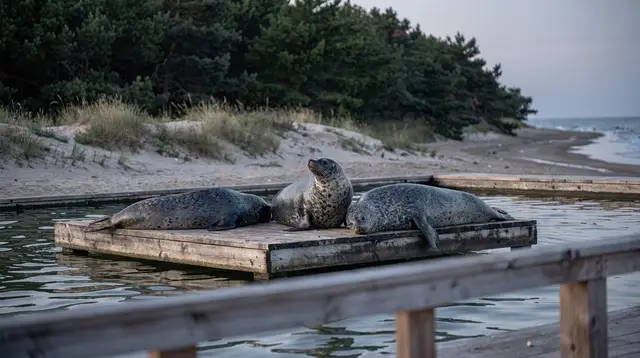
The Fokarium is a research and conservation station run by the University of Gdańsk's Marine Station, located in Hel town on the tip of the Hel Peninsula. It houses grey seals under scientific care as part of a Baltic seal conservation programme, and visitors observe the animals from viewing areas rather than touching or feeding them directly.
A research station, not a marine park
The Fokarium sits at the far end of the Hel Peninsula, in the fishing town of Jastarnia’s larger neighbour, Hel, and it is easy to misjudge before arriving. The name suggests a seaside attraction; the reality is the Marine Station of the University of Gdańsk, a working scientific facility whose main business is studying, breeding and rehabilitating Baltic grey seals. A small public visitor area is attached to the station, and that area is what most people mean when they say they are “going to see the seals in Hel” — but the animals themselves are there because of a decades-long conservation programme, not because the station exists to entertain a summer crowd.
That distinction shapes everything about a sensible visit. There is no petting pool, no seal show with tricks, and no arrangement where a visitor gets close enough to touch an animal. Seals are viewed from fixed observation points around outdoor and indoor pools, much as visitors would view specimens at any accredited research aquarium. The pace is quieter and more explanatory than a typical family attraction, with information panels on seal biology, the Baltic population’s history and the station’s ongoing work. Anyone arriving expecting a hands-on wildlife encounter, similar to a dolphin-swim programme elsewhere, will be disappointed — and that expectation is worth correcting before the trip rather than during it.
Why grey seals needed a rescue station at all
The Baltic grey seal population collapsed through the twentieth century, driven down by decades of hunting and later by pollution that interfered with reproduction. By the 1970s and 1980s, numbers along the Polish coast had fallen to a small fraction of historic levels, and the species had effectively vanished from stretches of shoreline where it had once been common. The University of Gdańsk’s Marine Station in Hel became a centre for studying what remained of the population and, over time, for breeding seals in controlled conditions with an eye to reintroduction.
That reintroduction work has continued for years: young seals raised or rehabilitated at the station are periodically released back into the Baltic, and researchers track how the wider population responds. It is slow, unglamorous conservation science — closer to a university field programme than a wildlife park’s marketing story — but it is a genuine part of why grey seals are now seen again, in modest but recovering numbers, along parts of the Polish coast. Framing a Fokarium visit around this history, rather than around a promise of animal interaction, is both more accurate and, for most visitors, more interesting once they understand it.
What the visit actually looks like
The public area is compact: a series of pools, some outdoor and some under cover, connected by a walking route with information boards in multiple languages. Visitors move at their own pace, and a full circuit — reading the panels, watching the animals, taking in the layout — typically takes somewhere between thirty minutes and an hour, depending on how much of the written material a visitor stops to read. It pairs naturally with the rest of a Hel town visit rather than filling a half-day on its own; most people combine it with a walk through the fishing harbour, the beach, or the town’s narrow streets rather than treating it as a standalone destination worth a special trip.
As at other institutional animal facilities, the station cares for its seals on its own schedule, which includes supervised feeding as part of daily husbandry. Some feeding sessions happen where visitors can observe them, and they tend to draw the most attention of any part of the visit — but the source material for this guide does not carry a confirmed, current timetable, and schedules of this kind shift with the season and the animals’ needs. The sensible approach is to check locally on the day, at the visitor entrance or through the station’s own current information, rather than planning a trip around a specific hour found in an old blog post or a listing that may be out of date.
Getting there: Hel is not a city-centre stop
The single most common misunderstanding about the Fokarium is where it sits. It is not in Gdańsk, not in the Tricity core, and not reachable on foot or by a quick tram ride from anywhere near the Motława waterfront. Hel town sits at the tip of a narrow, roughly 35-kilometre sand peninsula, and reaching it takes real travel time by any method.
| Route | Approx. duration | Notes |
|---|---|---|
| Direct summer train from Gdańsk | ~2 hours | Seasonal; runs along the Hel Peninsula line |
| Seasonal passenger boat (Gdańsk / Sopot / Gdynia) | ~90 min – 2 hours | Weather-dependent, mainly May–September |
| Driving around the bay | Varies, often 1.5–2+ hours | Traffic on the peninsula road is heavy in August |
None of these is a quick hop, and none runs at full frequency outside the warmer months — several stop entirely in winter. A trip built around the Fokarium works best as part of a wider Hel Peninsula day trip rather than a narrow there-and-back errand, and travellers relying on public transport should build in the full return journey time rather than assuming a short hop like the Gdansk-Sopot-Gdynia SKM line.
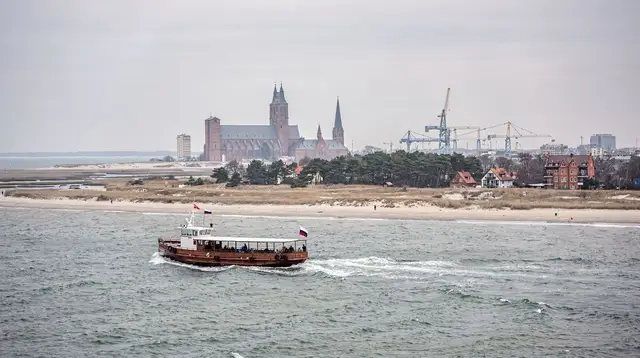
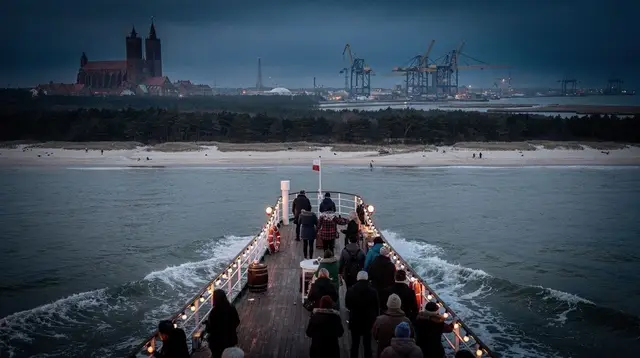
For visitors without their own transport, a boat cruise to Hel from the Tricity waterfront is often the more relaxed option in season, covering both the scenery of Puck Bay and the practical transfer in one go. Those exploring further west along the coast, toward the moving dunes near Łeba, can look at options such as:
a day cruise from Gdańsk out to the tip of the Hel Peninsula, which covers the sea approach to Hel town in a single guided outing, or a full-day excursion to Łeba and the shifting dunes further along the coast for travellers combining several Baltic coast stops on one trip.
Opening times: check before you go, always
Hel operates on a strongly seasonal rhythm, and the Fokarium is not an exception to that pattern. Much of the peninsula’s tourist infrastructure — boat services, some transport links, seasonal shops and stalls — scales back or closes outside the roughly June-to-September window, and museum and attraction hours elsewhere on the coast (Malbork Castle, the Słowiński dunes’ seasonal transport, ferry links to Scandinavia) follow the same broad pattern of longer summer hours and shorter, sometimes suspended, winter ones.
There is nothing in the material behind this guide confirming a guaranteed year-round opening schedule for the Fokarium specifically, and given how consistently the rest of Hel’s visitor facilities contract in the off-season, the honest advice is to verify current hours directly before travelling rather than assume the station keeps identical hours in January and July.
This matters more for a winter or shoulder-season trip than a midsummer one. A visitor arriving in Hel in December expecting the same open-all-day rhythm as an August afternoon may find reduced hours, fewer staffed information points, or a shorter visitor route than described in older travel write-ups. Planning around Gdańsk in winter already means expecting shorter days and thinner services generally along this coast; Hel and its Fokarium follow the same logic.
Pairing the Fokarium with the rest of Hel and the coast
Because the visitor area itself is modest in scale, most travellers treat the Fokarium as one stop within a longer day on the peninsula rather than the reason for the trip. Hel town’s fishing harbour, its beach on the bay side facing Puck, and the walk through the old fishermen’s quarter fill out a half-day comfortably around a Fokarium visit.
Families exploring the wider Tricity with children in tow often combine it with other animal-focused stops back toward Gdańsk, such as Oliwa Park’s zoo and cathedral grounds, on a different day of the same trip — see the broader roundup of family-friendly activities across Gdańsk and the Tricity for how the two fit into a single itinerary.
Travellers building out a longer Baltic coast run sometimes extend from Hel toward Leba and the Słowiński National Park dunes, treating the peninsula, the seal station and the dunes as one coastal arc rather than separate day trips. For that kind of route:
a guided electric-car tour around Łeba covers the town efficiently without a long walk, while a private guided visit into Słowiński National Park is a practical way to reach the moving dunes, which sit several kilometres from the park entrance and are not a roadside stop.
Watersports enthusiasts heading to the bay side of the peninsula for kitesurfing or windsurfing around Jastarnia and Puck Bay can find a Fokarium stop makes a natural, low-effort addition to a day otherwise spent on the water — see the guide to kitesurfing on Puck Bay near Jastarnia or the broader watersports guide for the Baltic coast for how the logistics line up.
Practical notes before setting off
A few points are worth carrying into the planning stage, all of them consistent with how the rest of this coast behaves outside the peak summer weeks. Card payments are near-universal at Polish attractions and cafes, so cash is rarely essential, though small stalls in a fishing town like Hel sometimes still prefer it. The Baltic weather off the peninsula tip can be noticeably windier and cooler than inland Gdańsk, even on a sunny day, so a layer worth having regardless of season is standard advice for this stretch of coast — consistent with the guidance in Gdańsk’s beaches and Baltic swimming guide about how quickly conditions shift on open water.
And because Hel sits well outside the Tricity’s SKM commuter network, anyone relying on public transport should check the getting around the Tricity guide for how the peninsula’s own seasonal train and bus links connect back to Gdańsk, rather than assuming the frequent city-centre rail rhythm extends all the way out to the coast.
None of this is meant to discourage a visit — the Fokarium is a rare chance, in this part of the Baltic, to see the animal at the centre of a genuine regional conservation success story, explained by the people actually doing the work. It is simply a different kind of stop than a seaside show, and travelling out to it with the right expectations — a research station with a public viewing area, on the far tip of a peninsula, on a schedule that shifts with the season — makes for a far better afternoon than arriving hoping for something the place was never built to offer.
Fokarium and Hel Peninsula seal visit FAQ
What is the Fokarium exactly?
It is the Marine Station of the University of Gdańsk in Hel, a working research facility that studies and cares for Baltic grey seals. It combines a small public visitor area with an active conservation and rehabilitation programme, which is why it reads more like a university field station than a seaside attraction.
Is the Fokarium in Gdańsk city centre?
No. It sits in Hel town, at the far tip of the Hel Peninsula, roughly 70-75 kilometres from central Gdańsk by road around the bay. It is not a stop within the Old Town or anywhere near the Motława waterfront.
Can visitors touch or feed the seals?
No. The Fokarium is a conservation and research centre, not a hands-on animal encounter. Seals are viewed from designated areas, and direct contact is not part of a standard visit — treating it otherwise misunderstands what the place is for.
Is there a set feeding schedule to plan around?
The station holds feeding sessions as part of its daily animal care, but exact times shift with the season and the animals’ needs, so it is worth checking the current schedule locally on the day rather than relying on a fixed time found online in advance.
How do you get to Hel and the Fokarium without a car?
A direct seasonal train runs from Gdańsk to Hel in around two hours, and seasonal passenger boats cross the bay from Gdańsk, Sopot or Gdynia in roughly 90 minutes to two hours. Both options depend on the season, with far fewer sailings and services outside the summer months.
Is the Fokarium open all year?
Much of Hel’s visitor infrastructure scales back sharply outside the summer season, and the Fokarium is no exception, so a guaranteed year-round schedule should never be assumed — always check current opening times before travelling, especially between autumn and spring.
Why does the Fokarium matter for the Baltic Sea?
Grey seals were hunted close to local extinction in the Baltic during the 20th century. The Fokarium’s breeding and rehabilitation work, alongside seal releases along the Polish coast, is part of the wider effort that has slowly brought numbers back up, making the station a genuine piece of regional conservation history rather than a sideshow.
Is a visit worthwhile if you are not especially interested in wildlife?
It works best paired with the rest of a Hel Peninsula day out — the fishing harbour, the beaches, the walk into town — rather than as a destination on its own, since the visitor area itself is compact and the emphasis is on education over spectacle.
Hel peninsula cruises
Verified deep-linked GetYourGuide tours. Book through these links and we earn a small commission at no cost to you.
GetYourGuide does not provide a product photo for this activity — the image shows the meeting point, photographed by us.