Why Łeba exists on a Baltic itinerary
Łeba is a small fishing and holiday town wedged between Lake Łebsko and the open Baltic, roughly 120km north-west of Gdansk along the coast. On its own, Łeba is a pleasant, low-key seaside stop with a working harbour and a long sandy beach. What actually draws visitors this far from Gdańsk is what sits just beyond the town: Słowiński National Park, one of the few places in Europe where you can walk onto a genuine desert of moving sand, surrounded on every side by forest and sea.
The park’s dunes are not static viewpoints. Driven by onshore wind, the sand migrates several metres a year, slowly burying pine trees as it advances and exposing the skeletal remains of trees it buried decades earlier further along its path. The best-known of these, Łącka Góra, rises to around 30 metres - a genuine sand mountain in the middle of a protected forest, with nothing to prepare you for the scale of it except the walk that gets you there.
That walk is the part visitors most often get wrong before they arrive, so it’s worth stating plainly and early: there is no way to drive to the dunes. Private vehicles are not permitted inside the national park, full stop. Anyone arriving expecting to park near the sand and stroll a short distance is planning the wrong trip.
How access actually works
The dunes sit inside a protected national park, and the park manages traffic accordingly - no roads for private cars cross into the core zone where the sand fields are. Every visitor, regardless of budget or fitness level, reaches Łącka Góra by one of four methods, all starting from the village of Rąbka, a short taxi or local bus ride from central Łeba.
| Method | Approx. distance/time | Notes |
|---|---|---|
| On foot from Rąbka | 4-8km round trip, 2-3 hours | Marked forest and sand trail, free |
| Bicycle | Same route, roughly 45-60 min each way | Rentals available in Łeba and Rąbka |
| Electric buggy/cart | Seasonal, shortens the walk considerably | Paid, runs mainly in high season |
| Boat across Lake Łebsko | Seasonal, scenic approach | Weather-dependent, runs May-September |
Walking is the default and the most rewarding option: the trail from Rąbka crosses pine and birch forest before opening abruptly onto sand, and that transition - dense woodland to bare dune in a few steps - is part of what makes the place memorable. Depending on which section of the dune field you walk to and whether you return the same way, expect somewhere between 4 and 8 kilometres round trip, which for most visitors means two to three hours of actual walking, not counting time spent on the dunes themselves.
Bicycles cover the same route faster and can be rented in both Łeba and Rąbka; the forest track is unpaved in places, so this suits confident riders more than families with small children. Electric buggies and carts operate seasonally and cut the walking distance sharply, which matters for visitors with limited mobility or very little time - but they still terminate short of the core dune area, and the final approach to the sand is always on foot. The boat option, crossing Lake Łebsko from Łeba or a nearby jetty, is the most scenic and the most weather-dependent: it runs mainly between May and September and can be cancelled on a windy day, which on this coast is not unusual.
Not a beach stroll - a walk in a protected wilderness
It’s worth resetting expectations before setting out. This is easy to picture as an extension of a day at the beach - sandy, coastal, close to the sea - and that mental shortcut causes real problems on the trail. The route to Łącka Góra is a hike through a nature reserve, not a boardwalk between ice cream stands. There is minimal shade for long stretches, no shortcuts back if you tire halfway, and the sand itself is genuinely difficult to walk on - soft, shifting underfoot, and tiring in a way that flat pavement never is.
Sturdy, closed shoes make more difference here than anything else you pack. Trainers fill with sand quickly; sandals are a poor choice once you’re on the dune itself. Bring water - there is little to no services once you leave Rąbka, and no shops or cafes deep inside the park. Sun protection matters even on overcast Baltic days, because the open sand reflects glare with none of the tree cover that shields the approach trail. Wind is a near-constant on the exposed sand field, so a light layer that can go over a t-shirt is worth carrying even in summer.
Fitness expectations deserve blunt treatment too: this is not a technical hike, but sand sapped of a firm surface makes even the flatter stretches noticeably more tiring than the same distance on a paved path, and the final approach up Łącka Góra itself is a genuine, if short, climb up a loose slope. Visitors with heart or breathing conditions, or those simply out of the habit of a few hours on their feet, should budget extra time and rest stops rather than treating the posted distances as a fixed schedule. None of this makes the walk inaccessible to an averagely fit adult - most visitors manage it without difficulty - but arriving with realistic expectations beats arriving with a beach mindset and discovering the sand fights back.
The terrain also rules out an easy fix for visitors who use a wheelchair or have significant mobility limitations: soft sand and an unpaved forest track make the walk to Łącka Góra impractical without assistance, and the electric buggies, while shorter, still hand off to loose sand for the final stretch. Visitors weighing accessibility across the wider region are better served checking a dedicated overview of which Tricity attractions and transport genuinely work for wheelchair users, such as the guide to wheelchair-accessible attractions in the Tricity, before committing a full day to Łeba specifically.
Treat it as a half-day hike with a spectacular payoff, not a fifteen-minute photo stop. Visitors who allow enough time to actually reach the highest dunes, sit for a while, and walk back unhurried tend to rate it as one of the best things they did on the whole coast; visitors racing in for a quick look and a rushed retreat tend to find it merely “nice sand.”
Planning a visit from Gdańsk
Łeba is far enough from Gdansk that treating it as a single self-drive or self-organised day trip takes real commitment: about 120km each way, roughly 2 to 2.5 hours by car or bus along the coast road, with no direct fast train. Organised day tours exist and remove the logistics, but they compress an already long round trip into a single day, leaving comparatively little time at the dunes themselves once travel is subtracted.
None of this requires a hire car. Łeba sits on a bus route from Gdańsk and Lębork, and travellers who’ve already decided to explore the Tricity and coast by rail and bus can fold Łeba into the same car-free plan - a question covered directly in should you rent a car in Gdansk, which weighs the coast’s public transport against the cost and hassle of driving. Budgeting for the day is straightforward too: between the park entry fee, a bus or bike rental, and a seafood lunch in the harbour, Łeba sits comfortably within the ranges laid out in a general Gdańsk budget travel guide, with the dune walk itself costing next to nothing beyond the entrance fee.
An overnight stay in Łeba solves that trade-off neatly: it turns a rushed there-and-back into a relaxed two-day trip, with time for the dune walk at a comfortable pace, an evening on Łeba’s own beach, and a second look at the sand in different light the next morning - dawn and late afternoon both change the colour of the dunes dramatically, something a single midday visit never shows. For a trip built specifically around this stretch of coast rather than treating it as a single add-on day, a dedicated Łeba and the dunes escape itinerary lays out a fuller route, including where to sleep and how to pace the two dune visits mentioned above.
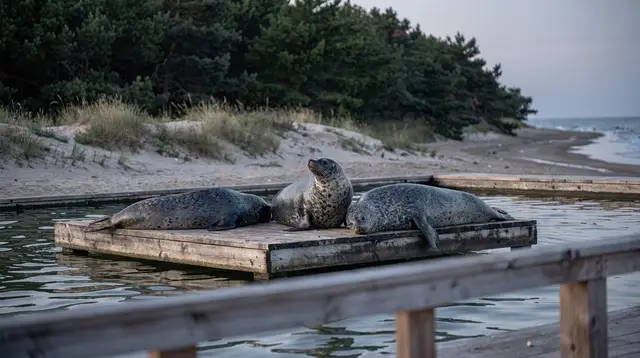
For visitors building a wider Baltic coast route, Łeba slots naturally alongside the Hel Peninsula and Puck as one of three distinct coastal experiences - Hel for its narrow spit and seal sanctuary, Puck for its calmer bay, Łeba for landscape unlike anywhere else on the route.
Combining all three in one trip is possible but ambitious; most itineraries pick one coastal focus per visit and save the rest for a return trip. Visitors who’d rather trade a long coastal transfer for a shorter, hillier day out sometimes swap Łeba for the lake-and-hill country closer to Gdańsk, covered in a dedicated Kashubian Switzerland day trip guide
- a gentler alternative with none of the sand or the distance.
Before heading out this far, it’s worth anchoring a Gdańsk base with a proper orientation to the city and the Tricity rail network. A guided overview such as the Gdańsk private city tour or a self-paced Old Town walking tour gives useful context on how the Tricity and its surrounding coast fit together before tackling a longer excursion like Łeba.
Visitors splitting their stay between Gdańsk and Sopot sometimes pair a coastal day like this one with a Sopot highlights walk or a relaxed sunset yacht cruise earlier or later in the same trip, using Sopot as a lower-effort coastal counterpoint to a demanding day at the dunes.
What else Łeba offers
Łeba itself is a modest, likeable town, not a destination to linger in for its own sake. Its own beach - wide, sandy, backed by low dunes - is a perfectly good place to spend an afternoon after the Słowiński hike, and considerably less strenuous than the national park. The small harbour has a handful of fish stalls and simple seafood restaurants serving the day’s catch, a reasonable reward after a long walk. Outside the peak July-August weeks, the town is quiet enough that finding a table or a room rarely takes planning.
Because so much of Łeba’s tourist infrastructure - boat crossings, buggy rides, some seasonal eateries - runs only from roughly May to September, visiting outside that window changes the trip significantly. Off-season, the walking route to the dunes stays open and is, if anything, even more dramatic under grey winter light and with nobody else on the sand, but plan for a longer walk with fewer shortcuts and fewer places to warm up afterwards. Visitors weighing a shoulder-season visit against the busier summer weeks can compare general expectations for the month in a wider seasonal guide such as Gdańsk in October, which covers the same shortening daylight and thinning crowds that shape an autumn visit to Łeba.
Practicalities at a glance
| Detail | What to know |
|---|---|
| Entry fee | Small national park fee, paid at the entrance near Rąbka |
| Car access to dunes | Not permitted anywhere inside the park |
| Minimum realistic time | Half a day for the walk alone |
| Footwear | Closed, sturdy shoes essential |
| Water/shade | Bring your own; very limited once past Rąbka |
| Peak season | June-August; boats and buggies mostly seasonal |
Łeba and the Słowiński dunes: your questions answered
Can you drive a car to the Łeba dunes?
No. Private cars are banned inside Słowiński National Park, and this is strictly enforced. The dunes are reached only on foot, by bicycle, by seasonal electric buggy, or by boat across Lake Łebsko, all starting from the village of Rąbka near Łeba.
How far is the walk to the moving dunes?
Depending on the route taken and which part of the dune field you visit, the round trip from Rąbka is roughly 4 to 8 kilometres, typically taking two to three hours including time spent on the sand itself. It is a real walk through forest and open dune, not a short stroll.
How far is Łeba from Gdańsk, and how do you get there?
Łeba is about 120km north-west of Gdańsk, reached in roughly 2 to 2.5 hours by car or by bus along the coast road. There is no direct fast rail connection, which is why many visitors either join an organised day tour or plan an overnight stay.
Is Łeba worth visiting as a day trip from Gdańsk?
It’s possible but demanding, given the roughly 4-5 hours of round-trip travel on top of the dune walk itself. Visitors with limited time often get more out of an overnight stay, which allows a relaxed walk plus time on Łeba’s own beach and harbour.
What should you wear or bring for the dune walk?
Closed, sturdy shoes are essential - the sand is soft and tiring, and trainers fill up quickly. Bring water and sun protection, since shade and services largely disappear once you leave Rąbka, and pack a light layer for wind on the exposed sand field.
Is the boat crossing to the dunes better than walking?
The boat across Lake Łebsko offers a scenic, low-effort approach and runs seasonally between roughly May and September, weather permitting. Walking remains the most reliable option year-round and gives the clearest sense of the transition from forest to open sand.
How tall is Łącka Góra, and does it really move?
Łącka Góra, the best-known dune in the park, reaches around 30 metres and advances several metres a year, driven by wind off the Baltic. It slowly buries forest ahead of it while exposing tree remains it buried decades earlier further back along its path.
When is the best time to visit the Łeba dunes?
May to September gives the longest daylight and full access to seasonal boats and buggies, with June and July offering the most daylight hours. September brings thinner crowds with generally still-good weather, making it a strong choice for a calmer visit.