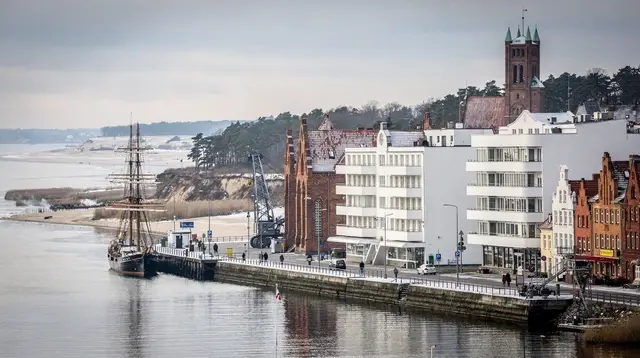
How Much Does a Trip to Gdańsk Cost? A Realistic Budget Guide
How much should I budget for a trip to Gdańsk?
Gdańsk is generally cheaper than Western Europe, but there is no single daily figure that holds for everyone: budget travellers, mid-range visitors and those wanting comfort spend very differently. Everything is paid in Polish zloty (PLN), not euros, so build your budget in zloty and expect card payments to be the norm.
Why “how much does Gdańsk cost” doesn’t have one answer
Ask a dozen travellers what they spent in Gdańsk and you’ll get a dozen different numbers, and that’s before anyone mentions the season, the neighbourhood, or whether the trip included a night out in Sopot. Budget guides that hand you a single daily figure are, more often than not, guessing on your behalf. This page won’t do that. Instead, it sets out the moving parts that actually determine what a Gdańsk trip costs — currency, accommodation type, food choices, transport patterns and season — so you can build a number that fits your own trip rather than borrow one that fits nobody’s.
The one fact that changes everything for a first-time visitor from outside Poland is currency. Poland is not in the eurozone. The currency is the Polish zloty (PLN), and everyday spending here — a coffee on Długi Targ, a ticket machine on the SKM platform, a stall on Mariacka street — runs in zloty, not euros. That single point trips up more visitors than any pricing question, so it’s worth dealing with first.
The currency question: zloty, not euros
If there is one assumption to leave at home, it’s that euros will do. Poland retains its own currency, and while a small number of tourist-oriented businesses near the Old Town might informally quote a euro price or accept a euro note out of convenience, this is not something a budget can be built around. Expect prices everywhere — restaurants, museums, market stalls, taxis, the SKM ticket machine — to be denominated in zloty, and expect to pay in zloty, whether by card or cash.
The practical upshot for a budget is straightforward: convert your spending target into zloty before you leave, rather than doing euro-to-zloty mental arithmetic at every till. Card payments, particularly contactless, are close to universal in shops, cafes and even at open-air stalls, so a card comfortably covers most day-to-day spending. It’s still worth carrying some zloty cash for smaller vendors, for tipping, or for the odd place that prefers it. For the full breakdown of cards versus cash, ATMs, and where a euro might (rarely) be accepted informally, see our dedicated guide on how to pay in Poland — it goes into more detail than a budget overview can.
Accommodation: the biggest lever in your budget
Where you sleep does more to move your total spend than any other single choice, and it swings on three things: which part of the Tricity you stay in, what kind of room you book, and what month you travel.
Location matters because Gdańsk, Sopot and Gdynia are not interchangeable when it comes to price. Central Gdańsk, especially the Old Town around Dlugi Targ, carries the convenience premium of any historic centre. Sopot, with its beach and pier, tends to be the priciest of the three in peak season precisely because it’s the Tricity’s resort town. Staying slightly outside the absolute centre, or basing yourself in Gdynia and using the SKM to reach Gdańsk and Sopot, is a common way to trade a short commute for a lower nightly rate — our guide to where to stay in Gdansk walks through the trade-offs by neighbourhood.
Room type is the second lever. Hostels and budget guesthouses sit at one end, mid-range hotels and apartments in the middle, and boutique or resort-style hotels — especially in Sopot — at the top. Rather than quote figures that would be stale within a season, the honest approach is to check current listings for your travel dates directly, since accommodation pricing moves faster than almost anything else in a destination and any number printed here would likely be wrong by the time you read it.
Season is the third and often underestimated factor. High season on this coast runs roughly June to September, when the Tricity’s beaches and Old Town are busiest and room rates are at their peak — the crowded weeks of St Dominic’s Fair in August being the extreme case. Shoulder months either side, and the winter low season, generally bring softer accommodation pricing, though also shorter hours at some coastal attractions and fewer seasonal boat services. If your dates are flexible, shifting a trip a few weeks either side of peak summer is one of the more effective ways to lower an accommodation budget without lowering the quality of the trip.
Food and drink: from milk bars to fine dining
Poland’s food scene spans an unusually wide range, and Gdańsk is no exception. At the economical end sit bar mleczny (milk bar) style canteens and casual pierogi spots, serving simple, filling Polish food at a fraction of restaurant prices — a genuinely useful budget tool, not just a novelty. In the middle sit the Old Town’s sit-down restaurants, serving Polish and international menus at prices closer to what a visitor from Western Europe would expect. At the top end, Gdańsk has a growing fine-dining scene, particularly in and around the Motława waterfront, priced accordingly.
Rather than pin down exact zloty figures that would need constant updating, the more useful budgeting habit is to think in ratios: a milk bar meal costs meaningfully less than a mid-range restaurant meal, which in turn costs less than a tasting menu — and mixing the three across a trip, rather than eating every meal at the same tier, is how most visitors naturally keep their food spend in check. Markets and bakeries are also a legitimate way to cut costs for breakfast or a packed lunch, especially on a day trip to somewhere like Malbork or Hel where restaurant options thin out once you leave the town centre.
A glass of local Goldwasser liqueur or a Baltic-brewed craft beer is worth budgeting for as a one-off experience rather than a daily habit if costs matter — both are part of Gdańsk’s drinking culture, and a single evening trying them tells you plenty without repeating the spend every night.
Getting around: SKM, trams, and when a taxi makes sense
The Tricity’s transport backbone is the SKM (Szybka Kolej Miejska), the commuter rail line running along the coast through Gdańsk, Sopot and Gdynia, supplemented by trams and buses within Gdańsk itself. Tickets are sold by time validity — 20, 40, 60, 90 minutes or a 24-hour pass — rather than by number of stops, which rewards planning a day’s movements together rather than buying single tickets for every short hop. For a full explanation of how the ticket system and validation machines work, our guide to getting around the Tricity covers it in detail.
This ticketing structure is also one of the more budget-friendly features of visiting Gdańsk: a day exploring the Old Town, Oliwa and a stretch of the Sopot seafront can realistically be covered on public transport for less than the equivalent taxi fares would cost, without sacrificing much time.
Taxis and ride-hailing apps remain useful for late-night returns, for luggage-heavy airport transfers, or for reaching spots the SKM doesn’t serve directly, and are worth having as a backup rather than a default. If you’re weighing whether a hire car is worth adding to the budget at all, our guide on renting a car in Gdansk is a useful gut check — for most itineraries centred on the Tricity, it adds cost without adding much convenience.
Airport transfers deserve their own line in a budget, since Gdańsk Lech Wałęsa Airport (GDN) sits about 12km northwest of the Old Town: the SKM covers it in around 25-35 minutes and is the cheaper route, while a taxi or private transfer is faster door-to-door but costs more — see our airport-to-city-centre guide for the comparison.
Attractions and activities: mixing free and paid
Gdańsk rewards visitors who mix free sightseeing with a handful of well-chosen paid experiences, rather than either paying for everything or seeing nothing but streets and facades. Walking the Old Town, the Motława riverfront, Mariacka street and much of the Sopot seafront costs nothing beyond transport. Several major sites — the European Solidarity Centre, the Museum of the Second World War, St Mary’s Basilica tower, and Malbork Castle — charge admission, generally with reduced rates for students, children or seniors, and it’s worth checking each site’s own current listing rather than relying on a number printed elsewhere, since ticket prices and reduced-rate policies change over time.
Some experiences are naturally suited to a guided or activity-based format rather than a simple entry ticket, and these are worth weighing against the do-it-yourself alternative on both cost and time. A guided kayak trip on the Motława gives a different, waterline view of the crane and the riverfront than walking the embankment, and bundles the cost of equipment and guidance into a single booking rather than piecing it together yourself. Over in Sopot, a guided bike tour covers more ground than walking while still costing far less than a private transfer for the same distance.
Day trips out of the city carry their own budget logic. Malbork Castle cannot really be seen properly on a rushed half-hour, and the honest time commitment — three to four hours for the full route — means a guided day trip to Malbork Castle with an audioguide can work out more time-efficient than organising the train and entry slot yourself, even where the sticker price looks higher than DIY.
The Stutthof Memorial near Sztutowo is reachable independently but public transport there is infrequent, so a guided visit with transfer often saves more in wasted time than it costs in convenience fees — worth factoring in given how far out of the way Sztutowo sits without a car. If you’re unsure whether a guided option or independent travel suits your budget better across the wider region, our comparison of guided tours versus DIY day trips lays out the trade-offs site by site.
Building your own number, sensibly
Rather than hand you a single daily figure dressed up as fact, here is the honest structure to build your own:
| Category | What drives the cost | Where to dig deeper |
|---|---|---|
| Accommodation | Location, room type, season | Where to stay in Gdansk |
| Food | Milk bar vs. restaurant vs. fine dining mix | This guide |
| Local transport | SKM/tram time-validity tickets vs. taxis | Getting around the Tricity |
| Attractions | Free sights vs. ticketed museums and castles | Each site’s own listing |
| Day trips | DIY transport vs. guided tour with transfer | Guided vs. DIY day trips |
A trip built mostly from the left-hand end of each row — hostel-style stays, milk bars, public transport, free sights — will cost meaningfully less than one built from the right-hand end, and most real trips land somewhere in between and vary day to day. The length of the trip matters too: our guide on how many days in Gdansk helps size the trip itself before you size the budget for it, and a short one-day Gdańsk itinerary or a fuller Gdańsk plus Sopot two-day plan can each be costed against the categories above once you know the shape of the days.
What we won’t promise you
It would be easy, and dishonest, to print a single “Gdańsk costs $X a day” figure and let readers plan around it. We won’t do that, for three reasons worth spelling out.
First, we won’t claim euros are broadly accepted, because they aren’t — Poland’s currency is the zloty, and building a trip around leftover euros from a previous stop is a real, recurring mistake, not a minor footnote. Our zloty-not-euro explainer covers exactly why this catches people out.
Second, we won’t publish precise, unverified prices for meals, rooms or tickets on a page like this. Restaurant menus, hotel rates and museum admission fees change often enough that a specific number printed today is a liability by next season; the categories and ratios above will still be true long after any specific figure has gone stale.
Third, we won’t tell you Gdańsk’s cost of living matches Warsaw or Krakow, because we don’t have the comparative data to back that claim, and confident city-to-city comparisons of this kind are one of the more common ways budget advice goes wrong. Treat any source — this one included — that states a firm ranking between Polish cities with some scepticism unless it cites where the figures came from.
For the mechanics of paying for any of this — cards, cash, ATMs, and the handful of situations where a euro genuinely might work — the fuller answer lives in our guide to paying in Poland. Read that alongside this page and you’ll have both halves of the budget picture: what things cost in shape, and how you’ll actually hand over the money for them. And before you land, it’s worth a glance at our broader list of tourist mistakes to avoid in Gdansk, several of which are budget mistakes in disguise.
Frequently asked questions about budgeting for Gdańsk
Can I pay in euros in Gdańsk?
Not as a rule. Poland uses the zloty (PLN) and has not adopted the euro, so shops, restaurants, transport and most attractions expect payment in zloty by card or cash. A handful of tourist-facing stalls or hotels may quote euro prices informally, but this is the exception, not something to plan a trip around.
Is Gdańsk cheaper than Warsaw or Krakow?
We don’t have verified comparative data to say Gdańsk is reliably cheaper or pricier than Warsaw or Krakow, and city-by-city cost comparisons shift with season and neighbourhood, so treat any confident claim of that kind with caution. What is clear locally is that the Tricity’s coastal towns, especially Sopot in summer, tend to carry a premium over central Gdańsk.
Do I need cash, or is card enough?
Contactless card payment is near-universal in Gdańsk shops, cafes and even market stalls, so a card comfortably covers most of a trip. It is still sensible to carry some zloty cash for smaller stalls, tips, or the rare place that is card-only above a minimum but cash-preferred below it.
Are museum and attraction tickets expensive?
Major sites such as Malbork Castle or the European Solidarity Centre charge a ticket, typically with a reduced rate for students, seniors or children, while some churches, memorial sites and outdoor spaces are free to enter. Rather than assume a figure, check each site’s own listing before you go, since prices and reduced-rate rules change.
Does the season change how much a trip costs?
Yes, noticeably. High summer (roughly June to September) pushes up accommodation prices in Gdańsk and especially in Sopot, while the shoulder and winter months generally bring softer rates, alongside shorter opening hours and fewer seasonal boat and coastal services.
Is public transport a cheap way to get around?
The Tricity’s SKM commuter rail and the local tram and bus network are priced by time validity rather than by distance, which tends to make them an economical way to move between Gdańsk, Sopot and Gdynia compared with taxis for every trip. Our guide to getting around the Tricity explains how the ticket system works.
Should I book tours in advance to save money?
Booking ahead does not always mean a lower price, but for time-slot attractions like Malbork Castle it can save you from a lost afternoon in a queue, which matters more to a tight budget than a small discount. For activity-based days out, comparing a guided option against doing it yourself is worth a look before you commit either way.
What is the single biggest budget mistake visitors make?
Assuming euros will be accepted, or that a Western European daily budget automatically translates one-to-one to Poland. Both assumptions can lead to under-preparing with cash or cards, or misjudging how far a given sum actually stretches on the ground.
Trip planning
Verified deep-linked GetYourGuide tours. Book through these links and we earn a small commission at no cost to you.
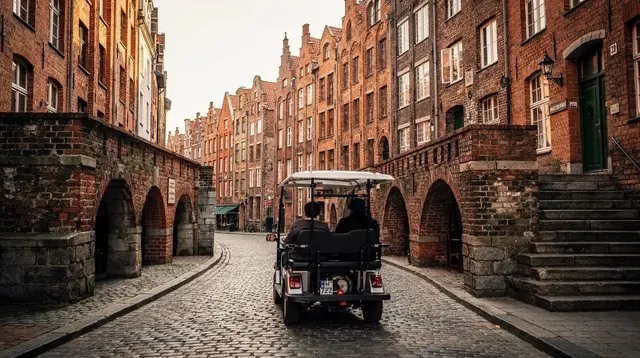
GetYourGuide does not provide a product photo for this activity — the image shows the meeting point, photographed by us.