Should You Rent a Car in Gdańsk?
Do you need a car to visit Gdańsk and the Tricity?
No. The SKM commuter train covers Gdańsk, Sopot and Gdynia efficiently and a car is unnecessary weight in the Old Town. A car earns its cost mainly for further-afield trips such as the Wolf's Lair or a flexible day in Kashubia, and even then it is not compulsory.
The honest answer: it depends on your itinerary, not on Gdańsk itself
Ask ten visitors whether they needed a rental car in Gdańsk and you will get ten different answers, because the real question is never “is a car useful in Poland” but “what does your specific itinerary actually require.” A couple spending three days in the Old Town and Sopot has no use for a car at all.
A family building a one-week Pomerania trip that includes Kashubian Switzerland and the Wolf’s Lair will find a car genuinely changes what is possible. Both of these are correct answers for their respective trips. What follows is the breakdown by destination and by trip type, so you can work out which camp you are in rather than following a blanket rule that does not fit your plans.
Where a car adds nothing: Gdańsk, Sopot and Gdynia
Inside the Tricity, a car is close to a liability rather than a convenience. The SKM commuter train runs along the coast from Gdańsk through Sopot to Gdynia and beyond, with trains every 10-20 minutes at peak times. The ride itself hugs the shoreline with sea glimpses for much of the way, which already beats sitting in traffic. Tickets are sold by time validity rather than by number of stops, so a single fare can cover hopping between all three cities in one outing.
Driving into any of these city centres, by contrast, means narrow streets in the Old Town, metered and often scarce parking, and pedestrian zones around Długi Targ and the Motława waterfront that a car simply cannot enter. Visitors who arrive with a rental car for a Tricity-only trip typically end up parking it at the hotel for days and paying for the privilege of not using it.
For the airport leg itself, a pre-booked private transfer straight to your hotel covers that first stretch without needing a rental car at all. If your itinerary is Gdańsk and Sopot over two days or a three-day Tricity trip, skip the rental and lean on the train.
The parking economics reinforce the point. Central paid-parking zones in Gdańsk’s Old Town and along the Sopot seafront operate on a metered, time-limited basis geared towards short errands rather than all-day tourist parking, and spaces closest to the sights fill early on a summer weekend. A car parked for three or four days while its owner walks or takes the SKM everywhere effectively becomes a recurring parking bill with no offsetting benefit - the same money would cover several weeks of SKM day tickets. Even hotels with private parking often charge a separate daily fee for it, which is worth checking before assuming a rental is the cheaper option once fuel, parking and the rental itself are all added up against a handful of train fares.
Where a car creates its own problems: Hel and the coast in summer
The Hel Peninsula is the clearest case where driving can actively work against you. The peninsula road is narrow and single-route for most of its length, and in July and August it carries a volume of holiday traffic that turns a straightforward drive into a slow crawl, particularly on weekends.
A direct summer train from Gdańsk, or a seasonal boat from Gdańsk, Sopot or Gdynia, sidesteps that congestion entirely and drops you closer to the centre of Jastarnia or Hel town than most parking would. If a beach day on the peninsula is the plan, check the boat cruise to Hel Peninsula or the wider Hel Peninsula day trip guide before assuming a car is the faster option - in peak season it usually is not.
Where a car is simply not allowed: the Łeba dunes
This one is not a matter of convenience - it is a hard rule. Słowiński National Park, home to the shifting sand dunes near Leba, does not permit private cars inside its boundary. Whatever gets you to Łeba - car, bus or train - the final stretch to the moving dunes is a walk or bike ride of roughly 3-4km each way from the park entrance, with no shuttle running in winter and only a limited seasonal option in peak summer.
A rental car will get you to Łeba faster than public transport in some cases, but it will not get you to the dunes themselves, and sturdy shoes matter far more here than a parking spot. See the Łeba moving dunes guide for the practical walk-in details.
Where a car starts to earn its cost: Kashubia
Kashubian Switzerland, the rolling hill and lake country west of the Tricity, is where the calculus shifts. Public transport reaches the area but thins out between villages, and the appeal of the region - hopping between lakes, viewpoints and small towns like Szymbark at your own pace - depends on exactly the kind of flexibility a train timetable cannot offer.
A self-driven day, or a private tour with a driver, is genuinely the more practical way to see more than one or two fixed stops. The Kashubian Switzerland day trip guide and the Kashubian Switzerland lakes tour both assume some form of private transport for exactly this reason.
Where a car becomes close to necessary: the Wolf’s Lair
The strongest case for renting sits with the Wolf’s Lair, Hitler’s former wartime headquarters in the forest well east of the Tricity. This is a long day out by any measure - the site is far enough from Gdańsk that public transport options are sparse and indirect, and most visitors who make the trip do so either by rental car or by booking an organised transfer that removes the driving decision entirely. If the Wolf’s Lair is on your list, treat it as its own logistics question rather than something to squeeze in alongside Tricity sightseeing; the Wolf’s Lair day trip from Gdańsk guide lays out what the day actually involves before you commit to a car for it.
Malbork and the castle route: train wins on convenience
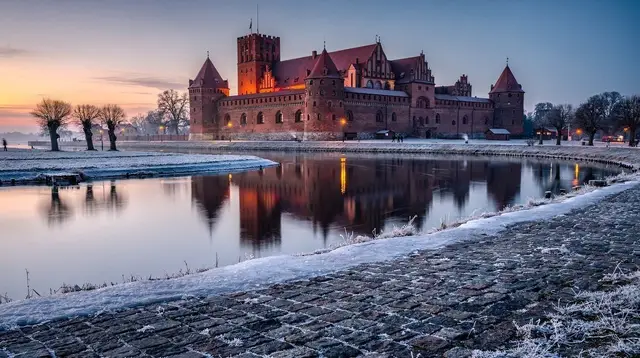
Malbork Castle is often assumed to need a car because of its scale, but the opposite is closer to true. Regional trains from Gdańsk Glowny reach Malbork in roughly 35-40 minutes, and the castle is a short walk from the station - no parking search, no motorway driving, no decision about where to leave the car for a multi-hour visit. A car saves little time here and adds the hassle of finding parking near a site that draws heavy visitor numbers in summer.
The getting to Malbork Castle from Gdańsk guide and the Malbork day trip itinerary both lean on the train as the simpler route, reserving a car for travellers who are combining Malbork with other stops in the same day, such as the Elbląg Canal or Sztutowo. Travellers who would rather skip the driving altogether can instead book a guided Elbląg Canal boat tour from Gdańsk that handles the transport for the whole day.
Practical rules of the road, if you do drive
Poland drives on the right, and a few local rules catch first-time renters out. Headlights must stay on at all times, day and night, all year round - not just in poor visibility. Winter tyres are not a strict legal requirement in the way they are in some neighbouring countries, but rental agencies typically fit them as standard through the colder months given how genuinely wet and windy the Baltic winter gets.
The A1 motorway, which runs south from the Tricity towards Toruń and on to Lodz, includes toll sections on some stretches further south, though the portion most visitors use for a Malbork or Elbląg Canal day trip does not typically require a toll ticket - check the route before assuming either way, since toll sections are periodically extended.
Rental counters cluster at Gdańsk Lech Wałęsa Airport itself, which means the car is often collected on arrival rather than picked up separately in the city centre - convenient if the plan is to drive straight out to Kashubia or Malbork without first passing through Gdańsk. A standard driving licence from an EU country, the UK, the US or most other Western countries is accepted without an International Driving Permit for a short tourist rental, though it is worth confirming with the specific rental company, since requirements can vary by nationality.
Excess insurance is worth reading closely - the headline daily rate at Polish airport counters is frequently much lower than the all-in cost once collision damage waiver and reduced-excess cover are added, and comparing that adjusted total against the price of a private transfer for the same route sometimes changes the calculation entirely.
A quick way to decide: match the car to the trip shape
| Trip shape | Car needed? | Why |
|---|---|---|
| Gdańsk + Sopot, 2-3 days | No | SKM covers it entirely |
| Full Tricity, 3-4 days | No | SKM plus short bus/tram hops |
| Tricity + Malbork | No | Direct regional train, short walk to castle |
| Tricity + Hel in July/August | Optional, often skip | Peninsula road congested; train or boat avoids it |
| Tricity + Kashubian Switzerland | Helpful | Villages and lakes spread out, thin public transport |
| Tricity + Wolf’s Lair | Close to necessary | Far southeast, sparse public transport |
| Tricity + Łeba dunes | Gets you to Łeba only | Park itself bans private cars |
This is a guide to tendencies, not a fixed formula - a private transfer can substitute for self-driving on the Wolf’s Lair leg, and a guided tour can cover Kashubia without you touching a wheel. What matters is recognising which stops on your list belong to the “car helps” column before you commit to several days of rental fees for a trip that is mostly Tricity train rides.
If you do rent: what changes about the city itself
Renting for the out-of-town days does not have to mean driving in the city. Most visitors who rent for Kashubia or the Wolf’s Lair pick the car up on the morning they need it and return to train and tram use for everything inside Gdańsk, Sopot and Gdynia. This avoids paying for parking near the Old Town or navigating the pedestrian streets around Mariacka, while still getting the flexibility a car provides for the genuinely spread-out destinations.
If your plan already includes a 4-day Gdańsk and Malbork itinerary or the fuller 5-day Tricity, Hel and Malbork route, check which specific days would actually benefit before booking a rental for the whole stay - it is common to need a car for one or two days out of five, not all of them.
Should you rent a car in Gdańsk: the verdict
There is no single correct answer, and any page that gives you one is oversimplifying. A car is unnecessary inside the Tricity, where the SKM does the job better than driving ever would. It is not a shortcut to the Łeba dunes, which ban private vehicles regardless. It is a mixed bag for Hel, where summer traffic can erase any time a car might save. But for Kashubian Switzerland’s scattered lakes and villages, and especially for a trip that includes the distant Wolf’s Lair, a car - or at minimum a private transfer - stops being a luxury and starts being the practical way to see what you came for. Look at your own itinerary stop by stop, not at Gdańsk as a single yes-or-no question, and rent only for the days that actually need it.
Frequently asked questions about renting a car in Gdańsk
Do I need a car to get around Gdańsk, Sopot and Gdynia?
No. The SKM commuter train links the three cities every 10-20 minutes at peak times and runs along the coast, which is faster and less stressful than driving and parking in any of them.
Can I drive to the moving dunes at Łeba?
Not all the way. Słowiński National Park bans private cars inside its boundary, so from the park entrance the dunes are a walk or bike ride of several kilometres each way, whatever transport brought you to Łeba.
Is it worth renting a car just for the Hel Peninsula?
Rarely. The peninsula road gets heavily congested in July and August, and a direct summer train or a seasonal boat from Gdańsk, Sopot or Gdynia usually gets you there with less hassle.
Does a car make sense for the Wolf’s Lair?
This is the strongest case for renting. The Wolf’s Lair sits roughly 250km southeast of Gdańsk, in an area with sparse public transport, so a car or an organised transfer is the practical way to combine it with anything else nearby.
Is Malbork Castle easier by car or by train?
By train, generally. Regional trains from Gdańsk Glowny reach Malbork in roughly 35-40 minutes and the castle is a short walk from the station, so a car adds parking logistics without saving meaningful time.
What about Kashubian Switzerland - do I need a car there?
A car helps here more than almost anywhere else in the region. The lakes and hills are spread out with limited public transport, so self-driving or a private tour gives real flexibility to move between villages at your own pace.
Are there parking and driving hassles specific to Gdańsk?
The Old Town has narrow streets, limited and metered parking, and pedestrian zones that make arriving by car more stressful than useful; most visitors who rent leave the car at a hotel or edge-of-town lot and use it only for out-of-town days.
Is a car necessary for a short 2-3 day Gdańsk trip?
No. For a short trip focused on Gdańsk and the Tricity, a car is dead weight - you will pay for parking and mostly not use it, while the train handles everything you need.
Do I need an International Driving Permit to rent a car in Gdańsk?
Usually not for short tourist rentals if you hold a licence from the EU, UK, US or most other Western countries, but requirements vary by nationality and rental company, so it is worth confirming directly with the agency before travelling.
Are there toll roads between Gdańsk and Malbork or Toruń?
The stretch most visitors use for a Malbork or Elbląg Canal day trip is not typically tolled, but the A1 motorway further south towards Toruń and Lodz does include toll sections, and these are periodically extended - check the specific route rather than assuming either way.
Transport options
Verified deep-linked GetYourGuide tours. Book through these links and we earn a small commission at no cost to you.
GetYourGuide does not provide a product photo for this activity — the image shows the meeting point, photographed by us.