One Week in Pomerania: Tricity, Hel, Malbork and Toruń
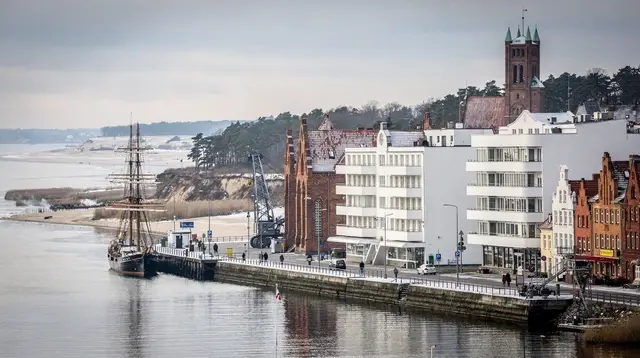
A week is the right length to see Pomerania properly rather than skim it. This itinerary spends three days in the Tricity — Gdańsk, Sopot and Gdynia — then sends you out along the coast to the Hel Peninsula for a day, inland to Malbork Castle for a day, and further inland again to Toruń for a genuinely long day. The seventh day is deliberately left loose: a rest day in Gdańsk, or a day in Kashubian Switzerland for anyone renting a car for that single day only.
Two things this itinerary refuses to do, on purpose. It does not add the Wolf’s Lair — at roughly 250km from Gdańsk, it is a full day trip in its own right, and squeezing it into an already full week means arriving exhausted and leaving rushed. It also refuses to present Toruń as a light there-and-back: the town sits around 170km from Gdańsk, and even the fastest direct train takes about two and a half hours each way, so Day 6 below is built as a proper long day with an early start, not a half-day bolt-on. For a shorter version of this trip, see the one-week Pomerania alternative or the three-day Tricity itinerary.
A practical note before Day 1: Gdańsk runs on Central European Time, UTC+1 in winter and UTC+2 during summer daylight saving from late March to late October — the same clock as Warsaw and Berlin, never UTC+3.
Day 1: Gdańsk Old Town, Mariacka and the Motłava
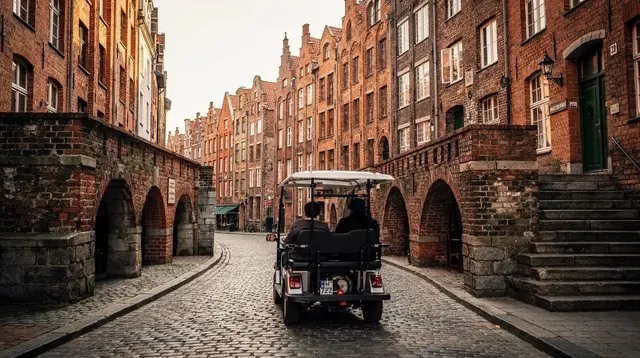
Start in the Old Town, walking down Długi Targ toward the river. This is a good morning for a guided walking tour of the Old Town, which threads the gabled merchant houses, the Neptune Fountain and the Town Hall into a single, well-paced route. Follow the Old Town walking guide if going independently.
By late morning, head to Mariacka street, the traditional amber-dealers’ lane running from St Mary’s Basilica to the river — see the amber shopping guide and, if buying, how to spot real amber first. St Mary’s Basilica itself is free to enter; the tower climb (over 400 steps) is a separate ticket and queue.
In the afternoon, walk the Motłava riverfront past the medieval crane Żuraw, which is actually an entrance to the National Maritime Museum, not just a photo stop. A short boat cruise from Gdańsk out onto the Baltic is a relaxed way to close the day, or follow the Motłava river cruise guide for other options. Finish with dinner in the Old Town; see best bars in Gdańsk Old Town for an evening drink afterward.
Day 2: Shipyard, Solidarity and Westerplatte
Day 2 turns to modern history. Start at the European Solidarity Centre and the historic Gate No. 2 of the Gdańsk Shipyard, where the 1980 strikes began under Lech Wałęsa. Budget two to three hours for the permanent exhibition — it is a dense, document-heavy museum, not a quick plaque stop. The shipyard and Solidarity guide and European Solidarity Centre guide cover the route in detail.
After lunch, head to Westerplatte, where the Second World War began on 1 September 1939. A city bus covers the distance in under 30 minutes year-round; a seasonal water tram along the Motłava is scenic but slower and does not run in winter. The site is an open memorial park — free, no booking, about 45-60 minutes on foot. The Westerplatte guide has both routes mapped out. Travelers who want the fuller WWII picture can add the Museum of the Second World War, which needs its own two to three hours and is best treated as a separate half-day rather than squeezed into this one.
Day 3: Sopot and Gdynia by SKM
This is the day to see the rest of the Tricity, and it depends on the SKM commuter train, which runs from Gdańsk through Sopot to Gdynia every 10-20 minutes at peak times. Buy an SKM ticket for the train legs — it does not cover local trams or buses, which sell separate tickets by time validity (20, 40, 60, 90 minutes or a 24-hour pass). Carrying both an SKM ticket and a tram ticket is normal here, not a mistake.
Ride the SKM to Sopot first. A private walking tour of Sopot’s old town highlights is a good way to see the resort’s villas and side streets before walking out onto Europe’s longest wooden pier — a 30-45 minute round trip, with a small seasonal entry fee. See the Sopot walking tour guide for a self-guided version.
Back on the SKM, continue to Gdynia, a planned interwar port city known for its modernist architecture. A private maritime legends tour of Gdynia with tickets included covers the docked museum ships, including the tall ship Dar Pomorza, each of which needs its own ticket if visited separately. The Gdynia modernist walking guide is the reference for the self-guided architecture route. Return to Gdańsk by SKM in the evening.
Day 4: The Hel Peninsula
Day 4 is the coast at its most exposed: a day trip to Hel, a narrow sand peninsula, not an island, reached from Gdańsk by a direct summer train (around two hours) or a seasonal passenger boat across the bay (roughly 90 minutes to two hours, weather dependent, running mainly May to September). Driving the peninsula road in August means real traffic, so rail or boat is the better choice even for travelers with a car elsewhere in the week.
In Jastarnia or Hel town, time a visit around the seal sanctuary’s feeding talks, which run two to four times daily depending on season — see the seal sanctuary guide. The boat cruise to Hel guide and the Hel day trip guide both lay out realistic timings; much of Hel’s tourist infrastructure closes outside summer, so a shoulder-season visit should check opening hours before setting off.
Day 5: Malbork Castle
Day 5 goes inland to Malbork Castle, the largest brick fortress in the world by land area. Regional trains run from Gdańsk Główny in roughly 35-40 minutes, and the castle is a short walk from the station — no car needed. In high season, book a timed entry slot in advance on the official calendar; walk-up queues in July and August can run past an hour, and entry is capped at roughly 500 visitors per hour.
Budget half a day, not two hours: the full circuit of the High, Middle and Low Castles genuinely takes three to four hours for anyone reading the rooms rather than marching through them. A guided option, a day tour from Gdańsk to Malbork Castle with audioguide, bundles the transport and the timed entry together. The Malbork visitor guide and getting to Malbork from Gdańsk cover both the independent and guided routes. Return to Gdańsk by early evening.
Day 6: Toruń — a long day, not a half-day
This is the day to get right. Toruń is genuinely far from Gdańsk — around 170km — and even the fastest direct train takes roughly two and a half hours each way. Treating it as a quick add-on to another day is how visitors end up disappointed; treat it instead as its own full day with an early departure, ideally on one of the first direct trains out of Gdańsk Główny.
Toruń rewards the long trip: a UNESCO-listed brick Gothic old town, the birthplace of Nicolaus Copernicus, and a local gingerbread (piernik) tradition worth sitting down for. The Toruń day trip guide lays out a walking route that fits the return train window. Build in slack for the journey back — a missed direct connection can mean a change and a noticeably longer trip home, so aim to be at the station with time to spare rather than cutting it fine.
Day 7: Rest, or Kashubia with a rental car
The final day is intentionally open. Most travelers will want an easier morning after six fairly full days — a slow walk through Oliwa Park, a last look at Mariacka street, or simply packing and a relaxed lunch by the Motłava. See Oliwa Park, zoo and cathedral guide for a low-effort morning.
For travelers who specifically want to rent a car for this one day — and only this one day, since the rest of the week runs entirely on SKM, tram and bus — a drive into Kashubian Switzerland is the best use of it: rolling hill country around Kościerzyna, roughly an hour from Gdańsk, with the upside-down house and record-length wooden plank at Szymbark as an easy stop along the way. The Kashubian Switzerland day trip guide covers a loop that gets back to Gdańsk by evening.
Planning notes for this week
| Day | Focus | Transport |
|---|---|---|
| 1 | Gdańsk Old Town, Mariacka, Motłava | On foot |
| 2 | Shipyard, Solidarity, Westerplatte | Bus |
| 3 | Sopot and Gdynia | SKM + tram (separate tickets) |
| 4 | Hel Peninsula | Train or seasonal boat |
| 5 | Malbork Castle | Regional train |
| 6 | Toruń | Direct train, early start |
| 7 | Rest, or Kashubia | On foot, or rental car |
A few things worth repeating because they trip up first-time visitors. SKM tickets and local tram or bus tickets are two separate systems in the Tricity — always carry both if the day mixes trains and trams. Toruń’s distance is real, not a formality: build Day 6 around an early train and a comfortable return, not a squeezed-in afternoon. And the Wolf’s Lair, at around 250km away, is best left for a longer future trip rather than folded into this one — see why the Wolf’s Lair needs its own day for the reasoning. For a broader sense of pacing across the region, the best day trips from Gdańsk and how many days in Gdańsk guides are useful companions to this itinerary.
FAQ: planning a week in Pomerania
Do I need a car for this itinerary?
No. The Tricity runs on a dense SKM and tram network, Hel and Malbork are reachable by train or seasonal boat, and Toruń has a direct rail connection. A car only earns its keep on the optional Kashubia day.
Is Toruń really worth a full day trip from Gdańsk?
Yes, but only if treated as a full day. Toruń sits around 170km from Gdańsk, and even the direct train takes roughly 2h30 each way, so a rushed half-day visit undersells its UNESCO-listed old town and Copernicus sites.
Can I fit the Wolf’s Lair into this same week?
Not realistically. The former Wolf’s Lair near Kętrzyn is about 250km from Gdańsk and needs a full day on its own, on top of an already packed week. Treat it as a reason to extend a future trip rather than squeeze into this one.
How do I get to the Hel Peninsula, and how long does it take?
By direct summer train from Gdańsk in around two hours, or by a seasonal passenger boat across the bay taking roughly 90 minutes to two hours. Driving the peninsula road in August means heavy traffic, so rail or boat is usually the better choice.
Do SKM trains and Tricity trams use the same ticket?
No, and this trips up a lot of first-time visitors. SKM commuter trains and the local tram or bus network sell separate tickets, so a validated SKM ticket does not cover a tram transfer, and vice versa.
What time zone is Gdańsk in?
Central European Time, UTC+1 in winter and UTC+2 during Central European Summer Time from late March to late October, the same clock as Warsaw and Berlin.
Should I book Malbork Castle tickets in advance?
It is worth it in summer. Malbork sells timed entry slots with capped hourly numbers, and July and August queues for walk-up tickets can run past an hour, so a pre-booked slot on the official calendar saves real time.
What should I do on day 7 if I don’t want to drive to Kashubia?
Treat it as a genuine rest day: a slow morning in Oliwa Park, a return visit to Mariacka street for amber, or simply a lazier lap of the Motłava waterfront before an evening flight or train onward.
tours.7 days
Verified deep-linked GetYourGuide tours. Book through these links and we earn a small commission at no cost to you.
GetYourGuide does not provide a product photo for this activity — the image shows the meeting point, photographed by us.