Hel Peninsula Day Trip: How to Get There and What to See
Can you do the Hel Peninsula as a day trip from Gdańsk?
Yes. A direct summer train takes about two hours each way, a seasonal passenger boat from Gdańsk, Sopot or Gdynia takes roughly 90 minutes to two hours, and driving is possible but the single coastal road jams badly in July and August. Most visitors combine Hel town's Fokarium seal station with a walk along the beach or the harbour.
Why the Hel Peninsula confuses first-time visitors
The name draws people in, but the geography is what actually matters for planning the day. The Hel Peninsula is not an island, despite looking like one on a folded map or from the deck of a boat crossing Puck Bay. It is a sand spit roughly 35km long, curling out from the coast near Władysławowo and narrowing, at its thinnest stretch, to as little as 200m between the open Baltic on one side and the calmer bay water on the other. A single road runs its full length, and at several points you can, in principle, walk from the sea to the bay in a few minutes. That narrowness is the whole character of the place: pine forest and dunes holding a strip of land together against the wind and the water on both sides.
Because it reads as remote on a map, people often assume Hel needs an overnight stay or a multi-day trip. It does not. Done properly, with the right transport choice, Hel works well as a single, full day out from Gdańsk, and this guide covers that day trip specifically: how to get there, what a realistic day looks like once you arrive, and what not to expect. If your interest is purely the boat journey itself rather than the day at the other end, the dedicated boat cruise to the Hel Peninsula guide covers that crossing in more depth.
Getting there: train, boat or car
There is no single best way to reach Hel — the right choice depends on the season, your tolerance for a car, and whether you want the journey itself to be part of the day.
By train
A direct seasonal train runs from Gdańsk Glowny to Hel, taking around two hours each way. It is the steadiest option: no traffic, no weather dependency, and it runs on a fixed timetable that makes planning a return straightforward. The route is not scenic in the way the boat is — much of it runs inland before reaching the coast — but it is the most reliable way to guarantee you get there and back on schedule, which matters if you are trying to keep this to a single day. Trains are more frequent in the summer season and thin out considerably outside it, so check the current timetable before you commit to a start time.
By seasonal boat
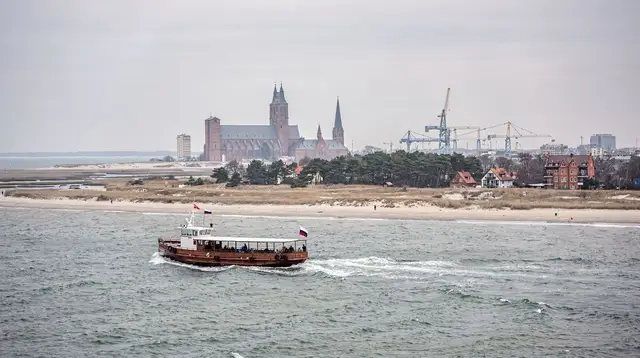
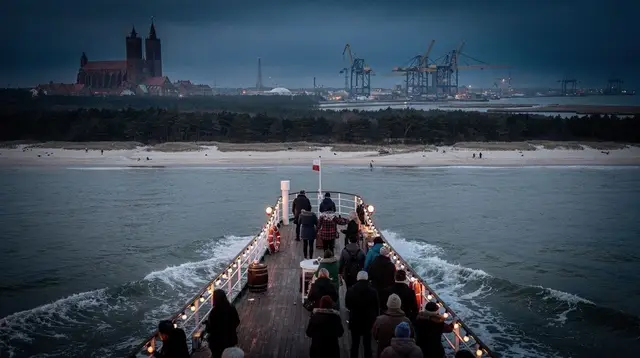
Passenger boats run from Gdańsk, Sopot and Gdynia out to Hel between roughly May and September, taking anywhere from about 90 minutes to two hours depending on the departure point and the operator. This is the scenic option, not the fast one: you get open water, views back toward the Tricity skyline, and a proper sense of crossing Puck Bay rather than skirting around it by road. It is also weather-dependent — rough conditions can delay or cancel sailings, so it suits travellers with some flexibility rather than a tight schedule. Outside the summer season, boat services largely stop running altogether, which pushes the choice back to train or car.
By car
Driving gives the most flexibility on the peninsula itself, since public transport along its length is limited once you’re there. The catch is getting in: the road around Puck Bay funnels all traffic through a handful of towns, Władysławowo chief among them, and in July and August, especially on weekends, this stretch genuinely jams.
A trip that should take ninety minutes from Gdańsk can stretch well past two hours in peak-season traffic, and parking in Hel town itself gets tight by midday. If driving is the plan, leaving early in the morning is the single most effective way to avoid the worst of it. For a wider look at whether a car is worth having at all for this coast, see should you rent a car in Gdansk.
| Option | Time from Gdańsk | Season | Main trade-off |
|---|---|---|---|
| Train | ~2 hours | Mainly summer, reduced off-season | Reliable, not scenic |
| Boat | ~90 min – 2 hours | Roughly May–September | Scenic, weather-dependent |
| Car | 90 min – 2.5+ hours | Year-round | Flexible on arrival, jams badly in peak season |
Whichever way you travel, budget for the return leg taking as long as, or longer than, the outbound one — nobody arrives at Hel and finds the evening crowd thinner than the morning one in August.
A realistic day on the peninsula
Once you’re there, Hel town is the obvious base for a single day, and most visitors build the day around three things: the harbour and old fishing town, the Fokarium, and a stretch of beach.
Hel town itself is a former fishing settlement that still has working boats tied up along the harbour, alongside the tourist trade that’s grown up around them. It’s small enough to walk end to end in twenty minutes, but worth slowing down for — smoked fish stalls by the harbour, a handful of streets of wooden fishermen’s cottages, and a lighthouse you can climb for a view back down the narrow strip of land you’ve just arrived on.
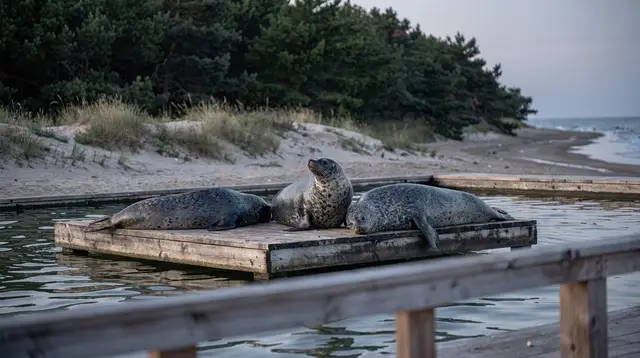
The Fokarium, run by the University of Gdańsk, is the peninsula’s best-known single attraction and genuinely worth timing your visit around rather than treating as a drop-in. It’s a research and rehabilitation station for Baltic grey seals, and the seals are fed at scheduled talks — typically two to four times a day depending on the season — where staff explain the rehabilitation work while the animals are visibly active. Turning up between feeding times still gets you a look at the seals, but arriving for a scheduled talk is a noticeably better visit. The seal sanctuary guide has the fuller detail on timing this well.
The beach runs along the open Baltic side of the peninsula, wide and sandy, backed by pine forest rather than a promenade. It’s a genuinely pleasant place to walk regardless of the season, and a fine spot for a swim in summer — with the caveat below about water temperature. For a broader view of the coast’s beaches and what swimming here is actually like, see Gdańsk beaches and Baltic swimming.
Between these three, a comfortable day looks something like: arrive late morning, walk the harbour and town, time a Fokarium visit around a feeding talk, have a late lunch of local smoked fish, then a walk on the beach or a short stretch further up the peninsula before heading back. Trying to add a long excursion further along the peninsula, or combining Hel with another major stop like Leba or the Słowiński dunes on the same day, is rarely comfortable given the travel time already built into getting there and back.
What this trip will not give you
It’s worth being honest about three things before you set out, because they’re the assumptions that trip visitors up most often.
This is not warm-water swimming. The Baltic here peaks at roughly 17-20 degrees Celsius in August, and that’s on a calm, sunny day — a stretch of wind can knock the water noticeably cooler within hours. It’s a fine sea for a bracing swim and a walk on wide sand, but nobody should come expecting Mediterranean water temperatures. The Baltic coast is not the Mediterranean piece goes into why that comparison doesn’t hold up more generally along this coastline.
This is not an easy drive in peak season. If you’re driving, July and August weekends bring real traffic on the single road in, and that delay should be built into your planning rather than treated as a possible inconvenience. The train or boat sidesteps this entirely.
This is not an island, whatever the map suggests at a glance. Hel is physically joined to the mainland the whole way along, connected by that one road, and understanding it as a very narrow peninsula rather than a detached piece of land changes how you think about getting there and how quickly weather or traffic on the mainland side can affect your journey. The Hel Peninsula is not an island piece covers the geography itself in more detail if you want the full picture.
Getting the boat right, if that’s your route
If a seasonal cruise is part of the plan, a guided version takes the schedule and the crossing logistics off your hands. The Gdańsk to Hel boat expedition runs the crossing from the city out toward the tip of the peninsula, which suits travellers who’d rather not plan the return sailing themselves against a train timetable.
Combining Hel with the rest of the coast
Hel sits at one end of a stretch of coastline that includes some very different landscapes within a couple of hours’ travel, and a number of visitors extend their trip rather than treating Hel as an isolated day. Further along the coast, the moving dunes near Leba are a genuinely different kind of landscape — shifting sand rather than a narrow sea-and-bay strip — and worth its own day rather than a rushed add-on.
A guided day trip to Łeba’s moving dunes covers the transport and the walk out to the dunes themselves, and the private guided tour of Słowiński National Park suits travellers who want the ecology and history explained rather than just the view. For a shorter, town-based alternative, Łeba’s guided electric car city tour covers the town itself at an easier pace.
Closer to Hel, the bay side of the peninsula and the mainland towns opposite it, including Puck and Jastarnia, are known for wind and water sports rather than swimming — see kitesurfing on Puck Bay and the broader Baltic coast watersports guide if that’s more your interest than the seal station and the beach walk.
For travellers building a longer coastal trip rather than a single day, the Sopot and Hel beach weekend and Tricity, Hel and Malbork in five days itineraries both fold Hel into a wider plan, and getting around the Tricity by SKM, tram and bus is worth a read if you’re relying on public transport for the rest of your stay as well as for this trip.
Hel Peninsula day trip: frequently asked questions
Is Hel an island?
No. It is a narrow sand peninsula, around 35km long and as little as 200m wide at its thinnest point, attached to the mainland near Władysławowo. A car can drive the entire length of it on a single road.
How do you get to the Hel Peninsula from Gdańsk?
Three ways: a direct summer train from Gdańsk Glowny taking about two hours, a seasonal passenger boat from Gdańsk, Sopot or Gdynia taking roughly 90 minutes to two hours, or driving the coastal road around Puck Bay, which can take well over two hours in August traffic.
Is the sea warm enough to swim at Hel?
It is swimmable but genuinely cool by comparison with southern Europe. The Baltic peaks at roughly 17-20 degrees Celsius in August, and a windy day can drop it noticeably within hours. Expect a bracing dip, not a warm-water swim.
What is the Fokarium and is it worth visiting?
The Fokarium is a grey seal research and rehabilitation station in Hel town, run by the University of Gdańsk. It is genuinely worth timing a visit around, since the seals are fed and observed at scheduled talks two to four times a day depending on the season, rather than simply on view all day.
Can you drive to Hel and avoid the summer traffic?
Not entirely. The peninsula has a single road in and out, and in July and August, especially on weekends, it backs up for long stretches, particularly around Władysławowo and the smaller towns along the way. Travelling by train or boat, or driving early in the morning, are the only real ways to reduce the delay.
How much time do you need on the peninsula?
A full day, realistically eight to ten hours door to door from Gdańsk, once travel time in both directions is accounted for. Trying to fit Hel in alongside another major stop on the same day is rarely comfortable.
Does everything on the peninsula stay open in winter?
No. A lot of the seasonal infrastructure, including some boat routes, kiosks and shorter opening hours at attractions, scales back or closes outside roughly May to September. A winter visit is quieter but more limited.
Hel peninsula cruises
Verified deep-linked GetYourGuide tours. Book through these links and we earn a small commission at no cost to you.
GetYourGuide does not provide a product photo for this activity — the image shows the meeting point, photographed by us.