Gdańsk Beaches and Baltic Sea Swimming Guide
Are the beaches around Gdańsk good for swimming?
Yes, but the Baltic runs cold: sea temperatures typically reach only 17-20 degrees Celsius even in August, and can drop within a day if the wind shifts. Expect short, bracing dips and long stretches of sand rather than a Mediterranean-style warm-water holiday.
What Baltic swimming is actually like
Anyone arriving from a warmer coastline should reset expectations before packing a towel: this is a northern sea, not a southern one. Even in the height of summer, the Baltic around Gdańsk Bay typically sits at 17-20 degrees Celsius, and a shift in wind direction can pull that down several degrees within a single afternoon, because colder water can be dragged up from below or blown in from offshore. Swimming here is a short, bracing dip followed by a warm towel and a walk on the sand, not a long, languid float the way it might be in the Adriatic or the Aegean. Visitors who plan for that from the outset tend to enjoy it; visitors expecting Mediterranean warmth tend to be disappointed within the first five minutes of wading in.
The upside is real, though. The coastline from Sobieszewo Island through Sopot and Gdynia out to the Hel Peninsula is lined with wide, fine sand, backed by dunes and pine forest rather than concrete promenades in most stretches.
Beaches are long, uncrowded compared with southern Europe even in August, and the air temperature along the coast in July and August usually sits in a comfortable 18-22 degrees Celsius range, so sunbathing and beach walking work well even when the sea itself stays cool. For a fuller picture of what a Baltic summer feels like beyond the water, see Gdańsk in summer and Gdańsk in June.
Facilities: lifeguards, showers and what’s actually there
Facilities vary sharply by beach, and it is worth knowing this before choosing where to spend the day. Sopot and Gdynia’s central beaches run a proper seasonal operation in July and August: lifeguard towers with a coloured flag system (white for open, red for no swimming), rinse showers, rented sunbeds and parasols, changing cabins, and beach bars serving food and drink within a short walk of the sand. Toilets are generally paid, small kiosks near the main access points. Outside the lifeguard season - roughly mid-June to early September - those towers stand empty and swimming becomes an at-your-own-risk activity, even though the beach itself stays freely accessible.
Sobieszewo Island and most of the Hel Peninsula’s beaches are a different proposition: fewer amenities, longer stretches with no kiosk or shower in sight, and lifeguard cover concentrated only around the busiest access points near Hel town and Jastarnia rather than along the whole peninsula. That is part of what keeps them quieter, but it also means bringing water and sun protection rather than assuming a beach bar is nearby.
Dogs are generally tolerated on the quieter stretches of Sobieszewo and Hel outside the main lifeguarded sections, though rules can tighten in peak season; central Sopot and Gdynia beaches are stricter about dogs in July and August. None of the beaches on this coast operate as designated nudist (FKK) beaches in the way some German Baltic resorts do, though a handful of quieter, unofficial stretches toward Sobieszewo’s dune side see informal use - check local signage rather than assuming.
Sopot: the classic Tricity beach
Sopot is the most convenient beach for anyone based in central Gdańsk, reachable by SKM train in well under half an hour. Its beach curves around Europe’s longest wooden pier, and the stretch either side of the pier is the busiest and most developed, with beach bars, sunbed rental and a genuine resort atmosphere in July and August. Walk ten minutes north or south of the pier and the crowds thin considerably, though the sand and water quality stay much the same.
Sopot is also the easiest beach to combine with sightseeing: the pier itself, the old spa park behind the beach, and the town’s restaurant streets are all within walking distance, so a beach morning can slide into a lunch and a wander without needing transport. For a structured look at the town beyond the sand, see the Sopot walking tour. Cyclists can also cover the Sopot and Gdynia beaches in one outing on a 3-hour guided bike tour of Sopot, which threads along the coastal path connecting several beach access points.
Gdynia: quieter sand, the same sea
Gdynia’s central beaches sit a short walk from the modernist old town and the docked museum ships, and they generally draw a more local crowd than Sopot’s pier-side stretch. The water is the same Gdańsk Bay, so temperature and clarity are broadly comparable; the difference is atmosphere rather than water quality. Gdynia’s beach also feels a little more workaday and a little less resort-like, which some visitors prefer. The Gdynia modernist walking tour pairs well with a beach afternoon, since both sit within easy reach of the SKM station.
Further along the coast toward the bay’s mouth, conditions get progressively more open and a touch breezier, which locals who prefer a livelier sea over a sheltered one tend to favour.
Sobieszewo Island: calm sand and birdlife
Sobieszewo Island, at the mouth of the Vistula east of central Gdańsk, offers a genuinely different beach experience: fewer people, a wide belt of dune and forest behind the sand, and a nature reserve reputation that draws birdwatchers as much as swimmers. It is not on the SKM line, so it takes a little more effort to reach than Sopot or Gdynia - a bus or a taxi from central Gdańsk - which is exactly why it stays quieter.
Families looking for a calmer beach away from the Tricity’s summer crowds, and anyone travelling with young children who want space to spread out, tend to find Sobieszewo worth the extra journey time; see Gdańsk with kids for more on family-friendly options along this coast.
Hel Peninsula: the region’s widest beaches
The Hel Peninsula has arguably the best beaches on this stretch of coast, on both sides of the narrow spit: calmer, bay-facing sand near Puck and Jastarnia, and wider, more exposed open-sea beaches on the Baltic side near Hel town itself. The sand is fine and the beaches are noticeably less crowded than Sopot’s pier area, even in August, simply because the peninsula takes longer to reach.
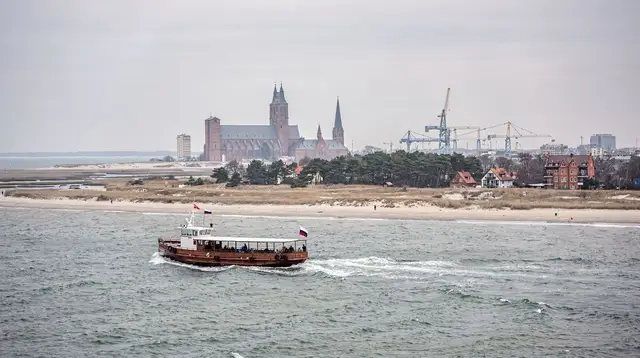
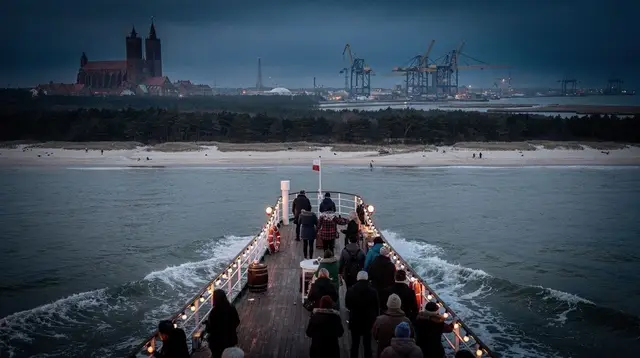
Getting there works two ways: a direct summer train from Gdańsk in around two hours, or a seasonal boat across the bay, which turns the journey itself into part of the day out. A cruise from Gdańsk out onto the Baltic Sea gives a sense of the open water and the coastline from the deck before ever touching sand, and is a good option for visitors who want the sea experience without necessarily swimming.
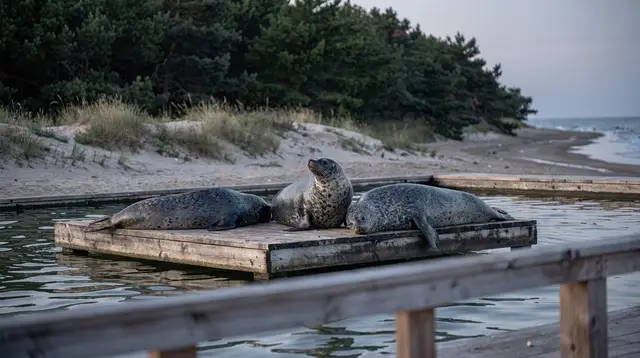
Given the travel time, Hel suits a full day trip rather than a quick beach stop - see the Hel Peninsula day trip guide for a realistic schedule, and the Fokarium seal sanctuary in Hel town for a natural add-on to a beach day there.
Water temperature, month by month
The table below gives typical ranges rather than guarantees - a strong onshore wind can drop the sea several degrees below these figures on any given day, even at the height of summer.
| Month | Typical sea temperature | Swimming reality |
|---|---|---|
| May | 10-13°C | Too cold for most swimmers; beaches are quiet |
| June | 13-17°C | Swimmable on warm, still days; still cool |
| July | 16-19°C | Best month for consistent swimming conditions |
| August | 17-20°C | Warmest and busiest; still a brisk dip, not a warm bath |
| September | 14-17°C | Swimmable early in the month, cooling fast by the end |
| October | below 12°C | Beach walking season, not swimming season |
What no page about this coast should promise
It would be easy to oversell this coastline as a beach-holiday substitute for southern Europe, and that would set visitors up to be disappointed. A few things worth being direct about:
- The water does not get warm. Even at its August peak, the Baltic around Gdańsk Bay rarely exceeds 20 degrees Celsius, and a windy afternoon can undercut that by several degrees within hours. This is a sea for a bracing swim, not a long soak.
- The swimming season is short. Realistically June through September, with July and August the most reliable. Outside that window, the beaches are for walking and photography, not swimming.
- Evenings turn cool fast, even on a warm summer day. A sunny beach afternoon in Sopot or Hel can give way to a genuinely chilly evening once the sun drops and the sea breeze picks up, so a layer for later is worth carrying even in July.
- This is not a sheltered, calm sea by default. Wind is a constant feature of this coastline, which is part of why it is popular for kitesurfing around Puck Bay but means swimmers should expect some chop and current on breezier days, particularly on Hel’s open Baltic side.
For a broader honest-expectations view of the region, see the Baltic coast is not the Mediterranean.
What else can disappoint: jellyfish, algae and seaweed
Beyond the cold, a handful of smaller things catch out visitors who have only pictured clear tropical water. Moon jellyfish - small, pale, and not dangerous to touch - occasionally drift close to shore from mid-summer onward, especially after a few days of warm, still weather; they are harmless but off-putting to swim through, and swimmers who dislike the sensation tend to wade rather than dive in on the days they appear. Loose strands of seaweed and eelgrass wash up along parts of Sopot and Gdynia’s beaches in warmer spells too, more a texture underfoot than a real problem, though it puts some visitors off barefoot walking near the waterline.
More rarely, a stretch of unusually warm, calm weather in July or August can trigger a bloom of blue-green algae in the bay, prompting a temporary swimming ban on affected beaches while water quality is monitored and the bloom clears - typically a matter of days rather than weeks. Local news sites and the flag system at lifeguarded beaches are the fastest way to check current conditions; Hel’s open Baltic side, more exposed to wind and current, tends to clear algae blooms faster than the more sheltered inner bay around Gdańsk itself.
If you only have one day at the beach
With just one day to spend on sand rather than sightseeing, the honest choice comes down to priorities rather than any beach being simply “best.” Anyone staying centrally without a car, and wanting the least effort for a solid beach afternoon, should default to Sopot: it is the fastest to reach, has the most reliable facilities, and can be combined with the pier and old spa park without a second transfer. Travellers who find Sopot’s summer crowds off-putting but still want an easy SKM ride should choose Gdynia instead - the same sea, noticeably fewer people, and a modernist old town worth an hour either side of the sand.
Families with young children, or anyone who values quiet over convenience, are usually better served skipping the Tricity beaches altogether for Sobieszewo Island, accepting the longer bus ride in exchange for space, calm water and a nature reserve to wander if the kids tire of sand. Hel only makes sense as a dedicated day out on its own itinerary, not as a bolt-on to a Sopot morning - the travel time alone (roughly two hours each way) eats too much of a single day to combine comfortably with anything else. Visitors torn between Hel and a shorter trip should weigh the Hel Peninsula day trip guide against a simpler Sopot or Gdynia afternoon before committing a full day to the journey.
Getting between the beaches
The Tricity’s SKM commuter rail makes Sopot and Gdynia beaches easy to combine in a single day without a car; see getting around the Tricity by SKM, tram and bus for how the ticketing and timetables work. Sobieszewo Island and the Hel Peninsula both sit off the main SKM line and need a bus, seasonal boat, or taxi, so they are better planned as their own half-day or full-day trips rather than an add-on to a Sopot morning. Anyone weighing up whether a hire car is worth it for reaching these beaches can check should you rent a car in Gdansk first - for the beaches covered here, it generally is not necessary.
For visitors who want to be on the water rather than just beside it, a guided kayak tour from Gdańsk covers the Motława and nearby waterways rather than the open sea, which is a good lower-key alternative on a day when the bay itself looks too choppy for swimming. Those wanting an evening on the water instead of a beach afternoon might prefer a private boat party between Gdańsk and Sopot, which trades swimming for a different kind of time on Gdańsk Bay.
Beach access at a glance
| Beach area | Distance from Gdańsk centre | Best for |
|---|---|---|
| Sopot | ~20-25 min by SKM | Convenience, pier, resort atmosphere |
| Gdynia | ~30-35 min by SKM | Quieter sand, modernist old town nearby |
| Sobieszewo Island | ~40-50 min by bus | Calm beaches, birdlife, families |
| Hel Peninsula | ~2 hours by train or seasonal boat | Widest beaches, full day out |
Beaches by season
For destination guides tied to specific months and how they affect a beach visit, see Gdańsk in September for the shoulder-season window when crowds thin but the sea is still swimmable, and Gdańsk in October for when the beaches shift firmly from swimming to walking territory. St Dominic’s Fair, which fills the Old Town each August, is covered in St Dominic’s Fair in Gdansk and is worth timing a beach trip around, since it is the single busiest week on the coast.
Are there jellyfish or algae in the Baltic near Gdańsk?
Small, harmless jellyfish (moon jellyfish) sometimes drift close to shore in mid to late summer; they are not dangerous, just unappealing to swim through. Warm, still spells can also bring patches of algae, occasionally prompting a temporary blue-algae swimming ban that local news and beach flags will announce.
Do the Gdańsk Bay beaches have lifeguards and facilities?
Sopot and Gdynia’s central beaches have seasonal lifeguards, flag systems, rinse showers and rented sunbeds in July and August. Sobieszewo and most of Hel’s beaches are far more basic, with fewer or no lifeguards outside the busiest stretches, so swim more cautiously there.
Hel peninsula cruises
Verified deep-linked GetYourGuide tours. Book through these links and we earn a small commission at no cost to you.
GetYourGuide does not provide a product photo for this activity — the image shows the meeting point, photographed by us.