Gdańsk in Summer: A Complete Season Guide
What is summer like in Gdańsk?
Gdańsk summers (June-August) bring long daylight hours, mild air temperatures around 18-22°C and a sea that stays cool, typically 17-20°C even in August. It is also the busiest and most expensive season, peaking around the St Dominic's Fair in late July and August, when the Old Town and coastal towns like Sopot and Hel get genuinely crowded.
Three months, one big trade-off
Summer is when Gdańsk looks its best and behaves its worst. June, July and August bring the region’s longest, brightest days, its liveliest calendar, and the only weeks when the Baltic Sea comes close to swimmable — but they also bring the fullest hotels, the longest queues, and traffic on the roads out toward the coast that simply doesn’t exist in April or October.
This page is the season-wide overview: what actually changes month to month, what stays true throughout, and where the trade-offs are sharpest. For finer detail on a specific month, see the dedicated pages for Gdańsk in June and Gdańsk in September, which sit at opposite ends of the summer experience.
The daylight, and why it matters more than the temperature
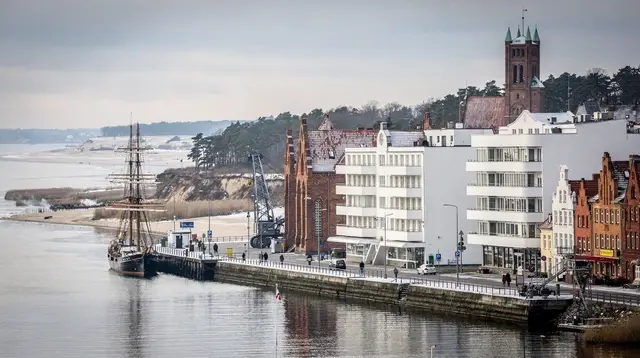
Gdańsk sits far enough north that the summer solstice genuinely changes how a day feels. Around late June, the sky starts lightening before 4:30am and doesn’t go properly dark until after 10pm — closer to eighteen hours of usable daylight than the twelve or thirteen most visitors are used to. Even by August, when the days have shortened somewhat, evenings remain long and mild enough that dinner on the Motława waterfront or a walk along Sopot’s pier at 9pm still happens in daylight.
That long light is arguably summer’s real advantage over the shoulder seasons, more than the air temperature itself. Average summer air temperatures run around 18-22°C, pleasant but not dramatically different from a good week in late May or early September. What’s different is how much of the day there is to use it in.
What summer does not deliver: a warm sea
This is worth stating plainly, because it trips up a lot of first-time visitors who assume “Baltic beach town in August” means something close to the Mediterranean. It doesn’t. Sea water temperature peaks at roughly 17-20°C in August, the warmest point of the year, and a few windy days can knock several degrees off that within hours. Compare that to 24-26°C typical of the Adriatic or Aegean in the same month, and the gap is real, not a rounding error.
None of that makes the coast unswimmable — plenty of locals and visitors do swim through summer, and the beaches around Sopot, Gdynia and the Hel Peninsula are wide, clean and genuinely pleasant to walk. It just means packing for a bracing dip and a beach walk, not for lounging in warm water for hours. For a fuller picture of where and how, see the Baltic swimming guide, and for the wider point about expectations, the Baltic coast is not the Mediterranean.
The crowd curve: quiet June mornings to packed August afternoons
Summer isn’t one uniform level of busy — it ramps up steadily and then spikes hard in the second half of the season.
| Period | Crowd level | What drives it |
|---|---|---|
| Early-mid June | Moderate | Schools not yet out across most of Europe; pleasant weather draws a steady but manageable flow |
| Late June-early July | Rising | European school holidays begin; Old Town and Sopot pier noticeably busier by midday |
| Mid-late July | Busy | Peak beach season; accommodation prices climbing toward their yearly high |
| Late July-mid August | Very busy | St Dominic’s Fair fills the Old Town; hotel prices and foot traffic at their annual peak |
| Late August | Easing | Fair has ended; crowds thin gradually as the month closes |
The single biggest driver of that late-summer spike is St Dominic’s Fair (Jarmark Swietego Dominika), a street market tracing its roots back to 1260 that fills Długi Targ and the surrounding Old Town streets for roughly three weeks. It’s a genuinely good event — stalls, food, music, a real sense of occasion — but it also means the Old Town core is at its most crowded for the entire year during exactly this window. Visitors who want the Fair’s atmosphere should plan for it deliberately; visitors who want a quieter Old Town should plan around it, favoring June or waiting for September instead.
Getting to the coast: where summer traffic actually bites
The other trade-off that catches people out is road traffic, specifically on the single access road down the Hel Peninsula. It’s a narrow strip of land with one main road serving every town along its roughly 35km length, and on August weekends that road can back up for long stretches as day-trippers and holidaymakers all funnel toward the same beaches. Parking in Sopot and in Hel town itself also fills early on the busiest days.
The more reliable options in peak summer are the direct train from Gdańsk to Hel (around two hours) or one of the seasonal passenger boats that cross the bay from Gdańsk, Sopot or Gdynia, running roughly 90 minutes to two hours depending on the route and conditions. Either avoids the road entirely. More broadly across the Tricity, the SKM commuter rail is the steadier way to move between Gdańsk, Sopot and Gdynia all summer long, unaffected by the same congestion — see getting around the Tricity and whether you actually need a car for the fuller case.
A short cruise sidesteps the traffic question entirely and gives a different view of the coastline than the road does — worth weighing for at least one afternoon of a longer stay. A private catamaran cruise between Gdańsk and Sopot covers that stretch of coast by water instead, and a private sailing cruise linking Gdańsk, Sopot and Gdynia covers the whole Tricity waterfront in one outing.
Booking ahead: what actually needs it in summer
Most of Gdańsk’s Old Town — the churches, the Motława waterfront, the streets themselves — never needs booking. A handful of specific things do, and summer is when skipping the booking step costs the most time.
- Malbork Castle uses timed entry slots capped at roughly 500 visitors an hour; July and August weekend queues for walk-up tickets can run past an hour without one.
- The Museum of the Second World War and the European Solidarity Centre both get busy on summer weekends; timed online tickets remove the uncertainty.
- Accommodation across the Tricity peaks in price and availability pressure during the Fair weeks — booking well ahead matters more in late July/August than at any other point in the year.
- Seasonal boats to Hel run to a fixed summer schedule and can sell out on the best-weather days.
None of this is unique to Gdańsk, but the margin for winging it is smaller in August than in any other month.
A different way to see the season: on the water
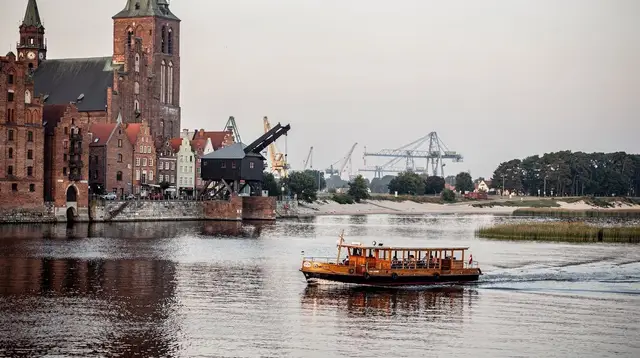
Given how much of summer’s appeal is about light, coastline and the sea itself, a boat trip is arguably the single best way to experience it rather than just walk past it. Options range from a straightforward crossing to something more social. A Motława river cruise with optional food and drink stays closer to the Old Town and suits an easy evening, while a private boat party with music and drinks leans into summer’s later, longer evenings for a group outing.
On land, the golf-cart format has become a popular way to cover more of Gdańsk’s spread-out sights without walking every step of it in summer heat — a golf cart tour covering the Gdańsk Shipyard and Gradowa Hill pairs well with a morning spent on the Solidarity history sites before the day’s crowds and warmth build up.
For something slower and hands-on, summer is also when outdoor and workshop activities run at full capacity across the coast — a summer jewelry-making workshop in Sopot makes a good rainy-hour or midday-heat alternative to another walking circuit, and ties naturally into the region’s amber tradition.
Month by month, briefly
June is the sweet spot for many repeat visitors: the longest daylight of the year, warming but not yet peak-crowded, and the Fair still weeks away. See the Gdańsk in June guide for specifics.
July is full summer — warm, busy, and building toward the Fair by month’s end. Expect the coast and the Old Town both operating near capacity on good-weather weekends.
August is peak season outright. The St Dominic’s Fair dominates the first three weeks, sea temperatures hit their yearly high, and prices and crowds are at their most intense; late August eases as the Fair wraps up and the first hints of the calmer season ahead start to show. For that calmer alternative just after summer proper ends, see Gdańsk in September.
Practical notes that apply across all three months
- Currency and cards: Poland uses the zloty (PLN), not the euro, throughout the year — summer changes nothing here. Contactless card payment is near-universal.
- Sun protection matters more than expected: with days this long, exposure adds up even at a relatively northern latitude, especially out on open water or the beach.
- Pack a light rain layer regardless of the forecast: Baltic weather can turn from sunny to showery within an hour, even mid-summer.
- Weekday mornings beat weekend afternoons almost everywhere in summer — the Old Town, Sopot’s pier and the Hel road are all calmer before roughly 11am.
- First-time visitors unsure how to structure a summer trip around all this should also check common Gdańsk tourist mistakes and the Sopot and Hel beach weekend itinerary, which is built specifically around the season’s coastal side.
Frequently asked questions about summer in Gdańsk
Is summer the best time to visit Gdańsk?
It depends what you want. Summer gives the longest days and the fullest calendar of events, but also the highest prices, the busiest streets and the most competition for restaurant tables and beach space. Many repeat visitors prefer June or September for a calmer version of the same weather.
How warm is the Baltic Sea in summer?
Sea temperatures typically reach 17-20°C in August, the warmest point of the year, and can be several degrees cooler after a windy spell. It is swimmable but bracing, closer to a cool Atlantic beach than a Mediterranean one.
How many hours of daylight does Gdańsk get in summer?
At its longest, around the summer solstice in June, daylight starts around 4:30am and lasts until after 9:30pm. Even in August, days remain long by most European standards, which is part of why evenings on the Motława riverfront and Sopot’s pier feel so easygoing.
When is St Dominic’s Fair and how busy does it get?
St Dominic’s Fair (Jarmark Swietego Dominika) runs for roughly three weeks from late July into August, filling the Old Town with market stalls. It is the single busiest stretch of the year in Gdańsk, with accommodation prices at their peak and the Długi Targ area crowded from late morning onward.
Is it easy to drive to Hel or the coast in summer?
Not always. The Hel Peninsula’s single access road regularly backs up on August weekends, and parking in Sopot and Hel town fills early. Trains and seasonal boats are usually more reliable than a car during peak summer weeks.
Should I book Malbork Castle or museum tickets in advance during summer?
Yes, for anything popular. Malbork Castle uses timed entry slots that can sell out on July and August weekends, and major Gdańsk museums get busy too. Booking a day or two ahead removes most of the risk.
What should I pack for a Gdańsk summer trip?
Layers and a light rain jacket, even in July. Days can be warm and sunny in the Old Town yet noticeably windier and cooler out on the water or the coast, and sudden showers are common despite the season.
Seasonal guide
Verified deep-linked GetYourGuide tours. Book through these links and we earn a small commission at no cost to you.
GetYourGuide does not provide a product photo for this activity — the image shows the meeting point, photographed by us.