Gdańsk with Kids: A Family Guide to the Tricity Coast
Is Gdańsk a good destination for a family with young kids?
Yes, for the right mix of sights. Oliwa's park, zoo and cathedral, the bay beaches, and short SKM train rides all work well with young children. Longer excursions like Hel's seal sanctuary, Malbork Castle or Stutthof need more planning, and some sites - the Mariacka tower's 400 steps, Stutthof itself - are better suited to older children or adults only.
Gdańsk is a flat, walkable, sea-level city with a train line that does most of the hard work, which makes it a more forgiving family destination than its Gothic churches and wartime history might suggest at first glance. But not every sight here is built for a stroller or a short attention span, and the coast has one honest limitation no itinerary can talk around: the Baltic Sea is cold. This guide sorts the region’s family options by how much effort and travel time they actually demand, from an afternoon in Oliwa to a full day out at the Hel Peninsula, and says plainly where a site is better left for older children or adults.
If you only have one day with young kids
With a single day and children under about six, the honest answer is to skip Hel, Malbork and the shipyard sites entirely and stay close. Pair a morning at Oliwa’s park and zoo with an afternoon at the Sopot or Gdynia beach, both reachable by the same SKM line without a change of train, and leave the Old Town for a slow evening walk along Długi Targ and the Motława waterfront when energy is low and there is nothing left to queue for.
This is not a compromise itinerary - it is close to what most local families with toddlers actually do on a free Saturday, and it avoids the two mistakes that wreck a family day here: a long transfer at the wrong time of day, and a demanding site attempted on too little sleep. Families with children old enough to manage a full day of travel can start layering in Gdynia’s aquarium or a shorter Old Town stop on a second day, and save Hel or Malbork for a third.
Nearby and easy: Oliwa’s park, zoo and cathedral
If you have one half-day with young kids and nowhere else to be, Oliwa is the answer. It sits on the SKM line a short ride from central Gdańsk, and the park, zoo and cathedral cluster together within walking distance of each other, so there is no second transfer to manage with tired legs or a stroller.
Oliwa Park is flat, shaded and free to enter, with ponds, paths and enough open grass for children to run off energy between stops. It is the kind of place you can simply wander rather than tick off a checklist, and it works in any weather short of a downpour.
Oliwa Zoo, next to the park, is a manageable half-day rather than an all-day commitment, with enclosures spread over gently sloping, walkable ground. It suits a wide range of ages, from toddlers happy simply to look at animals to older kids who want the full loop.
Oliwa Cathedral is free to enter, and its historic pipe organ is played at short recitals through the day - typically several times daily in summer, far fewer off-season. A well-timed recital, arriving a little early for a seat, can hold a young child’s attention for the ten or fifteen minutes it runs; turning up mid-afternoon hoping for one, especially in winter, often means no recital at all. Our Oliwa park, zoo and cathedral guide has the fuller layout and timing detail, and the family-friendly activities guide sets Oliwa against the Tricity’s other kid-friendly options.
Nearby and easy: the bay beaches
The beaches along Sopot and Gdynia are wide, sandy and easy to reach by SKM train, which makes them a natural half-day pairing with a walk on Sopot’s wooden pier or a look at Gdynia’s docked museum ships. What they are not is warm.
Baltic water peaks at roughly 17-20 degrees Celsius in August and can sit several degrees cooler on a windy day, so plan the beach as a place for building sandcastles, paddling and short, bracing dips rather than long afternoons in the water, and pack a warm layer for straight after a swim. The Baltic beaches and swimming guide covers which stretches suit young children best and what the water actually feels like month by month.
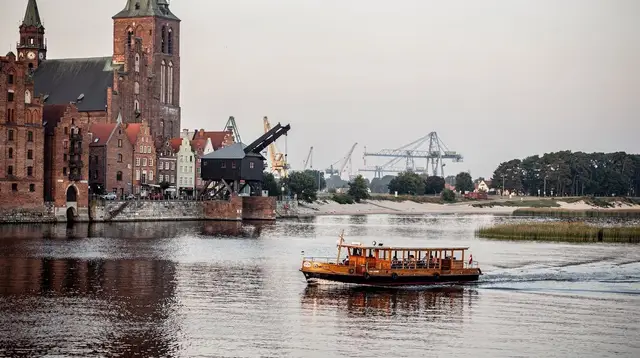
A gentler way to see the coast with younger kids who tire of walking is a short cruise: the Motława river cruise with an optional food and drink option covers Gdańsk’s waterfront from a boat rather than on foot, and sits well inside a single morning or afternoon.
Nearby and easy: Gdynia’s aquarium and waterfront
Gdynia is a straightforward SKM ride from Gdańsk or Sopot, and its aquarium is one of the more reliable indoor options in the Tricity - useful on a cold, wet or simply overcast day when an outdoor plan falls through. It is compact enough to see in an hour or two without exhausting a young child, and it pairs naturally with a walk along Gdynia’s waterfront, where the docked tall ship Dar Pomorza and the museum destroyer Blyskawica give older kids something more to look at, each on its own separate ticket.
Families wanting a guided overview of Gdynia alongside Sopot can take the private Tricity tour covering Gdańsk, Sopot and Gdynia, which sets its own pace rather than following a fixed group schedule.
In town, but pick your moment: the Old Town and shipyard sites
Gdańsk’s Old Town along Długi Targ and the Motława riverfront is flat, compact and easy walking, and most of it costs nothing to see from the street. Two specific attractions here need a judgment call before bringing young children.
St Mary’s Basilica is free to enter as a working church, but the tower climb - over 400 steps with no lift - is a separate ticket and a genuinely demanding climb with no way down but the same stairs. It suits older, sturdy kids who like a physical challenge, not toddlers or anyone who tires quickly. The St Mary’s tower guide lays out exactly what the climb involves before you queue for it.
The Gdańsk Shipyard and European Solidarity Centre tell a serious, text-and-recording-heavy story about the birth of the Solidarity movement - worthwhile with older kids studying modern history, less rewarding for a child too young to follow a museum at that pace. A lighter way to take in the shipyard area with younger children is the golf cart tour of the shipyard and Gradowa Hill, which covers the ground by vehicle rather than on foot through a dense exhibition. The Gdańsk shipyard and Solidarity tour guide has more on pacing this for a family group.
A bigger day out: the Hel Peninsula and its seal sanctuary
Hel is the region’s most rewarding family excursion beyond the Tricity, and also its biggest commitment of the day. It is not an add-on you decide on over breakfast - reaching the peninsula takes at least an hour each way by road around the bay, or a seasonal boat crossing of roughly ninety minutes to two hours that can be choppy in wind, so this is a full-day plan, not a half-day one, and it works best with kids who can handle a longer travel day without losing patience.
The reward at the end is the Fokarium seal sanctuary in Jastarnia-adjacent Hel town, which runs feeding talks two to four times a day depending on season
- worth timing your arrival around rather than turning up and hoping.
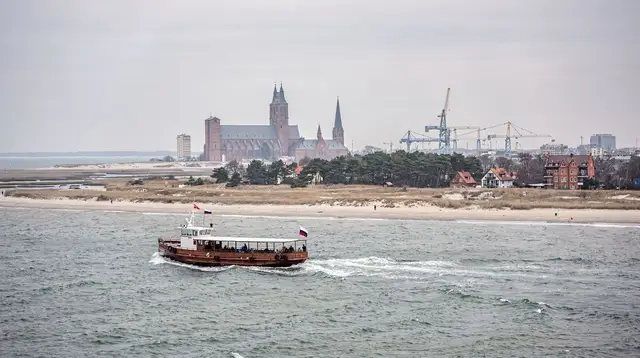
The seal sanctuary guide has the current feeding schedule and the Hel Peninsula day trip guide covers the transport options in full, including which is realistic with a stroller. A guided option that removes the logistics is the Bay of Puck motor yacht cruise with a castle visit, which crosses the bay by boat rather than the narrow peninsula road.
A bigger day out, with real stairs: Malbork Castle
Malbork Castle, the largest brick fortress in the world, is an easy train ride from Gdańsk Glowny - roughly 35-40 minutes - but the visit itself is not a quick stop. The full route through the High, Middle and Low Castles genuinely takes three to four hours over stone floors, stairs and uneven courtyards, with no way to shorten it once you are inside a timed entry slot. That is a long, physically demanding day for a young child, and families with toddlers or early-primary-age kids often do better choosing one section of the castle rather than attempting the whole route, or simply returning when children are a little older.
The Malbork Castle day tour from Gdańsk with audioguide handles the transport and timed entry, which removes one layer of logistics from a day that is already a full one. The Malbork Castle visitor guide and getting to Malbork from Gdańsk guide go into the timed-entry system and realistic pacing in more depth.
What this guide will not promise you
Some family-shaped claims about this coast do not hold up, and it is worth being direct about them before you plan around them.
The sea will not be warm. Even at the height of summer the Baltic rarely passes 20 degrees Celsius, and a windy afternoon can drop it further within hours. Plan for short swims and bring dry layers, not a Mediterranean beach day.
Not every attraction suits every age. The Mariacka tower’s 400 steps with no lift rule it out for toddlers and for anyone who tires on stairs. Malbork’s full route is a three-to-four-hour physical undertaking, not a quick castle photo stop.
Stutthof is not a family outing. The memorial near Sztutowo marks a former Nazi concentration camp, and the site and most guides recommend against bringing children under roughly 13. If your itinerary includes it, plan it as a separate, adult or older-teen visit, and read the guide to visiting Stutthof respectfully beforehand regardless of who is going.
Long excursions need preparation, not enthusiasm alone. The Wolf’s Lair, roughly 250km southeast near Ketrzyn, and Torun, a separate UNESCO old town well inland, are genuine full-day-or-overnight trips. Both reward an older child who can sit through a long travel day and absorb a fair amount of history; neither is a casual add-on for a young child already tired from a week of sightseeing. The Toruń day trip guide and Wolf’s Lair day trip guide are honest about the distances involved before you commit a family day to either.
Practical logistics: strollers, toilets and nap timing
The Old Town’s main streets - Długi Targ, Mariacka, the Motława waterfront - are flat but paved in old cobblestones, which is manageable with a jogging stroller or a toddler who walks but genuinely hard work with a standard umbrella stroller or a pram; several families report switching to a baby carrier for the Old Town specifically and saving the stroller for Oliwa Park and the beaches, where paths are smooth. The SKM trains have some dedicated space for prams and wheelchairs near the doors, but it is not guaranteed and fills fast on summer weekends, so boarding at an origin station like Gdańsk Glowny rather than a mid-route stop makes finding space more reliable.
Public toilets are not abundant on the Baltic coast model of tourism: the Old Town has paid facilities near the main squares, Oliwa Park and the zoo both have on-site toilets, and the bay beaches typically have seasonal facilities near the main entrances that close or thin out off-season. Malbork Castle and the Hel Fokarium both have toilets inside the paid area, which is one more reason not to treat either as a quick stop you can duck in and out of - once you are through the entry, plan for the full visit before you leave.
Nap timing matters more here than the distances suggest. A young child who naps in the early afternoon is a poor match for a Hel Peninsula day, where the crossing itself already eats ninety minutes to two hours each way; the SKM ride to Oliwa or Gdynia, by contrast, is short enough that a nap on the train barely costs any sightseeing time. If a nap is unavoidable, building the day around Oliwa or the beaches rather than a long excursion keeps a missed or shortened nap from derailing the whole day.
Comparing the options by effort
| Activity | Travel time from Gdańsk | Best suited to | Realistic time needed |
|---|---|---|---|
| Oliwa park, zoo, cathedral | ~20-25 min by SKM | All ages | Half a day |
| Bay beaches (Sopot/Gdynia) | ~15-25 min by SKM | All ages, short swims only | Half a day |
| Gdynia aquarium | ~30 min by SKM | All ages, good for bad weather | 1-2 hours |
| Old Town, shipyard sites | Walking distance | Older kids for shipyard history | Half a day |
| Hel Peninsula and Fokarium | 1-2 hours each way | Kids who handle a long travel day | Full day |
| Malbork Castle | ~35-40 min by train | Older, sturdy walkers | Full day |
| Stutthof Memorial | ~1 hour by car | Not recommended under ~13 | Half a day, adults/teens |
| Toruń / Wolf’s Lair | 2.5-4+ hours each way | Older kids, with preparation | Full day or overnight |
Getting between all of these is straightforward without a car: the SKM and PKM guide to getting around the Tricity explains the ticketing, and the Gdańsk airport to city centre guide covers the first leg if you are arriving with young kids and luggage in tow. For planning how many days to give the region as a family, the how many days in Gdańsk guide is a useful starting point, and the family-friendly Tricity itinerary sketches a full week built around exactly this effort-tiered approach.
Is Gdańsk’s Old Town stroller-friendly?
Partly. The squares and waterfront are level, but the historic cobblestones underfoot are genuinely rough on a standard pram’s wheels over any distance. A jogging stroller copes better, and several families simply switch to a carrier for the Old Town stretch and put the stroller back to use in Oliwa Park or on the beach promenades, where the surface is smooth again.
What is the best time of year to bring young children to Gdańsk?
Late June or September, if the school calendar allows it. Both sit outside the peak crowds and heat of late July and August, while still keeping the long Baltic daylight that makes evenings on the Motława or the Sopot pier feel unhurried with tired kids in tow. August adds St Dominic’s Fair to the Old Town, which is a draw in its own right but also the single most crowded and booked-out stretch of the year for trains, restaurants and Malbork’s timed-entry slots.
Family activities
Verified deep-linked GetYourGuide tours. Book through these links and we earn a small commission at no cost to you.
GetYourGuide does not provide a product photo for this activity — the image shows the meeting point, photographed by us.