Toruń Day Trip from Gdańsk: Is It Really Worth It?
Can you visit Toruń as a day trip from Gdańsk?
Yes, but only as a full day, not a half-day add-on. Toruń is around 170km from Gdańsk, about 2h30 each way by direct train, so a return trip already uses five hours before any sightseeing. Combining it with Malbork on the same day is possible but tiring, since the two sit in different directions from Gdańsk.
Toruń turns up on a lot of “best day trips from Gdańsk” lists, usually filed right next to Malbork Castle as if the two were interchangeable. They are not. Malbork sits 50-60km from Gdańsk and can be done, comfortably, between breakfast and dinner. Toruń sits about 170km away, roughly 2h30 by direct train in each direction, which means a round trip alone eats five hours before a single church door has been opened. This page exists to set that distance straight before it wrecks someone’s itinerary, and then to make the case that Toruń is still worth the day it actually costs.
Why Toruń is not the same trip as Malbork
The comparison is natural - both are UNESCO-adjacent brick-Gothic towns reachable by train from Gdańsk, both show up in the same “castles and old towns” searches, and both get bundled into quick day-trip round-ups written by people who have not checked a timetable. But the two towns pull in different directions from Gdańsk and sit at very different distances, and treating them as equivalent is where trip planning goes wrong.
| Malbork | Toruń | |
|---|---|---|
| Distance from Gdańsk | ~50-60km | ~170km |
| Direct train time | 30-40 minutes | ~2h30 |
| Realistic visit length | Half a day | A full day |
| Old town character | Single castle complex | Whole historic town centre |
| Wartime fate | Damaged, restored | Largely undamaged |
Malbork works as a bolt-on to a Gdańsk morning because the travel time barely registers. Toruń does not, because the travel time is the single biggest line item in the day. Anyone weighing the two properly should read our dedicated comparison at Malbork vs Toruń: Which Day Trip Should You Actually Take? before booking either.
Getting to Toruń starts with getting across Gdańsk itself, and that first leg is worth planning too. Gdańsk Glowny station sits a short SKM or tram ride from most Old Town hotels, and the guide to getting around the Tricity by SKM, tram and bus covers how the ticketing and timing work for that connection. Drivers weighing whether to hire a car for the whole trip should read why a car is rarely worth it in Gdansk first - for a single-destination trip like Toruń, the direct train beats parking and motorway tolls on both time and cost.
The real numbers: distance and train time
Toruń lies south of Gdańsk, inland along the Vistula, and the direct rail connection covers around 170km in about two and a half hours. That is not a typo and not an exaggeration for effect - it is roughly the same driving distance as Gdańsk to Warsaw, just in a different direction. A few operators run faster or slower services depending on the day and the train type, and there can be indirect connections that take longer with a change, so the direct train is worth booking specifically rather than taking whichever departure comes first.
Do the arithmetic before committing to a plan: 2h30 out, 2h30 back, that is five hours of travel. Add even a modest four hours of actual sightseeing in Toruń and the day is already nine hours long, without allowing for a lunch that isn’t eaten standing up, or for the ordinary friction of getting from a Gdańsk hotel to the station and back. This is why Toruń belongs in the “full day” column of any planning list, not the “quick half-day extra” column where Malbork sits.
For a broader look at how Toruń stacks up against the region’s other big excursions - Malbork, the Elbląg Canal, Kashubian Switzerland - the overview at Best Day Trips from Gdansk is the place to start. Anyone building a longer, multi-stop Pomerania trip that includes Toruń properly should look at One Week in Pomerania: Tricity, Hel, Malbork and Toruń rather than trying to cram it into a shorter Gdansk-only stay.
This kind of distance miscalculation is common enough that it is worth reading the wider list of tourist mistakes to avoid in Gdansk, which covers more than just day-trip distances. Anyone tallying up what a Toruń day actually costs - train tickets, museum entry, lunch, maybe a workshop - should also check the Gdańsk budget travel guide, since a full-day excursion like this one changes the maths of a tight daily budget more than a half-day trip like Malbork does.
What survived: Toruń’s intact Gothic old town
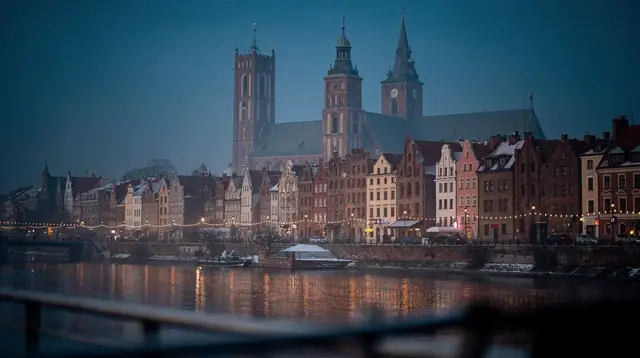
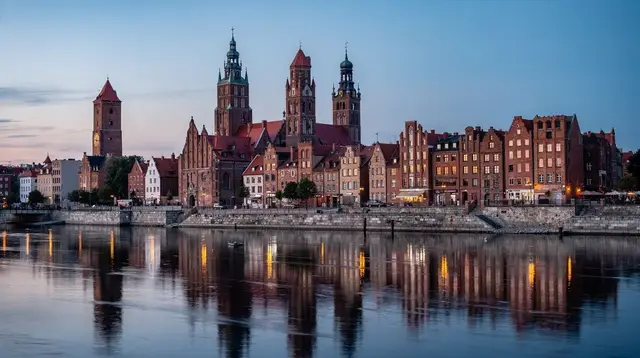
Here is the detail that makes Toruń genuinely different from Gdańsk, not just further away. Gdańsk’s famous gabled Old Town looks medieval, and it is built on medieval foundations, but the buildings visitors photograph on Długi Targ and along the Motława were rebuilt after being reduced to rubble in 1945 - careful, faithful postwar reconstruction, but reconstruction all the same. Toruń’s old town was spared that fate. Its red-brick Gothic churches, merchant houses, town hall and city walls are, to a remarkable degree, the original medieval fabric, not a copy of it.
That single fact is why Toruń carries its own UNESCO World Heritage listing, independent of anything in Gdańsk, and it is why art and architecture specialists rate it among the best-preserved medieval brick towns in Central Europe. Walking through it is a genuinely different experience from walking through Gdańsk’s Old Town - the same red-brick Gothic vocabulary, but centuries closer to what it always looked like rather than a 20th-century recreation of it.
Visitors who found Gdańsk’s “medieval” streets impressive should know Toruń raises that bar rather than repeating it; our piece on the subject, Gdańsk’s Old Town Is a Reconstruction, and That’s the Point, goes further into what that distinction actually means on the ground.
The Old Town centres on a grid of Gothic streets radiating from the Old Town Market Square, dominated by the red-brick Old Town Hall - one of the largest brick town halls in this part of Europe, with a tower that can be climbed for a rooftop view over the whole historic core. Around it stand a cluster of brick churches, including the Cathedral of St John, where Copernicus himself was baptised, and the Church of the Assumption of the Blessed Virgin Mary, both worth a slow look at their vaulted interiors rather than a glance from outside.
Copernicus: Toruń’s most famous son
Nicolaus Copernicus was born in Toruń in 1473, and the town has never let anyone forget it. His birth house on Ulica Kopernika is now a museum dedicated to his life and his heliocentric theory, and a statue of him stands in the Old Town Market Square, usually surrounded by visitors taking the obligatory photograph. For anyone with an interest in the history of astronomy, this is the reason to come to Toruń in the first place - not a side note attached to the architecture, but the headline attraction for a meaningful share of visitors.
The museum experience has modernised in recent years with interactive elements alongside the historical rooms, and it rewards an unhurried hour rather than a five-minute walkthrough. Combined with the cathedral where he was baptised, a Copernicus-focused couple of hours forms a natural spine for the day, around which the rest of the old town, the walls and the gingerbread stops can be arranged.
Families weighing whether Toruń suits children should know the Copernicus museum’s interactive exhibits tend to hold younger visitors’ attention far better than a church interior does, which makes it one of the more kid-friendly stops on this itinerary; the broader Gdańsk with kids guide and the family-friendly activities in Gdańsk and the Tricity roundup both cover how a day this long works, or doesn’t, with young children in tow.
Piernik: Toruń’s gingerbread tradition
If Copernicus is Toruń’s most famous resident, gingerbread is its most famous export. Toruń has baked piernik - a dense, spiced gingerbread, often filled or glazed - since at least the medieval period, and the tradition is very much alive rather than preserved behind glass. Bakeries across the old town sell it in every shape imaginable, from plain spiced biscuits to elaborately decorated figures, and several venues run hands-on workshops where visitors bake and decorate their own gingerbread to take home.
This is where a day trip from Gdańsk can be turned into something more structured than freeform wandering. A guided walk that focuses specifically on the gingerbread tradition covers the bakeries, the history and usually a tasting or two - the Toruń Gingerbread Walk is built around exactly that. For a version that folds in the practicalities of getting there from Gdańsk as well, the private day tour from Gdańsk that includes a gingerbread-making workshop handles the transport and the baking session in one booking, which removes a fair amount of the planning described in the paragraphs above.
Poland’s currency questions do not stop at the Gdańsk city limits - Toruń uses the same zloty, and the same near-universal card acceptance, as the coast. Travellers unsure how payment works away from tourist-heavy areas should skim how to pay in Poland: zloty and cards before boarding the train, since smaller gingerbread workshops and market stalls in Toruń are more likely to prefer cash than a hotel or a chain cafe would be.
What a realistic day actually looks like
Given the 2h30 journey each way, a Toruń day trip from Gdańsk realistically runs from an early departure to a late return. A workable shape:
| Time | Activity |
|---|---|
| Early morning | Direct train from Gdańsk Glowny, ~2h30 |
| Late morning | Old Town Market Square, Old Town Hall, tower view |
| Midday | Copernicus’s birth house museum, Cathedral of St John |
| Early afternoon | Lunch, city walls and riverside, gingerbread bakery stop |
| Mid afternoon | Optional gingerbread workshop or guided walking tour |
| Late afternoon | Direct train back to Gdańsk, ~2h30 |
That itinerary leaves perhaps four to five hours of actual time in Toruń once the platform-to-platform travel is subtracted, which is enough to see the highlights properly but not enough to linger the way the town deserves. A structured walking tour makes efficient use of those hours - the afternoon tour of the Old Town or the shorter half-day private walking tour both cover the market square, the churches and the Copernicus sites with a guide who keeps the pace tight, which matters when the clock is genuinely working against a same-day return.
Anyone who wants to see Toruń from the water rather than only on foot has options too: a short 30-minute cruise past the old town’s riverfront fits into a tight afternoon window, while longer sailings run in the evening for those staying overnight.
For travellers who read all of the above and decide a five-hour round trip is more than they want to spend on a single excursion, Toruń is not the only full-day option out of Gdańsk. The Elbląg Canal day trip, with its boats hauled overland on rail-mounted trolleys, and the Kashubian Switzerland day trip, through the region’s hill country and lakes, both deliver a comparably full day without the 170km haul south.
The honest case for staying overnight instead
Everything above describes what a single, rushed day from Gdańsk can achieve, and it is achievable - but it is rushed. Toruń’s old town rewards an evening stroll once the day-trip groups have caught their trains home, when the market square empties out and the brick facades catch the late light without a crowd of shoulders in the frame.
A one-night stay turns the trip from “five hours of travel bookending four hours of sightseeing” into a genuinely relaxed visit, with dinner in the old town and a second morning to see what got skipped the first day - an evening cruise, for instance, such as the evening cruise along the Vistula or the atmospheric Toruń at Night boat tour, both of which only really work for someone not racing to catch a last train back to Gdańsk.
For travellers who have more time in the region and are weighing whether Toruń deserves an overnight stop on a longer route, the dedicated trip notes at Toruń Heritage Trip: A Long Day or Overnight from Gdańsk lay out a slower version of this same visit, and Toruń Heritage Trip: A Long Day or Overnight from Gdańsk style routing questions are answered more fully in Best Day Trips from Gdansk alongside the other big excursions from the city.
Season matters here more than the train timetable does. A Toruń day trip in July or August means long daylight either side of the journey, covered in the Gdańsk in summer guide, while a winter visit means a much shorter window of usable daylight and colder platforms, as the Gdańsk in winter guide lays out. A wet forecast changes the calculation too, since Toruń’s appeal is largely outdoor and street-level; the notes in Gdańsk in the rain apply just as well to a Toruń day as to a day spent in Gdańsk itself.
What not to promise yourself
Three things this page will not pretend are true, because they cause real disappointment when they turn out not to be.
First, this is not a half-day trip. Malbork is a half-day trip; Toruń, at roughly 170km and 2h30 each way by direct train, is not. Anyone planning a Gdańsk itinerary around a “quick morning in Toruń” is planning around a train timetable that does not exist.
Second, Toruń is not a rebuilt town like Gdańsk. That is precisely its appeal, not a downside, but it is worth stating plainly since guidebooks sometimes gloss over the distinction: Gdańsk’s Old Town is careful postwar reconstruction; Toruń’s is original medieval fabric that survived the war largely untouched. They look similar in photographs and are genuinely different in what a visitor is standing in front of.
Third, pairing Toruń with Malbork on the same day, while physically possible, is not a comfortable plan. The two towns sit in different directions from Gdańsk, so a same-day combination means considerable backtracking rather than a tidy loop, and both towns end up shortchanged. Travellers determined to see both are better served by two separate excursions, or by treating one of them as an overnight stop, than by a single exhausting day covering both.
Travellers with a full week rather than a single free day have more room to do this properly. The Gdańsk and Malbork in four days itinerary shows how to give both towns their own unhurried day rather than cramming them together, and the car-free by train itinerary is built around exactly the kind of longer-distance rail connection that gets someone to Toruń and back without ever needing to rent a car.
Toruń earns its place on a Pomerania itinerary, but it earns it as a full day of someone’s trip, ideally with the option of staying the night - not as a quick extra squeezed between two other stops. Given the choice, and given what the train timetable actually says, treating it as a proper day out, or better still an overnight, is the honest way to plan it.
Toruń tours
Verified deep-linked GetYourGuide tours. Book through these links and we earn a small commission at no cost to you.
GetYourGuide does not provide a product photo for this activity — the image shows the meeting point, photographed by us.