5 Days Car-Free by Train: Gdańsk, the Tricity, Malbork and Toruń
Gdańsk and its region were built around water and rail long before anyone needed a car, and that infrastructure still works today. This itinerary proves it over five days: two full days moving along the coast by SKM train between Gdańsk, Sopot and Gdynia, a day trip south to Malbork Castle, and a longer excursion inland to Toruń - all without ever needing to hire a car or book a private transfer.
Why this itinerary works without a car
The Tricity exists because of its railway, not despite it. The SKM (Szybka Kolej Miejska) runs along the coast from Gdańsk through Sopot to Gdynia and beyond, with trains every 10-20 minutes at peak times - more frequent than most visitors expect from a “just a train” option. Malbork and Toruń are then a short step further: both sit on PKP InterCity and regional lines out of Gdańsk Glowny, with departures spread through the day rather than one or two trains to plan around.
One honest note before starting: this trip uses three separate ticketing systems, not one pass that covers everything. SKM tickets are bought and validated separately from Gdańsk’s own trams and buses, and PKP train tickets to Malbork or Toruń are a third, separate purchase. None of this is complicated, but budgeting a few minutes and a few zloty at each machine, each day, is part of travelling this way.
a guided walk through Gdańsk’s Old Town on Day 1 is a good way to get oriented before navigating the rail network solo for the rest of the trip.
Day 1: Gdańsk Old Town
Base yourself in central Gdansk for the first two nights - everything here is walkable, and it’s also the hub for every train in this itinerary. Spend the morning around Długi Targ and Mariacka street, then follow the Gdańsk Old Town walking tour route past St Mary’s Basilica and down to the Motława riverfront, where the medieval crane Żuraw marks the water’s edge.
In the afternoon, walk or take a short bus to the Gdańsk Shipyard and the European Solidarity Centre, the birthplace of the Solidarność movement - budget two to three hours for the exhibition, since this is a dense museum, not a quick stop. See the Gdańsk Shipyard and Solidarity guide for the layout. If time and season allow, a water tram or city bus reaches Westerplatte, where the Second World War began on 1 September 1939 - the Westerplatte guide covers both routes and their honest travel times.
For a structured overview of the historic core, Gdańsk: Private City Tour is worth considering on this first day, and a walking tour of the Old Town pairs well with independent wandering in the afternoon.
Stay overnight in Gdańsk. See where to stay in Gdansk if choosing a base.
Day 2: Sopot and Gdynia by SKM
This is the day the SKM earns its keep. From Gdańsk Glowny (or Gdańsk Wrzeszcz, a closer stop for some neighbourhoods), board the SKM north to Sopot - the ride itself hugs the coast, with sea glimpses for much of the way, and takes well under 20 minutes.
In Sopot, walk down to Europe’s longest wooden pier and spend an hour or two around the pedestrian centre. The Sopot walking tour covers the pier, the crooked house and the old spa quarter in a logical loop. For a guided option, a quiet walking tour with a qi gong session is an unusually calm way to see the town before it fills up, or consider Sopot: Old Town Highlights Private Walking Tour for a more conventional route.
Note that Sopot’s own local buses and Gdańsk’s SKM run on different ticket types - a ticket bought for the SKM does not cover a local Sopot bus, so keep that in mind for short hops within town.
By early afternoon, take the SKM onward to Gdynia, around 15-20 minutes further north. Gdynia is a different city in character - a largely twentieth-century port built up after 1918-20, which is why its centre reads as modernist rather than historic. Walk the self-guided Gdynia modernist route, or book a private maritime legends tour with tickets included to cover the docked museum ships, including the tall ship Dar Pomorza, alongside the city’s architecture.
Return to Gdańsk by SKM in the evening; the full line runs frequently well into the night. For context on how the whole network fits together, see getting around the Tricity by SKM, tram and bus.
Optional summer extension: in June through September only, a seasonal passenger boat or direct summer train can extend this kind of day out to the Hel Peninsula - see the Hel Peninsula day trip guide. Outside those months, boat and rail connections to Hel thin out sharply, so this itinerary does not build it into the core five days; treat it as a bonus only if travelling in high summer and only after checking current schedules.
Day 3: Malbork Castle
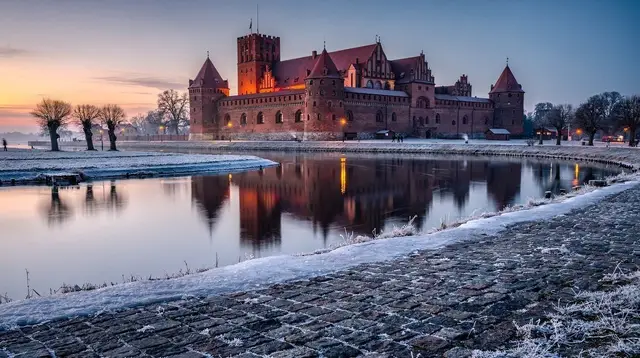
Today is a rail day trip south to Malbork, home to the largest brick fortress in the world and a UNESCO World Heritage Site. Regional and InterCity trains leave Gdańsk Glowny regularly through the day and cover the roughly 50-60km in about 35-40 minutes - genuinely one of the easiest excursions in this itinerary, with no transfer needed. The castle is a short walk from Malbork’s station.
| Leg | Mode | Approx. time |
|---|---|---|
| Gdańsk Glowny to Malbork | Regional / InterCity train | 35-40 min |
| Malbork station to castle | On foot | 10-15 min |
| Malbork to Gdańsk Glowny | Regional / InterCity train | 35-40 min |
Budget half a day for the castle itself, not the rushed “two hours” some tour itineraries promise - the full circuit of the High, Middle and Low Castles takes three to four hours for visitors who actually read the rooms. Since the museum introduced timed entry slots, it’s worth booking a date and 30-minute window in advance rather than relying on walk-up tickets, especially in high season. Full detail is in the Malbork Castle visitor guide, the Malbork Castle history and Teutonic Knights guide, and the practical getting to Malbork Castle from Gdańsk guide.
For a guided version that removes the planning entirely, a day tour from Gdańsk to Malbork Castle with an audioguide included covers transport and entry together, or the Polish-language option a guided trip from Gdańsk to Malbork Castle for a live guide throughout.
Return to Gdańsk by early evening train and spend a relaxed final Old Town evening - this is also a sensible night to try local specialties covered in the Gdańsk food tour guide.
Day 4: Travel to Toruń and first exploration
Toruń deserves more than a bolt-on, so this itinerary gives it a proper two days rather than squeezing it into one long outing from Gdańsk. A direct train from Gdańsk Glowny to Torun takes around 2.5 hours - long enough that arriving mid-morning and staying overnight makes far more sense than a same-day round trip.
Check into accommodation near Toruń’s UNESCO-listed old town, then spend the afternoon in the brick Gothic core - the birthplace of Nicolaus Copernicus and famous for its gingerbread (piernik) tradition dating back centuries. The Toruń day trip from Gdańsk guide lays out a walking route through the market square, the Copernicus house and the riverside district.
In the late afternoon or evening, join a gingerbread-themed walking tour for a hands-on introduction to the tradition that put Toruń on the map, or take an evening cruise along the Vistula for a different view of the old town’s brick towers and city walls lit up after dark.
Day 5: Toruń in the morning, return by train
Use the morning for anything missed the day before - the Leaning Tower, the city walls, or simply a slower coffee-shop pace through streets that get crowded with day-trippers by midday. Because this itinerary builds in an overnight stay, there’s no need to rush the visit into a few compressed hours the way a same-day round trip from Gdańsk would force.
By early afternoon, board the direct train back to Gdańsk Glowny for the roughly 2.5-hour return. Arriving back in Gdańsk in the late afternoon or early evening leaves time for a final walk along the Motława or one last dinner in the Old Town before departure the next day.
Two ticket systems, not one
It’s worth repeating clearly, since it’s the one thing that trips up first-time visitors to this itinerary: the SKM (used on Days 1-2 within the Tricity) and Gdańsk’s own trams and buses are sold on separate tickets, priced by time validity (20, 40, 60, 90 minutes, or a 24-hour pass) rather than by number of stops. PKP regional and InterCity trains to Malbork and Toruń are a third, entirely separate system, bought at station counters or online in advance. None of these tickets carry over to another - plan for buying tickets at least once or twice most days, and keep a little cash or a card ready at station machines.
What this itinerary deliberately leaves out
Three well-known regional destinations are not included here, on purpose: Kashubian Switzerland, the Wolf’s Lair, and the Elbląg Canal are all realistically reached by car or organised tour rather than scheduled public transport, so they fall outside a genuinely car-free plan.
Travellers with access to a car, or willing to book a private tour for those specific sites, should look instead at the Kashubian Switzerland day trip, the Wolf’s Lair day trip from Gdansk, or the Elbląg Canal day trip as separate additions. For a broader comparison of when a car helps and when it doesn’t, see should you rent a car in Gdansk.
Frequently asked questions about this car-free Gdańsk itinerary
Can you really see Gdańsk, the Tricity, Malbork and Toruń without a car?
Yes. The Tricity runs on the frequent SKM commuter train, and both Malbork and Toruń are reachable from Gdańsk Glowny by regional or InterCity trains that run throughout the day, no transfer required for Malbork and usually a single direct service for Toruń.
Is one ticket enough for the whole trip?
No. SKM tickets, urban tram and bus tickets in Gdańsk, Sopot or Gdynia, and PKP train tickets to Malbork or Toruń are three separate systems sold separately, so budget for buying tickets more than once a day.
How far is Malbork from Gdańsk by train?
Regional and InterCity trains cover the roughly 50-60km between Gdańsk Glowny and Malbork in about 35-40 minutes, with frequent departures through the day.
How long does the train to Toruń take?
A direct train from Gdańsk Glowny to Toruń takes around 2.5 hours, making it a realistic full-day trip or, better, an overnight stop rather than a rushed half-day.
Should Hel Peninsula be added to this itinerary?
Only in summer. The direct train or seasonal boat to Hel runs roughly May to September; outside that window the connections thin out sharply, so this itinerary treats Hel as an optional summer extension rather than a fixed day.
Why does this itinerary skip Kashubia, the Wolf’s Lair and the Elbląg Canal?
All three are realistically reached by car or organised tour rather than public transport, so they fall outside a strictly car-free plan and are better suited to a separate itinerary.
Do I need to book train tickets to Malbork and Toruń in advance?
It isn’t strictly required on regional trains, but booking InterCity tickets a day or two ahead, especially for Toruń, secures a seat and often a better price than buying at the station on the day.
Is this itinerary suitable without much English in rural stations?
Yes for the routes used here - Gdańsk Glowny, Malbork and Toruń are all major stations with digital departure boards, and ticket machines typically offer an English-language option.
Transport options
Verified deep-linked GetYourGuide tours. Book through these links and we earn a small commission at no cost to you.
GetYourGuide does not provide a product photo for this activity — the image shows the meeting point, photographed by us.