Toruń Heritage Trip: A Long Day or Overnight from Gdańsk
Toruń sits about 170 kilometres south-west of Gdańsk, and the direct PKP Intercity train between the two takes roughly two and a half hours each way. That single fact should shape the whole plan: Toruń is not a half-day hop that fits neatly around a Gdańsk morning, and treating it as one is the most common way visitors shortchange a genuinely outstanding town. Do the arithmetic honestly - five hours on trains alone - and a same-day round trip only works as a proper long day, with an early start and a late finish. The better alternative, and the one this itinerary leans toward, is a single overnight in Toruń, which turns a rushed dash into a relaxed visit with an evening by the Vistula thrown in for free.
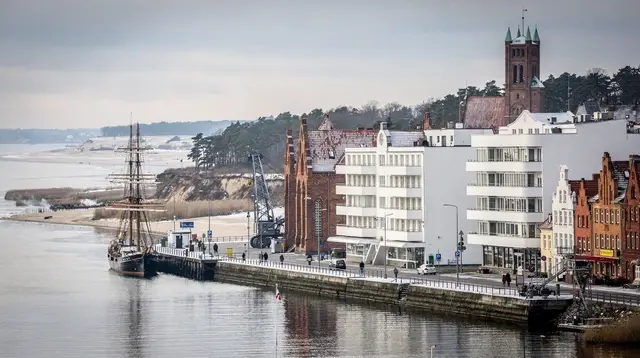
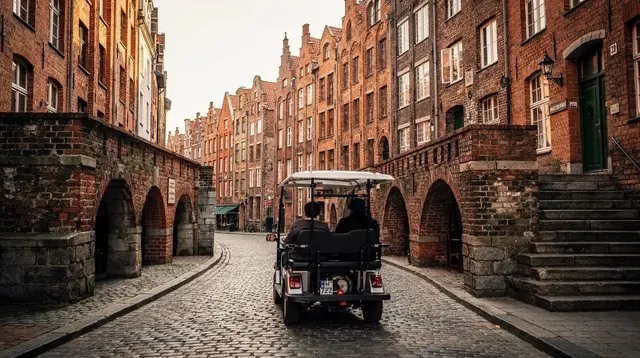
What makes the extra effort worthwhile is that Toruń offers something Gdańsk cannot: an old town that was never destroyed. While Gdańsk’s gabled Main Town was reduced to rubble in 1945 and rebuilt from scratch afterward - a distinction covered in more depth in why Gdańsk’s Old Town is reconstructed, not original - Toruń came through the Second World War almost entirely intact. Its red-brick Gothic churches, town hall and merchant houses are original medieval fabric, not careful postwar reconstruction - which is precisely why UNESCO inscribed the medieval town centre as a World Heritage Site.
Toruń is also the birthplace of Nicolaus Copernicus, born here in 1473, and it has baked gingerbread (piernik) since at least the fourteenth century, a tradition still very much alive in workshop bakeries across the old town. A shorter overview of the same trip, useful for comparing notes before committing to the long-day or overnight choice, sits in the Toruń day trip from Gdańsk guide.
One more thing worth saying plainly: do not try to combine Toruń with Malbork Castle in a single day. They lie in opposite directions from Gdańsk - Malbork south-east, Toruń south-west - on separate rail lines with no direct connection between them. Chaining the two together means a very early start, a rushed middle, hours lost in transit, and barely enough time at either site to do it justice. Each deserves its own day; see the guide on Malbork versus Toruń as a day trip for a fuller comparison of the two, and the Malbork day trip itinerary for how that separate excursion is best structured on its own.
Getting there: the train is genuinely enough
No car is needed for this trip, and none is recommended. PKP Intercity runs several direct services daily between Gdańsk Główny and Toruń Główny, with the fastest covering the roughly 170 kilometres in about 2h30. Regional trains also run the route but take noticeably longer with more stops, so it is worth paying the modest premium for an Intercity service, especially on the outbound leg.
Toruń Główny station sits across the Vistula from the old town, a fifteen to twenty minute walk or a short bus ride over the river - a detail some itineraries skip, so budget the extra time on arrival. Travellers building an entire trip around Poland’s rail network rather than a hire car can see how this fits a wider pattern in the car-free by train itinerary.
| Option | Journey time | Notes |
|---|---|---|
| PKP Intercity direct | ~2h30 | Fastest, most comfortable, several daily departures |
| Regional/TLK train | 3h-3h30 | Cheaper, more stops, less predictable timing |
| Driving | ~2h-2h30 | No advantage over the train; parking and city traffic add friction |
Book the outbound Intercity train for an early morning departure - ideally before 7:30am - to arrive in Toruń with a full day still ahead. If staying overnight, there is more flexibility on timing and less pressure to catch a particular evening train home.
Day 1: Toruń’s Old Town, Copernicus, and Gingerbread
Arriving mid-morning after the train and the walk into the centre, start at the heart of the old town rather than trying to see everything in order. The Old Town Market Square (Rynek Staromiejski), dominated by the red-brick Town Hall, is the obvious anchor - climb the Town Hall tower for a rooftop view over the unbroken sea of Gothic gables and church spires, a panorama that makes the “never destroyed” claim immediately visible rather than abstract.
From the square, the Cathedral of St John, the Church of St Mary, and the Church of St James form a triangle of brick Gothic architecture within easy walking distance of each other, each with its own scale and character - St John’s cathedral is the grandest, St Mary’s the most luminous inside, St James’ the most intimate. None of these require advance booking; a couple of hours moving between them, with the walk itself, covers the city’s religious architecture without over-scheduling the day.
Copernicus’s presence is woven through the old town rather than confined to one site. The Nicolaus Copernicus House Museum, a reconstructed merchant’s house near his believed birthplace, covers his life and astronomical work with period rooms and interactive exhibits - worth an hour, particularly for anyone who wants more than the statue in the market square. Speaking of which, the bronze Copernicus monument in front of the Town Hall is a standard, unavoidable photo stop, and deservedly so.
For a structured introduction that ties the old town’s history together rather than piecing it together solo, a private three-hour city tour of Toruń covers the Gothic core, the Copernicus sites, and the town’s medieval defensive walls with a guide who can explain what survived the war and why, which is harder to piece together from plaques alone.
Gingerbread: more than a souvenir
Toruń’s piernik tradition goes back to at least the fourteenth century, tied to the town’s medieval access to spices via the Hanseatic trade routes and its reputation for honey and rye flour. This is not a token gift-shop add-on; several working bakeries in the old town run hands-on sessions where visitors mix, shape and bake their own gingerbread using historical recipes and wooden moulds.
A guided gingerbread walk through Toruń combines a short history of the trade with a hands-on baking session, and works well slotted into the early afternoon, after the morning’s church-and-square circuit and before the day cools toward evening. Budget around ninety minutes to two hours for a proper version of this, not a rushed twenty-minute stop.
Beyond the guided workshops, the Museum of Toruń Gingerbread and several long-standing piernik shops around the market square sell the real thing - worth knowing that quality varies sharply, and the better bakeries are happy to explain the difference between a mass-produced tin and their own recipe.
Late afternoon: the walls, the river, the crooked tower
As the afternoon eases, the city walls and fortifications along the Vistula riverbank are worth a slow walk rather than a rush - much of the medieval defensive circuit survives, with gates and towers punctuating the route. The Leaning Tower (Krzywa Wieża), tilted noticeably off vertical due to subsidence centuries ago, is a curiosity worth a five-minute detour rather than a headline attraction in its own right.
If staying overnight, this is the point to check into accommodation and treat the rest of the evening without a train timetable hanging over it. If making this a single very long day, this is roughly the point at which the return journey needs to start being planned - allow time to walk back across the river to Toruń Główny well ahead of the train.
Evening: on the water, or a last look at the old town
For those staying overnight, an evening evening cruise along the Vistula in Toruń offers a different view of the old town entirely - the brick skyline lit up and reflected in the river, a genuinely different register from the daytime sightseeing. This is one of the clearest arguments for the overnight option over the single long day: a rushed same-day visitor simply does not have this hour available, since it needs to be running for the last direct train instead.
Dinner in the old town is straightforward and good value by Polish standards; restaurants around the market square and along the side streets serve solid Polish cooking, and it is worth choosing somewhere away from the very centre of the square for a slightly better price without losing the atmosphere.
Day 2 (If Staying Overnight): A Slower Morning
An overnight stay buys a second morning without the pressure of a train to catch. This is the time to revisit anything rushed the day before - perhaps a longer look inside the cathedral, a return to a gingerbread shop for supplies to take home, or simply a coffee in the market square watching the town wake up before the walk back to the station for a midday or early-afternoon train to Gdańsk. There is no need to over-plan this morning; part of its value is that it has no fixed agenda.
Same-Day Long Day: A Realistic Timetable
For travellers who genuinely cannot spare a night away, a same-day trip is possible, but it needs to be planned as a long day, not a leisurely one.
| Time | Activity |
|---|---|
| 6:30-7:00am | Depart Gdańsk Główny on the earliest direct Intercity |
| ~9:30am | Arrive Toruń Główny, walk to the old town |
| 10:00am-12:30pm | Market square, Town Hall tower, churches |
| 12:30-1:30pm | Lunch in the old town |
| 1:30-3:30pm | Copernicus House Museum, gingerbread workshop |
| 3:30-5:00pm | City walls, riverside walk, last impressions |
| 5:00-5:30pm | Walk back to Toruń Główny |
| ~6:00pm onward | Direct train back to Gdańsk, arriving early-mid evening |
This version works, but it leaves no real margin for delays, queues, or simply lingering somewhere longer than planned - which is exactly why the overnight option is the one recommended here whenever the schedule allows it.
Practical Notes
Toruń’s old town is compact and flat, entirely walkable, and does not require public transport once arrived - the only real distance is the walk between the train station and the old town itself, across the Vistula. Tickets for the Town Hall tower and the Copernicus House Museum can be bought on-site outside peak summer weekends; advance booking is rarely necessary. Comfortable shoes matter more than any single ticket, given the cobbled streets throughout the historic core.
For a broader look at how a Toruń trip fits alongside other excursions from Gdańsk, the best day trips from Gdańsk guide places it in context next to Malbork, Kashubia and the coast, while the guided tour versus DIY day trips comparison weighs the trade-offs between organising this trip independently and joining a structured tour.
Travellers building a longer stay around Gdańsk might also consult how many days in Gdańsk to see where a Toruń overnight best slots into a wider itinerary, and those still deciding between destinations can compare it directly against Malbork in Malbork versus Toruń as a day trip.
Those who prefer their Toruń visit bookended by a bit of Gdańsk polish can pair this trip with a private city tour of Gdańsk either the day before departure or the day after return, making the most of the short window either side of the Toruń excursion. Anyone still deciding where to base themselves for those extra nights can check the where to stay in Gdańsk guide before booking.
Back in Gdańsk, the Old Town walking tour guide and the first-time in Gdańsk guide are useful starting points for orienting the rest of a visit, and travellers with a full week to spare might fold this Toruń leg into the broader one week in Pomerania itinerary.
Frequently Asked Questions About the Toruń Trip
Is Toruń a good day trip from Gdańsk?
It can be, but only as a genuine full day, not a half-day add-on. The direct train takes roughly 2h30 each way, so a same-day round trip means an early departure and a late return, with a single uninterrupted block in Toruń in between.
How far is Toruń from Gdańsk?
About 170 kilometres by road and rail. PKP Intercity runs direct trains covering the distance in around 2h30, which is the most comfortable and reliable way to make the trip without a car.
Can I visit Toruń and Malbork Castle on the same day?
It is not recommended. Toruń lies south-west of Gdańsk while Malbork lies south-east, on a different rail line entirely; combining both in one day means two long, disconnected legs and barely any real time in either place.
Do I need a car to visit Toruń from Gdańsk?
No. The direct PKP Intercity train is faster than driving once parking and city traffic are factored in, and Toruń’s old town is compact and entirely walkable, so a car adds cost and hassle without adding convenience.
Why is Toruń’s old town different from Gdańsk’s?
Toruń escaped the large-scale destruction of the Second World War almost entirely, so its Gothic brick churches, town hall and merchant houses are original medieval fabric, not postwar reconstruction as in much of Gdańsk’s Old Town.
What is Toruń famous for?
Three things above all: its UNESCO-listed medieval old town, being the birthplace of astronomer Nicolaus Copernicus in 1473, and its centuries-old gingerbread (piernik) tradition, still baked and sold across the city.
Is one day enough to see Toruń properly?
One long day covers the old town’s highlights comfortably, but an overnight allows an unhurried pace, an evening on the Vistula waterfront, and a second morning for anything missed, without the pressure of a return train to catch.
tours.1 days
Verified deep-linked GetYourGuide tours. Book through these links and we earn a small commission at no cost to you.
GetYourGuide does not provide a product photo for this activity — the image shows the meeting point, photographed by us.