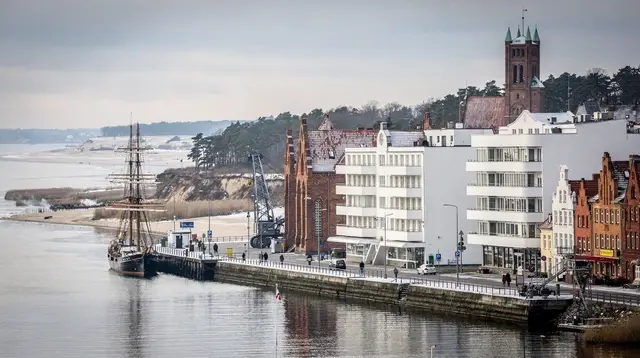
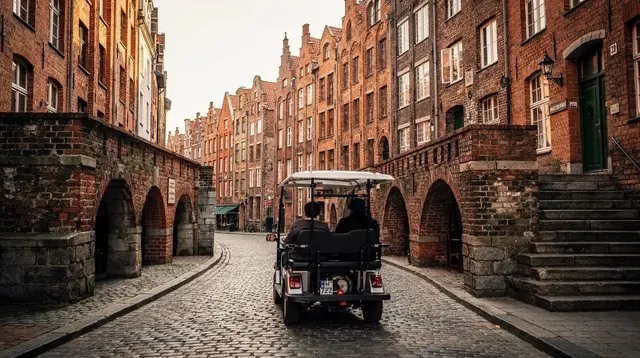
No, You Cannot Pay in Euros in Gdańsk
I made the mistake myself, on my first evening in Gdańsk. I had just landed, I had a handful of euro coins left over from a stopover somewhere else, and I assumed, the way you assume things when you are tired and hungry, that a country this close to Germany, this plugged into the European Union, this full of German and Dutch and Scandinavian tourists wandering the gabled streets around Długi Targ, would simply take euros the way half of coastal Croatia or Montenegro does. I ordered a plate of pierogi, reached for my coins, and the waiter looked at them the way you might look at a stranger’s foreign coins at a market stall back home: politely, but with a small shake of the head. Zloty only, he said. Card is fine.
It is a small moment, but it is a genuinely common one, and I think it is worth writing about honestly rather than burying it in a bullet-point packing list, because it says something true about how people picture “Europe” that Gdańsk quietly corrects. Poland has been a member of the European Union since 2004. It sits inside the Schengen area, so there is no passport check crossing in from Germany or Lithuania. Its supermarkets stock the same European brands, its motorways carry the same blue EU signage, and its cities feel, on the surface, thoroughly woven into the rest of the continent.
It is very easy, especially if your reference points are France, Germany, Spain or the Netherlands, to fold all of that into a single mental category called “the euro zone” and stop thinking about it. Poland does not fit that category. It never adopted the euro, has no binding date to do so, and its currency, the zloty, is not a technicality you can shrug off at the border. It is the only money that actually works here.
Why this is not just an administrative footnote
I want to push back gently on the instinct to file this under small print. It is tempting to think of currency as the kind of detail a good travel app handles for you automatically, invisibly, the way it handles time zones. But money is the one thing you touch constantly on a trip, dozens of times a day if you are buying coffee, tickets, snacks and souvenirs, and getting it wrong does not fail quietly. It fails at the counter, in front of a queue, with your card declined or your euros politely refused, at the exact moment you are trying to relax into a holiday. I would rather a visitor spend two minutes reading this before leaving home than lose ten minutes and some dignity outside a bakery on Mariacka street.
There is also a slightly bigger point buried in the small one. Poland keeping the zloty is not an oversight or a sign of being somehow less “in” Europe. Several EU members outside the eurozone, Poland included, have deliberately kept monetary independence, partly for economic flexibility and partly because adoption requires meeting specific convergence criteria and, in Poland’s case, sustained domestic political will that simply has not materialised. Gdańsk, a city that spent centuries as a Hanseatic trading port juggling different currencies and different rulers, is in some ways a fitting place to be reminded that “Europe” was never one single economic bloc, euro included.
The part that actually makes this easy
Here is the good news, and it is real good news, not a consolation prize. You will very rarely need to think about cash at all. Contactless card payment in Gdańsk and across the Tricity is close to universal: I paid by card for coffee, museum tickets, a taxi, a kiosk ice cream on the Sopot pier, and a stall selling amber jewellery near St Mary’s Basilica, and the only time I was asked for cash was at a tiny bar with a hand-written “gotowka only” sign taped to the till, which the bartender translated for me with a shrug before I even asked.
Most banks and card providers now handle the conversion automatically at a reasonable rate, so in practice you spend zloty without ever consciously converting anything, the numbers on the receipt simply become numbers, the way they would at home.
If you do want a little cash in your pocket, and I would recommend a small amount for markets, some smaller SKM ticket machines and rural stalls out in Kashubia, withdraw it from an ATM after you arrive rather than exchanging euros in advance. Airport exchange counters and pre-loaded currency cards bought at home tend to carry worse rates than a standard bank withdrawal once you land, and Gdańsk’s airport and Old Town both have ATMs from major Polish banks that work reliably with foreign cards.
What I would tell a friend before they landed
Do not bring euros expecting to spend them. Set your mental prices in zloty from the moment you land, even roughly, because a quick pierogi will run a very different number of zloty than of euros, and doing the conversion on the fly for the first day or two saves a lot of confused arithmetic later. Load a card that does not charge foreign transaction fees if you can, since you will be tapping it constantly. And keep a small amount of zloty cash on you, not because you will need it often, but because the one time you do need it, in a small bakery near Wrzeszcz or a fishing-village kiosk on the Hel peninsula, you will be glad it is already in your wallet rather than three streets away in an ATM.
Beyond the money itself, the currency question is a decent proxy for how to approach the whole trip: assume less, check a little more. If you are planning your first days here, a guided walk through the Old Town or a private city tour is a good way to get your bearings, including the practical stuff like where cards work and where cash still rules, without burning your first afternoon figuring it out alone.
And if the weather cooperates, a breakfast cruise out on the bay or an RIB speedboat run from Sopot is the kind of thing that is easiest to enjoy once you have stopped worrying about how you are going to pay for it.
Gdańsk gives you enough real things to adjust to: a sea that stays cold even in August, a city rebuilt almost entirely from rubble after 1945, a flat coastline with no mountains in sight. The currency should not be one of them. Once you know it is zloty, not euro, and that your card will carry you through nearly everything, the money genuinely stops being a thing you think about, which is exactly how it should be on a trip like this.
Frequently asked questions about paying with zloty in Poland
Does Poland use the euro?
No. Poland is a European Union member but has kept its own currency, the zloty (PLN), and has no fixed date to join the eurozone. Euros are not legal tender anywhere in the country.
Can I pay in euros at restaurants or shops in Gdańsk?
Almost never. A very small number of hotels or souvenir stalls aimed squarely at tourists might accept euro notes informally, usually at a poor exchange rate, but this is the exception, not the rule. Budget for zloty.
Are credit and debit cards widely accepted in Gdańsk?
Yes, very widely. Contactless card payment is standard in shops, cafes, restaurants, taxis and even most market stalls, so most visitors barely need cash at all during a stay in Gdańsk or the Tricity.
Should I exchange money before arriving in Poland?
It is not essential. Cards cover most spending, and if you do want cash, withdrawing zloty from an ATM in Gdańsk generally gives a fairer rate than exchanging euros at an airport kiosk or a currency booth on arrival.
What is the zloty exactly, and how is it written?
The zloty is Poland’s official currency, abbreviated PLN and sometimes written with the symbol zl. It divides into 100 groszy, similar to cents, and comes in both coins and banknotes.
Will I need cash anywhere in Gdańsk or the Tricity?
Occasionally. Some small kiosks, certain public toilets, a handful of local buses outside the main SKM network, and some rural stalls in Kashubia still prefer or require cash, so a small amount of zloty in your pocket is sensible even if cards cover most days.
Is it rude or unusual to ask if a place takes euros?
It is not rude, but do not expect a yes. Staff are used to the question from visitors arriving from the eurozone, and most will explain, politely but clearly, that payment is in zloty only.
For more on getting your bearings before you land, see how to pay in Poland with zloty and cards, a broader budget travel guide to Gdansk, and a list of tourist mistakes to avoid. If this is your first time in Gdansk, it is worth pairing this with a look at safety and common scams and at getting around the Tricity by SKM, tram and bus.
Planning your first days can start with a simple one-day Gdańsk itinerary or a longer Gdańsk and Sopot two-day plan, both of which slot naturally around the Old Town and a stroll past St Mary’s Basilica.
For context on why the city feels the way it does today, it helps to know that Gdańsk’s Old Town was rebuilt, not original, that Danzig is not the same as today’s Gdansk, and that the wider region runs on its own transport habits rather than assumptions carried over from Western Europe. If you are weighing up Gdańsk against Sopot and Gdynia for where to base yourself, the currency question is the same wherever you sleep.
tours.Practical
Verified deep-linked GetYourGuide tours. Book through these links and we earn a small commission at no cost to you.
GetYourGuide does not provide a product photo for this activity — the image shows the meeting point, photographed by us.