Cycling the Tricity: Gdańsk to Sopot to Gdynia by Bike
Can you cycle from Gdańsk to Sopot to Gdynia along the coast?
Yes - a mostly flat, mostly waterside route links the three Tricity cities, mixing dedicated cycle paths, promenades and some shared road sections. It is not one continuous, uniformly signposted trail for the whole distance, so riders should carry a map or app and expect a few detours around ports, harbours and beach zones. The SKM commuter train runs parallel to the whole route and takes bikes, making it an easy fallback.
The coastline that strings together Gdansk, Sopot and Gdynia is one long, low shoreline, and a surprising amount of it can be covered on two wheels rather than by rail or road. This is not a gentle old-town pedal past churches and market squares - it is a coastal ride, with sea air, beach access points, harbour views and the kind of open horizon that the Tricity’s built-up centres don’t offer. Riders looking for a slower, indoor-friendly city tour should look elsewhere; this route belongs with cycling and watersports rather than with museum-hopping.
What the route actually is
The Tricity - Gdansk, Sopot and Gdynia - stretches along roughly 30km of Baltic coastline, and cycling infrastructure has grown up alongside the coastal towns rather than as one planned trail. The result is a route that works, but works unevenly: long, well-surfaced stretches through Sopot’s seafront parks and Gdańsk’s waterfront paths, connected by sections that pass through harbour access roads, residential streets and the odd underpass.
It adds up to a genuinely rideable coastal corridor, but it is not a single continuously signposted cycle path for the entire distance, and riders who expect one uniform trail from end to end will be adjusting their expectations somewhere around the Gdynia docks.
That unevenness is worth stating plainly because plenty of casual write-ups imply a seamless, fully marked bike highway linking the three cities. What exists is closer to a patchwork of good and adequate cycling infrastructure that, ridden with a map or navigation app, gets you the whole way along the coast. Treat any claim of a single unbroken, perfectly signed trail with the same scepticism you’d apply to a “guaranteed sunny day” - the coast doesn’t work that way, and neither does the paint on the tarmac.
The three cities, briefly, from the saddle
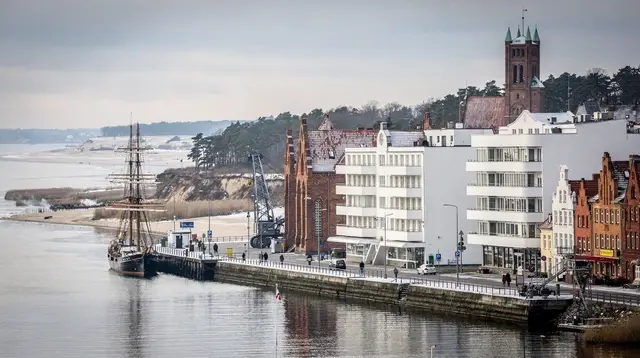
Starting in Gdańsk, the ride typically threads out from the Motlawa waterfront or from Oliwa, heading north along paths that hug the shoreline before reaching open beach frontage. This stretch trades the Old Town’s brick gables for a flatter, more open landscape - dunes, beach grass, the occasional pier silhouette in the distance.
Sopot is the ride’s most pedestrian-friendly middle section: wide promenades, well-tended parkland and Europe’s longest wooden pier all sit close to the cycling route, and the town is compact enough that a rider can dismount, walk to the pier, and rejoin the path without much lost time. Sopot is also where most guided bike tours are based, since the town’s flat layout and seafront concentration of sights suit a shorter, structured ride better than the longer Gdansk-Gdynia stretch does.
Gdynia is a different texture again: an interwar port city built largely from scratch after 1918-20, so the approach into town brings working harbour infrastructure, modernist architecture and a livelier urban edge than the beach-park feel of Sopot. The final stretch into central Gdynia involves more road riding and fewer dedicated paths, which is the point in the route where fatigue and traffic both tend to bite hardest.
Renting a bike and what to bring
Bike rental is not a bottleneck here: rental shops and city bike-share stands are common across all three Tricity centres, and most operate on a simple hourly or daily rate with a card deposit or hold. A basic city or hybrid bike suits the flat, mostly paved route better than a mountain bike, and few rental points stock road bikes, since the terrain doesn’t call for them. Reserving in advance is rarely necessary outside the busiest August weekends, though turning up early in the day gives the widest choice of bikes before stock thins out.
What’s worth packing matters more than what’s worth renting. Coastal wind off the Baltic can cut through a t-shirt even on a warm afternoon, so a light windproof layer is worth carrying even when the forecast reads mild. Sunscreen and a hat matter too - there’s little shade along the beachfront sections, and reflected glare off open water adds up over a few hours in the saddle.
A phone with a mapping app loaded (and ideally a downloaded offline map, since signal can dip in places) does more for the ride than any paper map, given how the route’s signage varies stretch to stretch. Carrying some cash or a card for a mid-ride coffee or ice cream in Sopot is sensible too, since not every beachside kiosk along the quieter stretches takes contactless.
Distance, effort and honesty about difficulty
This guide deliberately does not quote a single precise total distance for the ride, because the true figure depends entirely on which paths, detours and city-centre approaches a given rider takes - route-planning apps and cycling clubs offer varying figures, and none of them are verified here as a fixed number worth repeating. What can be said with confidence: the terrain itself is close to flat throughout, since Gdansk, Sopot and Gdynia all sit at or near sea level on the Baltic coast. This is not mountain or hill-country cycling.
That said, “flat terrain” is not the same promise as “zero effort.” Coastal winds off the Baltic are a real factor - a headwind on the return leg can turn an easy ride into a grind, and there is no guarantee the wind favours you either direction. Short ramps, underpasses, harbour-adjacent climbs and stretches of uneven paving mean the ride has genuine texture even without hills in the conventional sense. Riders planning the full Gdansk-to-Gdynia distance in one go should budget a full morning or afternoon, pace for wind, and not assume the flat coastline means an effortless outing.
Sharing the road: traffic, pedestrians and etiquette
None of this route is a closed-off, cyclist-only corridor for its full length, and treating it as one is where avoidable friction starts. Through Sopot’s busiest promenade stretches in high summer, the path fills with pedestrians, prams and slow-moving families, and a cyclist moving at speed there is the problem, not the person in the way. Slowing to walking pace through the densest pedestrian sections isn’t optional courtesy - it’s how the shared path keeps working for everyone using it.
Around Gdynia’s port approaches and the harbour-adjacent roads on the edge of Gdańsk, the opposite challenge applies: stretches of ordinary road shared with cars, delivery traffic and the occasional bus, where a cyclist needs to ride assertively and predictably rather than hug the gutter. Polish traffic law gives cyclists the same basic road rights as other vehicles on shared carriageways, but local driving habits and road surfaces vary, so this is not a stretch to ride distracted or two abreast. Riders unfamiliar with cycling in Polish traffic more generally may find it worth skimming general safety guidance before setting off, alongside the route-specific notes here.
The SKM: your built-in backup plan
This is the detail that makes the ride low-risk rather than a commitment: the SKM (Szybka Kolej Miejska), the Tricity’s commuter rail line, runs the entire length of the coast from Gdańsk through Sopot to Gdynia and beyond, with trains roughly every 10-20 minutes at peak times. See the transport guide for fare and timing details. For a cyclist, that means the ride is never an all-or-nothing proposition. Tired legs, a sudden downpour, a bike mechanical, or simply running out of daylight - any of these can be solved by rolling to the nearest SKM station and finishing the journey by train instead of by pedal.
This backstop changes how the ride should be planned. Rather than committing to the full Gdansk-Sopot-Gdynia distance from the outset, it makes sense to treat the coastal cycling route as a flexible outing: start riding, enjoy as much of the coastline as legs and weather allow, and peel off to the train whenever the ride stops being fun. Bikes are generally accommodated on SKM services, though space and exact rules can vary by train and time of day, so it is worth checking current conditions rather than assuming unlimited capacity at rush hour.
Guided tours versus riding it yourself
Two honest options exist here, and which suits a given traveller depends on time, confidence and how much planning appeal is part of the trip.
A guided bike tour, such as a three-hour guided ride around Sopot, solves the route-finding problem entirely - a local guide handles navigation, pacing and stops, which matters given how unevenly signed the coastal path can be.
Tours based in Sopot tend to focus on that town’s compact, well-paved core rather than attempting the longer Gdansk-Gdynia stretch, which suits riders who want the scenery and the seafront without the logistics of a longer self-planned route. A tour framed as a ride through Sopot with a resident guide adds local context - which beach access points are quiet, which cafes are worth the stop - that a solo ride along an app-guided route won’t offer.
For travellers who’d rather cover all three cities in one outing without pedalling the whole way, a combined option like the Tricity tour taking in Gdańsk, Oliwa, Gdynia and Sopot or a six-hour tour covering Gdańsk, Gdynia and Sopot swaps the bike for a vehicle and delivers the same three-city overview on a fixed schedule - useful for comparing the coastal geography before deciding whether a cycling day is worth attempting independently.
Riding independently means renting a bike (widely available across the Tricity, including bike-share schemes in the larger towns), planning the route on a mapping app rather than trusting signage alone, and building in the SKM as an escape valve at every stage. It’s the cheaper and more flexible option, and the one that rewards a rider willing to improvise around whatever the coastal path throws at them on a given day.
What to expect, and what not to expect
Set expectations honestly and the ride delivers: open Baltic views, three genuinely different townscapes strung along one coastline, flat terrain that rewards steady pedalling rather than punishing climbs, and a rail line running alongside the entire route as insurance. That’s a strong day out by any measure.
What the ride is not: it is not a continuous, uniformly paved, perfectly signposted cycle superhighway - expect gaps, detours and the occasional stretch of ordinary road shared with traffic, particularly around Gdynia’s port approaches. It is not a warm-water beach holiday activity - the Baltic here rarely exceeds the high teens Celsius even at the height of summer, so beach stops are for sand and sea air, not for a long swim. See the Baltic swimming guide for realistic water temperatures. And it is not a flat ride in the sense of zero effort - sea-level terrain still means wind, underpasses and short ramps, so pace accordingly rather than assuming an effortless coast.
Planning the ride
| Stage | Character | Terrain note |
|---|---|---|
| Gdańsk waterfront / Oliwa to Sopot | Beachfront paths, some park sections | Flat, generally well-paved |
| Sopot town and pier | Promenades, pedestrian-friendly | Flat, most tourist-friendly stretch |
| Sopot to central Gdynia | Mixed paths and roads, harbour approaches | Flat with short ramps, more traffic |
A sensible approach for a first attempt: start in Sopot, ride the well-surfaced promenade sections first to get a feel for the coastal path, then decide whether to extend toward Gdańsk, toward Gdynia, or both - using the SKM to return or to skip a stretch that isn’t working out. Riders combining the coastal ride with other Tricity sightseeing might pair it with a Sopot walking tour or a Gdynia modernist walking tour on foot for the sections better appreciated slowly than ridden through.
Check the current best-time-to-visit guide before booking - wind and daylight both affect how comfortable this ride is outside the core June-to-September season, and several beach-side services along the route scale back or close in the off-season, which affects rest stops and rental availability. Whatever the season, pack for coastal wind: the Baltic exposure here is real, and a calm departure from Gdańsk can turn breezy well before the Gdynia end of the ride.
A few more questions before you set off
What should I wear or bring for the ride?
Layer for wind rather than cold. Even a warm, sunny departure from Gdańsk can turn sharp once the route reaches open beach frontage, so a windproof or lightweight waterproof layer is worth the space it takes in a pannier or backpack. A helmet is sensible, though not always a legal requirement for adult cyclists in Poland. Beyond clothing, a basic repair kit or hand pump earns its keep here more than on a typical city ride, since bike shops and repair points thin out fast once you’re past the three town centres and into the connecting stretches.
Is the route lit or safe to ride after dark?
Lighting along the route is inconsistent. Central Sopot and parts of Gdańsk’s waterfront are reasonably well lit, but stretches of open beach path and the harbour approaches near Gdynia go noticeably darker once the sun is down. Riding those sections after dusk without working lights and some reflective gear is not advisable. If daylight is running short and the ride is not finished, that’s the moment to head for the nearest SKM station rather than push on into the dark hoping the path stays easy to follow.
Bike & segway tours
Verified deep-linked GetYourGuide tours. Book through these links and we earn a small commission at no cost to you.
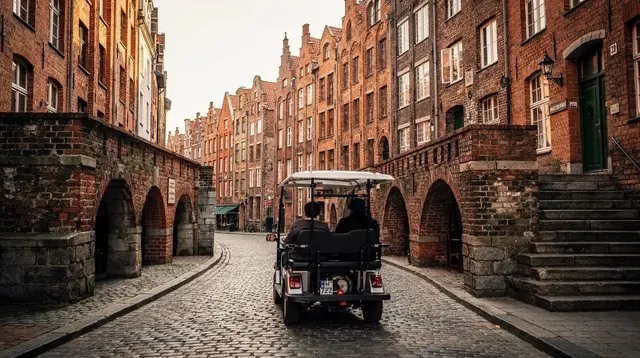
GetYourGuide does not provide a product photo for this activity — the image shows the meeting point, photographed by us.