WWII Sites in the Tricity: A Tour of Gdańsk's Wartime History
Can Westerplatte, the WWII Museum and Stutthof all be visited in one day?
Not comfortably, and not with Stutthof included. Westerplatte and the Museum of the Second World War sit within the city and pair well in a single day; Stutthof is roughly 55km away and needs its own half-day or day, not a bolt-on to a Tricity itinerary.
Why this needs a plan, not a checklist
Gdańsk’s wartime history is not concentrated in one district you can walk between in an afternoon. The places connected to the Second World War are spread across the city and the wider region, they cover different phases of the war, and they carry different weight - a windswept outdoor memorial is not the same kind of visit as a former concentration camp. This page exists to help decide what to prioritise given the time actually available, not to retell what each site covers in detail. For that, the dedicated pages linked throughout do the job properly.
Two sites sit within Gdańsk itself and pair naturally: Westerplatte, where the war began, and the Museum of the Second World War, a large indoor exhibition near the Old Town. A third, more difficult site - the Stutthof Memorial near Sztutowo - lies about 55km away and sits in a category of its own, both geographically and in what it asks of a visitor. This guide is upfront about what does not fit together, so a day doesn’t get overbooked around sites that deserve more space than a itinerary can give them.
The three sites, side by side
| Site | Type | Distance from Gdańsk centre | Typical visit length | Booking |
|---|---|---|---|---|
| Westerplatte | Outdoor memorial park | ~7km, in the city | 45-90 minutes | None needed |
| Museum of the Second World War | Indoor museum | Central, short walk from Old Town | 2-3 hours | Advisable on weekends |
| Stutthof Memorial | Former concentration camp, now memorial | ~55km | 2+ hours, plus travel | Not required, but plan transport ahead |
The table makes the core problem visible at a glance: Westerplatte and the museum are close together and roughly comparable in scale to combine in one day, while Stutthof is a different order of distance and does not belong in the same day without seriously rushing it.
Westerplatte: where the war began
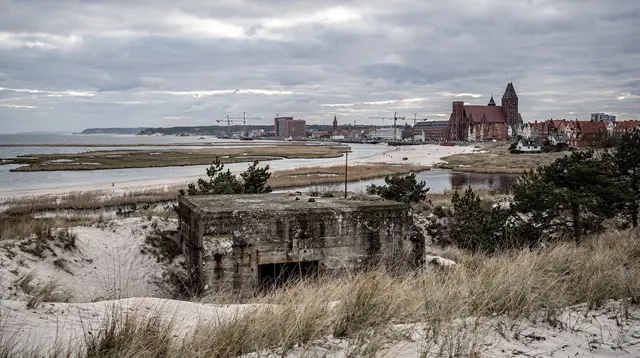
On 1 September 1939, the German battleship Schleswig-Holstein opened fire on the small Polish garrison stationed at Westerplatte, marking the opening shots of the Second World War in Europe. The site today is an open memorial park rather than a building - ruined barracks, information panels and a hilltop monument, set on a spit of land where the Gdańsk harbour meets the sea.
Two ways to reach it work well. A water tram runs along the Motława and out through the harbour, taking roughly 45-75 minutes each way and running mainly from April to October - this is the scenic option, not the fast one, and it stops in winter. A city bus covers the same distance in well under 30 minutes, year-round, and is the more practical choice outside the warmer months. Entry to the site itself is free, and no booking is needed. Budget 45-60 minutes for a self-guided walk around the grounds; a guided visit takes longer and adds context the panels alone don’t provide.
Westerplatte works well as a shorter, self-contained visit - it doesn’t require pairing with anything else, and it fits into a half-day alongside other Gdańsk sightseeing without dominating the schedule. For the fuller picture of the site, its layout and what to look for, the dedicated Westerplatte guide covers it properly; this page won’t repeat it.
The Museum of the Second World War: the fuller picture indoors
A short walk from the Old Town, the Museum of the Second World War is one of the largest museums of its kind in Europe, and it is built to be taken seriously rather than glanced at. The permanent exhibition moves through the war’s causes, its course across multiple countries, and its human cost, using original documents, recordings and reconstructed interiors rather than relying on captions alone.
Allow two to three hours. Visitors who plan “a quick look” as part of a packed day tend to come away feeling they missed most of it - this is a museum built for a proper visit, not a stop between other stops. Timed online tickets are worth arranging for weekends and school holiday periods; midweek, they are usually not essential, though checking ahead avoids a surprise.
Combined with Westerplatte, this is a full and appropriate day dedicated to the outbreak and course of the war as it touched Gdańsk directly. Visitors who want the fuller detail of what the exhibition covers should read the museum’s own guide rather than expect it summarised here.
Where Stutthof fits - and why it doesn’t fit into the same day
The Stutthof Memorial, near the village of Sztutowo, marks the site of a former Nazi German concentration camp - the first to be established outside German pre-war borders, and one of the longest-operating. It is a memorial and museum today, and it asks something different of visitors than Westerplatte or the war museum: not sightseeing, but a deliberately slow, respectful visit.
Geographically, it sits about 55km from Gdańsk, roughly an hour by car and longer by public transport, which runs infrequently. Most visitors reach it by organised tour or hire car rather than on a whim. Once there, a self-guided visit takes about two hours, longer with a guide, and the nature of the site means that time shouldn’t be compressed to fit a return journey squeezed between other plans.
This page will not promise that Stutthof can be added onto a Westerplatte and museum day without cost to either. It can’t, not properly. The honest approach is to treat it as its own half-day or full-day excursion - ideally with the mental space that arriving unrushed and leaving without a tight deadline allows. For guidance on visiting well, including what to expect and how to prepare, see how to visit Stutthof respectfully; for the practical layout of getting there, the Sztutowo-Stutthof destination page has the detail this page deliberately leaves out.
What these sites are not
It is worth naming a few things this territory is sometimes conflated with, because the mix-up shapes bad itineraries. The Gdańsk Shipyard and the European Solidarity Centre are not Second World War sites - they commemorate the Solidarity movement of 1980 and the fall of communism, a different chapter separated from the war by four decades. They are compelling in their own right, and pairing a morning there with an afternoon at Westerplatte is entirely reasonable, but they don’t belong under a “WWII sites” heading. The Shipyard and Solidarity tour guide covers that ground separately.
It is also worth resisting the idea that these sites form a simple loop. Westerplatte sits on a spit east of the centre; the war museum is central; Stutthof is well outside the city entirely, in a different direction again. There is no tidy geographic circuit connecting them, and itineraries that imply one - “spend the morning at Westerplatte, the afternoon at Stutthof” - underestimate the distances involved. Planning around actual travel times, not a map that makes everything look close together, avoids a day that runs short on time everywhere it matters.
Choosing based on time available
A half-day: Westerplatte alone, or the WWII Museum alone. Both stand on their own and don’t need to be paired to feel complete.
A full day, within Gdańsk: Westerplatte in the morning (via bus for speed, water tram if the weather and season allow the scenic route), followed by the WWII Museum in the afternoon or vice versa. This is the natural one-day combination, and it stays within the city.
A separate day, for Stutthof: budget the better part of a day once travel time is included, and go into it without another destination competing for the afternoon. Visitors combining several days in the region sometimes pair a Stutthof morning with onward travel toward Malbork or the Elbląg Canal, both of which lie roughly in the same direction - worth checking against the best day trips from Gdansk guide before assuming a combination works with the transport actually available.
A guided option removes some of the logistics from any of these. A private guided tour of the WWII Museum suits visitors who want the exhibition’s depth without navigating the layout alone - a private guided tour of the WWII Museum covers the permanent exhibition with a dedicated guide.
For a single tour that takes in the war’s outbreak specifically, including Westerplatte, a guided WWII tour of Gdańsk links Westerplatte and the wartime sites in one organised outing.
Visitors who want to combine WWII history with a broader look at the Tricity in the same day might consider a Tricity tour that pairs Westerplatte with a stop in Sopot, which works well as a way to see the memorial without dedicating a whole day solely to wartime sites. For those wanting the wider Tricity in one guided trip rather than piecing it together, a private Tricity tour covering Gdańsk, Sopot and Gdynia offers a broader view, useful for a first visit that wants context beyond the war years alone.
A note on tone
These are not sites to breeze through for the sake of ticking off an itinerary. Westerplatte is a place where people died in the war’s opening hours; the museum documents suffering on a vast scale; Stutthof memorialises a concentration camp. None of them reward being rushed, and none of them sit well alongside a light-hearted day of beach time or nightlife squeezed either side. If the plan for a given day includes Sopot’s pier or an evening in the Old Town’s bars, it’s worth giving the WWII sites their own separate day rather than compressing a heavy morning and a festive evening into one itinerary that serves neither well.
Practical basics
Westerplatte and the WWII Museum both sit within reach of central Gdańsk using the city’s ordinary public transport - buses, and the seasonal water tram for Westerplatte. Neither requires a car. Stutthof is a different matter: public transport exists but runs infrequently, so most visitors arrange a transfer, join an organised tour, or hire a car for the day. For general orientation on getting around without a car, the Tricity transport guide covers the SKM, trams and buses that serve the city sites; it doesn’t extend to Stutthof, which needs its own transport plan.
Frequently asked questions about WWII sites near Gdańsk
Can I see Westerplatte, the WWII Museum and Stutthof in one day?
Realistically no. Westerplatte and the Museum of the Second World War are both within Gdańsk and combine well in a single day. Stutthof, about 55km away near Sztutowo, needs a separate half-day at minimum, and rushing it does a disservice to the site.
Where did the Second World War actually begin?
At Westerplatte, on the Gdańsk waterfront, where the German battleship Schleswig-Holstein opened fire on the Polish garrison on 1 September 1939. The site today is an open memorial park, not a museum building.
Is the Museum of the Second World War the same thing as Westerplatte?
No. The museum is a large indoor exhibition near the Old Town covering the war broadly, both in Poland and internationally. Westerplatte is the outdoor battle site itself, several kilometres away. They are complementary, not duplicates.
Is Stutthof close enough to add to a Tricity day trip?
Not really. It is about 55km from Gdańsk, closer to an hour each way by car and longer by public transport, which is infrequent. Most visitors treat it as its own half-day or full-day excursion rather than an extra stop.
What about the Gdańsk Shipyard and the European Solidarity Centre - are they WWII sites?
No, they cover a different period: the Solidarity movement of 1980 and the fall of communism. They are worth visiting but belong to a separate chapter of the city’s history, not this one.
Is a guided tour worth it for these sites?
For Westerplatte and the WWII Museum, a guide adds context that plaques alone don’t cover, and several operators combine the two with Tricity sightseeing. For Stutthof, a guide is often recommended given the weight of the site and the value of a well-informed explanation.
How much time should I set aside for the WWII Museum?
Two to three hours for the permanent exhibition. It is dense with original documents and reconstructed interiors, and treating it as a quick stop tends to disappoint visitors who allotted less.
Is Westerplatte worth visiting if I only have a few hours?
Yes. It is a free, open-air memorial that takes about 45-60 minutes to walk, plus travel time by bus or water tram. It works well as a shorter, self-contained visit even on a tight schedule.
WWII tours
Verified deep-linked GetYourGuide tours. Book through these links and we earn a small commission at no cost to you.
GetYourGuide does not provide a product photo for this activity — the image shows the meeting point, photographed by us.