Kashubian Switzerland and Its Language
I went to Kashubian Switzerland expecting hills and lakes, and I got those. What I didn’t expect was to leave thinking about a language I’d never heard of a week earlier. That’s the part almost nobody mentions when they send you west from Gdansk for a day among the drumlins and glacial lakes around Kościerzyna: this region has its own tongue, still spoken, still taught, still very much alive, and it’s the thing that actually explains why this corner of Pomerania feels different from the coast.
A name that undersells the place
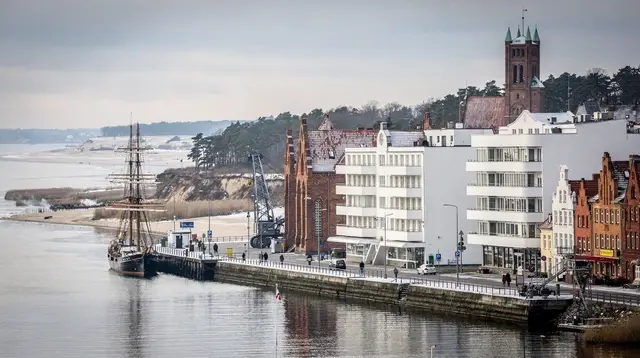
“Kashubian Switzerland” (Szwajcaria Kaszubska) is a nineteenth-century tourist nickname, coined because the terrain here - steep little hills, over a hundred lakes packed into a compact area - struck early visitors as unexpectedly Alpine next to the flat coastline around the Tricity. It stuck, and it’s not wrong, exactly: the Kashubian Switzerland hill country really does look different from anywhere else on this trip, all sudden ridgelines and water glinting between birch trees. But the name is purely about topography. It says nothing about who lives there, and that’s the gap I want to fill in.
The people who live in this hill country are Kashubians (Kaszebi), an ethnic and linguistic group with roots going back centuries in this specific patch of Pomerania, distinct from the Poles of Gdańsk or Warsaw in language, folk dress, embroidery patterns and even cuisine. Kashubian isn’t a regional accent of Polish, the way some visitors assume - it’s classified as its own West Slavic regional language, with a literary tradition, its own orthography, and legal recognition in Poland since 2005. You’ll see it on bilingual road signs once you ‘re off the main roads: Kaszebe alongside Kaszuby, village names doubled up in two alphabets that look similar but aren’t interchangeable.
Where the language actually shows up
It would be easy to drive through, admire the lakes, and never register any of this, so here’s where I’d point you if the language is what interests you rather than just the view. Smaller Kashubian towns still have older residents who speak it daily, and some primary schools in the region teach it as an elective subject
- a detail that surprised me, since I’d assumed a “regional language” meant something closer to a museum piece than a living classroom subject.
Local museums and cultural centres around Kościerzyna display Kashubian folk embroidery, distinctive for its blue-and-gold floral motifs, and sell books printed in Kashubian rather than Polish. None of this is hidden or hard to find; it’s just easy to drive past if nobody’s told you to look for it.
For a practical framework on the drive itself, I’d read a Kashubian Switzerland day trip guide before you go, and if lakes are as much your priority as villages, there’s a dedicated Kashubian Switzerland lakes route worth cross-referencing. Both cover the landscape well. Neither can substitute for actually stopping in a village long enough to notice the signage, which is on you.
Szymbark: humour as heritage
The one stop that gets talked about outside Kashubia at all is Szymbark, and it’s usually pitched as a novelty photo op: a house built completely upside down, roof to the ground, furniture bolted to the ceiling. Dom do gory nogami draws a crowd for exactly that reason, and I won’t pretend it isn’t fun to walk through something so deliberately disorienting.
But I think reducing Szymbark to a quirky photo stop misses what it’s actually doing. The house sits inside a wider education park built around oversized, almost absurdist structures - a giant wooden plank claimed as the longest of its kind, reconstructed wartime bunkers, exhibits on regional history delivered with a wink rather than a lecture. That combination of humour and pedagogy isn’t random; it’s very Kashubian. Folk culture here has a long tradition of using wit, exaggeration and playful physical objects to teach and to needle - the upside-down house reads less like a roadside gimmick and more like a piece of that tradition scaled up for visitors who might not otherwise stop.
If you’re building a full day around it, a Kashubia lakes by car itinerary or the broader one week in Pomerania plan both work Szymbark in alongside the landscape stops, which is the right order of priorities: hills first, then the house, then - if you have the time - a village long enough to sit somewhere and listen to what language is being spoken around you.
Why this matters for how you plan the day
I’d push back gently on the framing that treats Kashubian Switzerland as a nature extension of the Tricity
- a lakes-and-hills add-on to a trip that’s really about Gdańsk, Sopot and Gdynia. It deserves to be read as its own region, with its own culture, not a scenic backdrop 60-70km west of the coast.
That reframing changes what “enough time” looks like: a rushed loop past a few viewpoints and the upside-down house covers the landscape but skips the part that makes this place distinct. If you’ve already worked out how many days in Gdansk you need, I’d genuinely argue for carving out slightly more than the bare minimum for Kashubia specifically, rather than folding it into a single rushed afternoon between coastal stops.
A car makes this far easier than public transport does - see the should you rent a car in Gdansk breakdown if you’re undecided - since the villages worth lingering in aren’t well served by bus timetables. And if the idea of language and regional identity has hooked you the way it hooked me, it’s worth knowing Kashubia isn’t the only place in this trip where a “day trip” undersells a deeper story: Torun carries its own distinct identity too, well outside the coast.
Before any of this, it’s worth sorting the basics - Poland runs on the zloty, not the euro, a detail covered in why it’s zloty, not euro
- so money isn’t the thing slowing you down once you’re out among the hills. And if you’d rather have someone narrate the history and the language in person rather than piece it together from signage, a guide who works in Polish and knows the region’s context is worth booking before you set out; I went with a licensed guide leading walking tours in Polish around Gdańsk first, to get the regional history straight, and it made the Kashubian stops that followed make far more sense.
If you have family roots in this part of Poland, a session with a specialist who helps visitors trace Polish ancestry around Gdańsk before heading out to Kashubia can turn a scenic drive into something closer to a homecoming. And for a day shaped entirely around your own pace rather than a fixed coach itinerary, I’d book a private city tour with a guide who can tailor the day to what you actually want to see and simply ask for Kashubia specifically.
Before you go
Read the hills for what they are - genuinely striking, genuinely worth the drive - but don’t let the nickname do all the talking. Kashubian Switzerland has a language most visitors never hear about, a written culture most drive straight past, and a sense of humour at Szymbark that only really lands once you know it’s part of something older than a roadside attraction. If a full, structured route through the region and the coast beyond it appeals, a three-day Tricity itinerary with a Kashubia detour built in is a sensible way to make sure the language gets its due alongside the lakes.
tours.Culture
Verified deep-linked GetYourGuide tours. Book through these links and we earn a small commission at no cost to you.
GetYourGuide does not provide a product photo for this activity — the image shows the meeting point, photographed by us.