2 Days in Gdańsk: Winter Christmas Market Itinerary
Why winter is a different trip
Gdańsk in December is not Gdańsk in July with a coat on. The Baltic coast runs genuinely maritime winters: expect somewhere between -3°C and +3°C, a damp cold that gets into wool coats faster than dry cold does, and grey skies more often than not. The bigger factor for planning, though, is daylight.
By mid-December the sun is up for barely eight hours and sets around 3:30pm, with streetlights on and the Old Town lit up well before most visitors would think about dinner. That is not a complaint - a candlelit market square in the dark is part of the appeal - but it does mean a winter itinerary needs to be lighter than a summer one. Long queues, packed multi-stop days and boat trips belong to a different season; this plan trades them for fewer, better-timed stops and a lot of mulled wine.
This 2-day version centres on Gdansk itself, with a second day that either heads to Sopot by train for a quieter look at its pier, or stays indoors at the Museum of the Second World War, which is largely built underground and genuinely more pleasant in the cold than out on the water. If you are weighing whether two days is enough at all, see how many days in Gdansk; for what the season is actually like month by month, Gdańsk in winter goes into more detail.
What is closed, and what is not
Before the day-by-day plan, it helps to know what winter switches off. The seasonal passenger boats to the Hel Peninsula do not run in winter - the routes that link Gdańsk, Sopot and Gdynia to Hel by water operate only from spring to autumn, and the ice and swell on the open bay make a winter crossing impractical. If a Hel day trip is on your list, it belongs to a different season; this itinerary does not include it, and it should not be substituted in. The Motława water trams to Westerplatte are similarly reduced or suspended outside the warmer months, so anyone determined to see the site in winter should plan on the year-round bus rather than the boat.
St Mary’s Basilica tower - the 400-plus-step climb up the brick tower of the Old Town’s largest church - is technically open through winter, weather depending, but it is worth treating as optional rather than a headline stop on a cold-weather itinerary. The steps are narrow, worn stone, and in freezing or icy conditions they get genuinely slippery; the tower also closes earlier in winter and can shut without much notice if ice forms. If the weather is clear and dry, it is still a fine climb with a wide view over the red-brick rooftops - just don’t build the day around it, and skip it outright after rain or overnight frost.
What does stay open, and often improves in winter: the churches, the indoor museums, the amber galleries on Mariacka street, and above all the Christmas market itself, which exists precisely because of the season.
Day 1: The Christmas Market and the Old Town by winter light
Morning: settle in, then a first look at the Old Town. With sunrise not much before 8am in December, there is little point forcing an early start. A relaxed late-morning walk through the Old Town works well, taking in Długi Targ and the Motława riverfront while the light is at its clearest for photos.
The facades along the main street look medieval, but it’s worth knowing as you walk that almost all of them are postwar reconstruction - the Old Town was reduced to rubble in 1945 and rebuilt from the 1950s onward, which is part of what makes it worth a second look rather than a first-glance photo stop. A guided walk fills in this history properly if you’d rather have it explained than read off a plaque; a private option lets you set the pace around the cold and the shorter daylight.
a guided walk through the Old Town, timed to Gdańsk’s reconstructed streets and squaresFor a version tailored entirely to your own schedule - useful in winter, when you may want to build in warm-up stops - a private option covers the same ground at your pace.
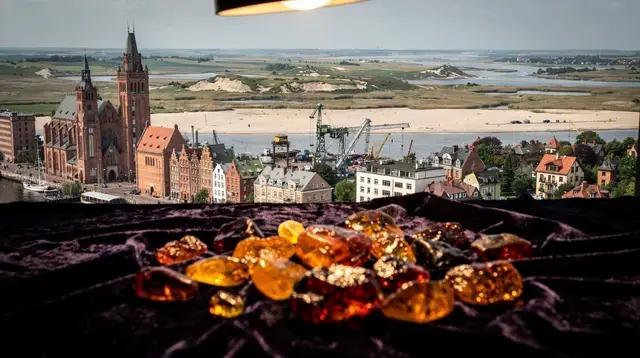
a private city tour of Gdańsk, adjustable for winter’s shorter daysEarly afternoon: warm up indoors. Rather than pushing through the cold all day, this is a good slot for one indoor stop. The Żuraw crane gate on the Motława waterfront houses a branch of the National Maritime Museum and takes about an hour; alternatively, the amber galleries and workshops around Mariacka street are unheated but short, dry browses between the cold outside and the next coffee. If you want to know what to look for when buying, how to spot real amber is worth a skim before you buy anything.
Late afternoon into evening: the Christmas market. This is the heart of the trip. Gdańsk’s Christmas market fills Targ Węglowy, just behind the Old Town’s main streets near the Foregate, with wooden stalls selling mulled wine (grzaniec), oscypek cheese grilled over coals, pierogi, gingerbread and handmade decorations, many of them amber jewellery given the city’s trade. Because sunset falls by mid-afternoon in December, the market is already lit by the time most visitors arrive for an afternoon browse, and it only gets better after dark: strings of lights against the gabled facades, mulled wine steaming in the cold, and a crowd that thins out on weeknights but fills up on weekends.
There is no fixed opening and closing time worth quoting exactly since stallholders vary, but the market runs daily through December up to the days just before Christmas, typically from late morning into the evening. Budget at least two hours here, more if you’re eating your way along the stalls, and dress warmer than you think you’ll need - standing and browsing in a Baltic December evening is colder than walking. For the full rundown of what to expect and when the market runs each year, see the dedicated Christmas market guide.
Dinner: the streets around the market and along Dluga stay busy with restaurants and bars well into the evening, many of them old cellar spaces that suit the cold outside. This is also a reasonable evening to try a Polish classic if you haven’t yet - Gdańsk’s take on pierogi is worth seeking out, and pierogi and Polish cuisine has recommendations if you’d rather book a guided food stop than choose blind.
Day 2: Sopot by SKM, or a museum day
Day 2 splits into two honest options depending on your appetite for a second cold outing versus a warm indoor afternoon. Both are half-day plans, leaving room for a slower morning and an early dinner given how early it gets dark.
Option A: Sopot by train
Sopot in winter is a genuinely different place than Sopot in July - fewer crowds, a near-empty pier, and a slower, quieter town that suits a short winter visit better than the packed summer resort does. The SKM commuter train runs frequently from Gdańsk Glowny and reaches Sopot in well under half an hour, making this an easy half-day without a car.
Walk the length of Europe’s longest wooden pier - it stays open year-round, and a quiet winter walk to the end and back is a genuinely different, calmer experience than the summer version, done in 30-45 minutes. The seasonal entry fee that applies in summer is typically waived or unenforced out of season. From there, the streets just back from the seafront hold cafes that are a natural stop for something hot before the train back.
For a guided version of Sopot that suits the season - and for those who’d rather not navigate independently in the cold - a private walking tour covers the pier and town centre without rushing.
a private walking tour of Sopot’s pier and town centreThere is also a quieter, slower-paced option built around a short guided session rather than a straight walking tour, which suits a calmer winter mood.
a quiet guided walk through Sopot with a short qi gong session includedDo not plan a boat crossing to Sopot or Gdynia in winter - the seasonal water routes along this stretch of coast do not operate outside the warmer months, so the SKM train is the way to travel this leg, not the water.
Option B: an indoor museum afternoon
If the cold has lost its charm by day two, Gdańsk’s best winter answer is the Museum of the Second World War, a short walk from the Old Town. Much of the museum sits below ground, which makes it one of the more comfortable stops in the city on a cold or wet day - no queuing outdoors, no weather to dress for once you’re inside.
It is a dense, serious museum and genuinely needs two to three hours to do it justice, so treat it as the anchor of the day rather than one stop among several. Pair it with the nearby European Solidarity Centre and the Gdańsk Shipyard grounds if you want a fuller history day - both are within easy walking distance and equally suited to a grey afternoon.
Getting around in winter
The SKM commuter rail network is the backbone of this itinerary and runs on a normal timetable through winter, with trains every 10-20 minutes at peak times - reduced but still frequent off-peak. Trams and buses cover the rest of the city and are, if anything, a better option than walking on days with ice or slush on the pavements. A car adds little for a 2-day Gdansk-and-Sopot plan and mostly adds parking hassle in the Old Town, so this itinerary is built without one. For airport transfers on either end of the trip, see the airport transfer guide.
Practical winter notes
| What | Detail |
|---|---|
| Temperature | Roughly -3°C to +3°C in December-January, often with wind chill off the Baltic |
| Daylight | Sunrise around 7:30-8am, sunset around 3:15-3:45pm in December |
| Christmas market | Targ Węglowy, daily through December, into the evening |
| Boat trips (Hel, Westerplatte) | Suspended or reduced in winter - not part of this itinerary |
| St Mary’s tower | Open weather permitting - treat as optional, skip after rain or frost |
| Currency | Zloty (PLN) - see how to pay in Poland |
Frequently asked questions about a winter Gdańsk itinerary
Is Gdańsk worth visiting in winter?
Yes, particularly for the Christmas market, the quieter Old Town, and lower accommodation prices than the summer peak. It suits travellers who want atmosphere and history over beach weather - the coastal and boat-based activities that define a summer visit are largely unavailable, so it’s a different kind of trip rather than a lesser one.
When does the Gdańsk Christmas market run?
The market on Targ Węglowy runs daily through December, typically from late morning into the evening, closing in the days just before Christmas. Exact dates shift slightly year to year, so check closer to your visit.
Can you visit Hel Peninsula or take a boat trip in winter?
No. The seasonal passenger boats connecting Gdańsk, Sopot and Gdynia to Hel, along with the Motława water trams to Westerplatte, do not run in winter. Hel remains reachable by road year-round, but it is not part of a compact 2-day winter itinerary and is better saved for a warmer visit.
Is it worth climbing St Mary’s Basilica tower in winter?
Only if the weather is dry and clear. The 400-plus stone steps get slippery in ice or after rain, and the tower keeps shorter winter hours and can close on short notice. It’s a reasonable optional add-on, not a itinerary anchor, in the cold months.
What should I wear for two days in Gdańsk in winter?
Layers, a warm waterproof coat, and solid, grippy footwear - pavements can be icy or slushy. Standing at the Christmas market or walking Sopot’s pier in the wind off the Baltic is colder than the air temperature alone suggests.
Is Sopot worth visiting in winter if the beach is out of the question?
Yes, as a quiet contrast to Gdańsk rather than a beach outing. The pier stays open, the crowds are gone, and the SKM train makes it an easy half-day without needing to plan around swimming or boat trips.
Do I need a car for this itinerary?
No. The SKM train connects Gdańsk and Sopot directly, and trams and buses cover the rest. A car adds parking difficulty in the Old Town without saving meaningful time on this route.
Is the Museum of the Second World War a good option in winter?
Yes, particularly since much of it is underground - it’s one of the more comfortable indoor options in the city on a cold or wet day, and needs two to three hours to see properly.
Winter activities
Verified deep-linked GetYourGuide tours. Book through these links and we earn a small commission at no cost to you.
GetYourGuide does not provide a product photo for this activity — the image shows the meeting point, photographed by us.