Pierogi Is Not a Tourist Dish
I ate pierogi for the first time in Gdańsk on a menu clearly built for visitors — laminated, six languages, a photo of glistening dumplings next to a Baltic sunset. I assumed, the way a lot of first-time visitors assume, that I was looking at a dish invented for exactly that menu: something standardised, flattened out, made easy to sell. It took a Polish friend’s grandmother, and a plate of pierogi ruskie eaten in her kitchen in Wrzeszcz a week later, to correct me.
The dish on the tourist menu and the dish on her table were, more or less, the same dish. What had changed was not the pierogi. It was who was eating it, and where. Wrzeszcz itself is easiest explored on a walking tour built around Günter Grass’s old neighbourhood, which passes exactly this kind of unglamorous, lived-in cooking rather than the postcard version.
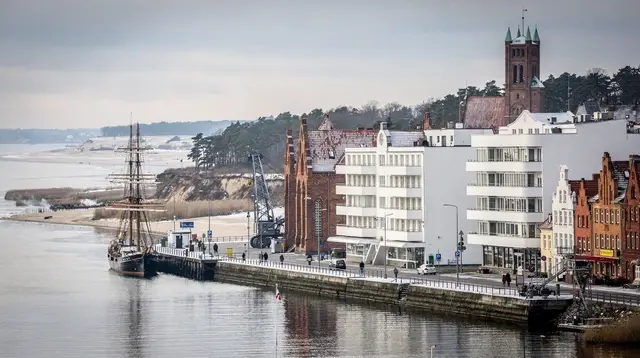
That distinction matters more than it sounds like it should, because it changes how you read a plate of food in Gdansk. Pierogi did not appear because tourism arrived on the Motława. It has been a household staple across Poland for centuries, filled with whatever the season and the region provided — potato and curd cheese, sauerkraut and mushroom, minced meat, in summer sweet cherries or blueberries. The version you get in an Old Town restaurant is not a tourist invention wearing a folk costume.
It is a domestic recipe that happened to be good enough, and simple enough, to survive the transition from home kitchen to restaurant kitchen without needing to be reinvented. Millions of Polish families were eating pierogi on ordinary Tuesdays long before anyone thought to put one on a menu with a euro sign next to it — and, worth saying plainly, a zloty sign is what you’ll actually find, since Poland has never adopted the euro, as our guide to paying in Poland with zloty and cards explains in more detail.
What throws visitors off, I think, is sheer visibility. In a city where nearly every restaurant near Dlugi Targ serves some version of pierogi, it’s easy to assume that ubiquity equals artificiality — that something so relentlessly present on tourist-facing menus must have been manufactured for that purpose, the way a “medieval banquet” or a souvenir amber pendant might have been.
But ubiquity in a restaurant district and ubiquity in a home kitchen aren’t contradictory; they’re the same food operating in two different economies. Pierogi is common on menus in Gdańsk for the same reason it’s common on stovetops across Poland: it’s cheap to make well, it scales from a family batch to a restaurant service without losing its character, and it is, quite simply, what people actually eat — a fact easy to confirm on any Old Town walking tour that passes a dozen pierogi menus before lunch.
A regional table, not an isolated curiosity
Treating pierogi as a standalone “must-try” — a box to tick alongside a photo at the Żuraw crane — misses how it actually sits on a Polish and specifically Pomeranian table. It belongs next to żurek, the sour rye soup often served in a bread bowl, tangy and warming in a way that makes sense the first time a Baltic wind cuts through the Old Town in October.
It belongs next to smoked fish, which is where this region’s geography really shows up on the plate: flądra (flounder) and węgorz (eel), smoked along the coast and sold from stalls in fishing towns like those around Puck or further out on the Hel Peninsula, where smokehouses have been working the same way for generations.
A proper regional meal here moves between all three — a bowl of żurek, a plate of pierogi, a piece of smoked fish eaten with rye bread and butter — not because a menu designer arranged it that way, but because that’s genuinely what a Kashubian or Pomeranian household table looks like, filled with what the land, the coast and the season provide, the kind of spread a broader Tricity food tour across Sopot and Gdynia is built to showcase.
Isolating pierogi as a curiosity — “the Polish dumpling,” singular, framed like a novelty — does the opposite of understanding it. It strips out the context that makes it make sense: a cuisine built around preserved, foraged and home-grown ingredients, adapted to a climate where a long, cold season made hearty, storable food a necessity rather than a style choice. Pierogi filled with sauerkraut and wild mushroom is not a quaint variant invented to diversify a menu. It’s the version that made sense when fresh vegetables ran out in November and the forest still had mushrooms worth drying.
I’d go further: judging pierogi by how available it is to tourists gets the causality backwards. A dish doesn’t become less authentic because a lot of people order it. If anything, the fact that pierogi has stayed essentially unchanged — same folding technique, same core fillings, same method of boiling then often pan-frying in butter — while feeding both grandmothers and coach parties, is evidence of how deeply it’s embedded, not how commercialised it’s become. A dish invented for visitors would have been reshaped for visitors: sweeter, prettier, easier to eat one-handed. Pierogi wasn’t. It stayed stubbornly, unglamorously itself.
If you want to taste that continuity rather than just read about it, a short river cruise along the Motława that includes a pierogi tasting is a reasonable way to have it explained by someone who grew up with it, rather than guessing from a menu translation.
For a deeper dive into the wider table — the soups, the smoked fish, the vodka that traditionally accompanies all of it, including Gdańsk’s own Goldwasser liqueur, distilled since 1598 — a guided private city tour built around Gdańsk’s food and history together tends to connect the dots better than eating alone. And if your own family history runs through this coast, it’s worth knowing that a guided visit focused on Polish ancestry and heritage in Gdańsk often ends up, unsurprisingly, back at a family table.
None of this means the touristic version is flawless. Some restaurants near the busiest squares do serve a thinner, hastier pierogi than you’d get from someone’s grandmother, the same way a pizza near a major European landmark is rarely the best pizza in town. That’s a fair complaint about restaurant quality, and one covered at more length in our guide to common tourist mistakes to avoid in Gdansk. It’s a different claim entirely from saying the dish itself was built for tourists — and conflating the two means missing what’s actually on the plate: a genuine, centuries-old piece of Polish domestic cooking that tourism found, rather than invented.
Frequently Asked Questions About Pierogi in Gdańsk
Is pierogi originally from Gdańsk, or from elsewhere in Poland?
Pierogi is a nationwide Polish dish, not specific to Gdańsk. It appears with regional variation across the country, and in Pomerania it typically sits alongside dishes shaped by the Baltic coast, like smoked fish and hearty soups.
Was pierogi created for tourists?
No. It has been a Polish household staple for centuries, long predating Gdańsk’s modern tourism industry. Its wide availability on tourist menus today reflects its everyday importance to Polish home cooking, not an invention for visitors.
What are the most common pierogi fillings?
Classic fillings include potato and curd cheese (pierogi ruskie), sauerkraut and wild mushroom, minced meat, and in summer, sweet fillings like cherry or blueberry. Restaurants in Gdańsk typically offer several of these on one menu.
What should I eat alongside pierogi for an authentic regional meal?
Żurek, a sour rye soup, and smoked Baltic fish such as flounder (flądra) or eel (węgorz) are traditional companions, reflecting the coastal Pomeranian table rather than a menu built solely around one dish.
Is restaurant pierogi in Gdańsk as good as homemade?
Quality varies by restaurant, as it does with any dish, but the recipe and method are largely unchanged from home cooking. Smaller, family-run places near residential areas often serve pierogi closer to the homemade version than large restaurants on the main tourist squares — a distinction worth knowing before your first visit to Gdansk.
Does pierogi quality drop in restaurants near major sights?
Sometimes, the same way food near any famous landmark can be rushed for volume. That’s a restaurant-quality issue, though, not evidence that pierogi itself was designed for tourists.
Can I try pierogi as part of an organised food experience in Gdańsk?
Yes. Options range from short tastings built into river cruises to broader food-focused city tours that place pierogi alongside other regional dishes and their history.
tours.Food
Verified deep-linked GetYourGuide tours. Book through these links and we earn a small commission at no cost to you.
GetYourGuide does not provide a product photo for this activity — the image shows the meeting point, photographed by us.